Role of indigenous attractants in enhancing quantitative parameters of cucumber (Cucumis sativus L.)
DOI:
https://doi.org/10.31783/elsr.2023.91159163Keywords:
attractants, cucumber, jaggery solution, pollination, yieldAbstract
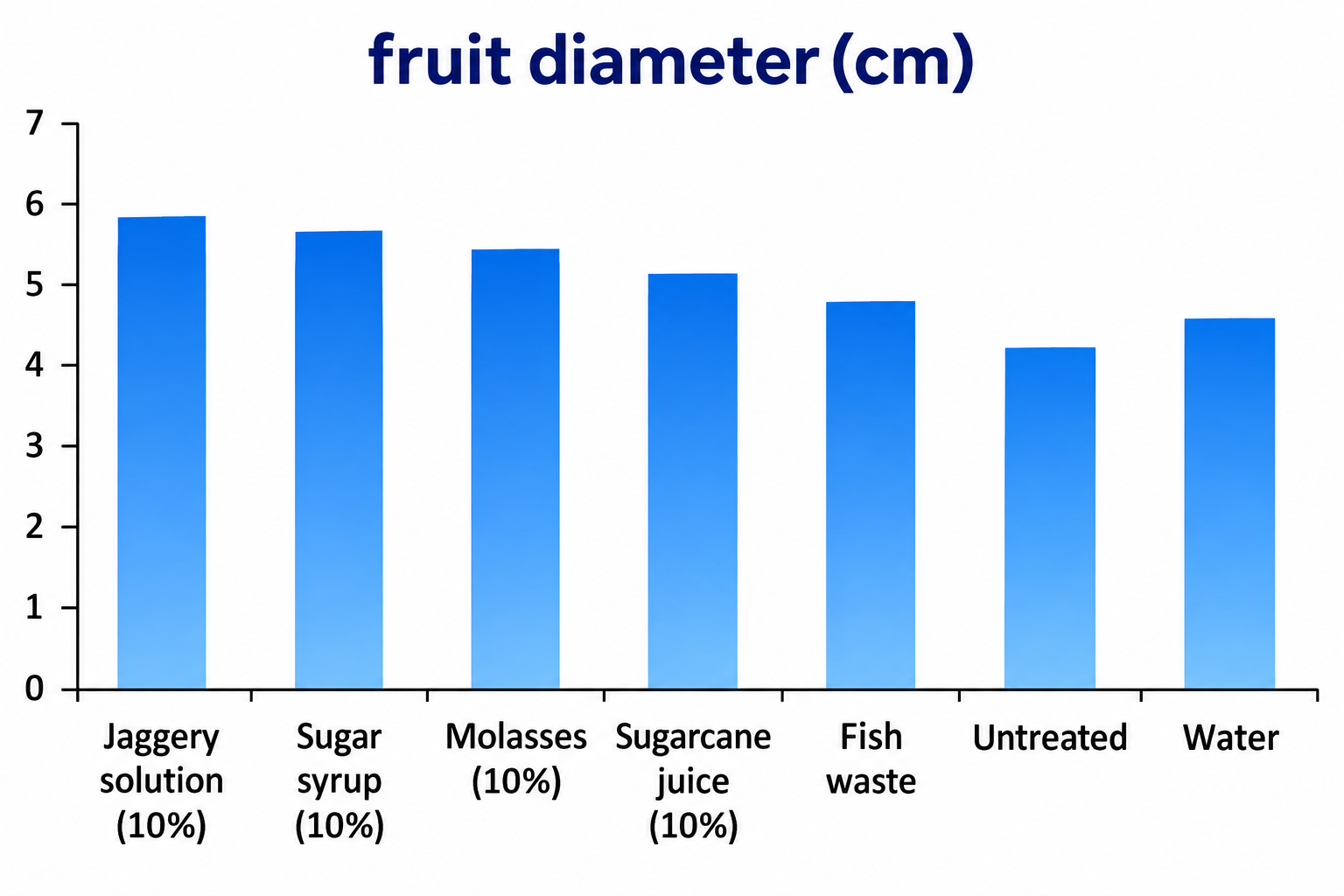
Cucumber is one of the essential summer vegetable crop grown among cucurbits and highly dependent upon diverse insect pollinators for efficient pollination and production of good quality fruits. Seven treatments viz., Jaggery solution (10%), Sugar syrup (10%), Molasses (10%), Sugarcane juice (10%), fish waste, Untreated control and water as negative control were applied during the experiment. The attributes that contribute maximum in terms of yield such as number of fruits/plant (8.87 ± 0.14). fruit length (26.02 ± 0.47 cm), fruit diameter (5.77 ± 0.02 cm), fruit weight (350.27 ± 0.09 g), Number of seeds/fruit (453.07 ± 4.98), yield/ha (222.50 ± 4.78 q) and fruit set (69.74 ± 0.62 %) was recorded with Jaggery solution (10%) followed by sugar syrup (10%) with number of fruits/plant as 8.87 ± 0.14, fruit length 25.07 ± 0.18 cm, fruit diameter 5.60 ± 0.04 cm, fruit weight 0.321 ± 0.01 kg, number of seeds/fruit 423.65 ± 1.97, yield/ha 190.00 ± 0.16 q and fruit set as 62.38 ± 0.68 %, followed by molasses (10 %), sugarcane juice (10%) and fish waste respectively. Compared to the control, each treatment was found significantly superior. The plants which were kept untreated failed to produce fruits with highest yield attributing characters thus, signifying the importance of attractants in enhancing production of cucumber.
References
[1] K. H. Arunkumar, M. G. Patil, C. N. Hanchinamani, I. S. Goud and S. V. Hiremath (2011). Genetic relationship of growth and development traits with fruit yield in F2 population of BGDL x Hot season of cucumber (Cucumis sativus L.). Karnataka J. Agric. Sci., 24: 497-500.
[2] C. Gopalan, B. V. R. Sastri and S. C. Balasubramanian (1971). Nutritive value of Indian foods, Indian Council of Medical Research., National Institute of Nutrition, Hyderabad. India.
[3] Anonymous (2018). Horticultural statistics at a glance. Horticulture statistics division, Department of Agriculture, Cooperation & Farmers Welfare Ministry of Agriculture and Farmers Welfare, Government of India. India Offset Press.
[4] S. E. McGregor (1976). Insect pollination of cultivated crops. US Department of Agricultural Washington, DC.
[5] H. K .Wankhede, S. R. Kulkarni and S. A. Parwar (2019). Effect of bee attractants on foraging activity of honeybees Apis mellifera and Apis cerana for enhancing seed production of cucumber (Cucumis sativus L.). J. Entomol. Zool. Stud., 7: 566-569.
[6] G. M. Rao and M.C. Suryanarayana (1988). Studies on pollination of watermelon Citrullus lanatus (Thunb) Mansf. Indian Bee J., 50: 5-8.
[7] E. C. Mussen and R. W. Thorp (1997). Honey bee pollination of cantaloupe, cucumber, and watermelon. UC Agriculture & Natural Resources.
[8] K. Sunder (1978). Standardization of field techniques for hybrid seed production watermelon Citrulus lanatus (Thunb) Mansf. M.Sc. (Agri) Thesis submitted to university of Agricultural Sciences, Bangalore, India.
[9] R. Ahmad (1992). Effect of honey bee pollination on fruit yield of cucumber crop. Pak. J. Zool., 24: 88-90.
[10] J. R. Schultheis, J. T .Ambrose, S. B. Bambara and W. A. Mangum (1994). Selective bee attractants did not improve cucumber and watermelon yield. HortSci., 29: 155-158.
[11] K. B. Prakash (2002). Pollination potentiality of Indian honey bees viz., Apis cerana on the production of cucumber (Cucumus sativus (Linn.). M.sc. Thesis, University of Agricultural Sciences, Bangalore, India.
[12] G. C. Srikanth, G. C. Kuberappa and B. V. Shwetha (2013). Role of attractants on insect pollinator diversity with special reference to pollination in increasing the productivity of Bottle gourd, Lagenaria siceraria L. Mysore J. Agric Sci., 47: 16-21.
Downloads
Published
Issue
Section
License
Copyright (c) 2023 Author (s)

This work is licensed under a Creative Commons Attribution-NonCommercial-NoDerivatives 4.0 International License.
Copyright © The Author(s). Effective from 1 July 2026, articles published in Emergent Life Sciences Research (ELSR) are distributed under the Creative Commons Attribution 4.0 International License (CC BY 4.0), which permits use, sharing, distribution, reproduction, and adaptation in any medium or format, provided that appropriate credit is given to the original author(s) and the source, a link to the license is provided, and any changes made are indicated.
Articles published before 1 July 2026 remain subject to the license applicable at the time of their original publication, including the Creative Commons Attribution-NonCommercial-NoDerivatives 4.0 International License (CC BY-NC-ND 4.0), where applicable.