
Amphotericin B: Insight into the advances in preclinical and clinical development
DOI:
https://doi.org/10.31783/elsr.2024.1015571Keywords:
amphotericin B, antifungal drug, COVID-19-associated mucormycosis, liposomes, nano-formulationsAbstract
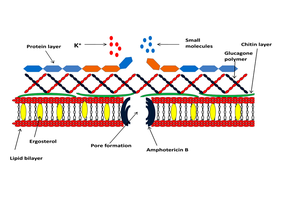
Amphotericin B (AmB) is a recognized antifungal drug derived from a natural source that has been used for more than five decades to treat various fungal as well as protozoal infections. In the past two years, the drug has returned to the forefront of medical discussions as the preferred treatment for COVID-19-associated mucormycosis (CAM), popularly known as black fungus infections. AmB acts by binding to ergosterol present in the fungal cells resulting in the formation of pore ion channels and thus making the fungal cell membrane dysfunctional. It also produces free radicals inside fungal cells and thus impairs vital cellular pathways of the fungus. Low fungal resistance and broad-spectrum activity against an array of fungal species support the continued use of AmB for decades. However, nephrotoxicity produced by conventional formulations of AmB is a major limitation of their use and is the reason for the search for safer advanced lipid-based formulations and nano-formulations. The price of the medication with newer AmB formulations and the intravenous route of administration are the major obstacles to their widespread clinical use. Due to its significant toxicity, AmB is mainly used to treat life-threatening fungal infections and leishmaniasis only. This review provides an insight into the preclinical and clinical advancement of various AmB formulations, including its nano-formulations, promising for the therapy of susceptible infections in humans and animals.
References
[1] N. R. Stone, T. Bicanic, R. Salim and W. Hope (2016). Liposomal amphotericin B (AmBisome®): a review of the pharmacokinetics, pharmacodynamics, clinical experience and future directions. Drugs, 76: 485-500.
[2] M. Baginski and J. Czub (2009). Amphotericin B and its new derivatives-mode of action. Current drug metabolism, 10: 459-469.
[3] A. A. Volmer, A. M. Szpilman and E. M. Carreira (2010). Synthesis and biological evaluation of amphotericin B derivatives. Natural product reports, 27: 1329-1349.
[4] R. Vardanyan and V. Hruby, Synthesis of essential drugs, Elsevier, 2006.
[5] K. C. Gray, D. S. Palacios, I. Dailey, M. M. Endo, B. E. Uno, B. C. Wilcock and M. D. Burke (2012). Amphotericin primarily kills yeast by simply binding ergosterol. Proceedings of the National Academy of Sciences, 109: 2234-2239.
[6] G. Inselmann, U. Inselmann and H. Heidemann (2002). Amphotericin B and liver function. European journal of internal medicine, 13: 288-292.
[7] F. B. Filippin and L. C. Souza (2006). Therapeutic efficacy of amphotericin B lipid formulations. Revista Brasileira de Ciências Farmacêuticas, 42: 167-194.
[8] C. D. Waugh, Amphotericin B, in: S.J. Enna, D.B. Bylund (Eds.) xPharm: The Comprehensive Pharmacology Reference, Elsevier, New York, 2007, pp. 1-5.
[9] J. Torrado, R. Espada, M. Ballesteros and S. Torrado-Santiago (2008). Amphotericin B formulations and drug targeting. Journal of pharmaceutical sciences, 97: 2405-2425.
[10] L. N. Silva, S. S. Oliveira, L. B. Magalhães, V. V. Andrade Neto, E. C. Torres-Santos, M. D. Carvalho, M. D. Pereira, et al. (2020). Unmasking the amphotericin B resistance mechanisms in Candida haemulonii species complex. ACS Infectious Diseases, 6: 1273-1282.
[11] G. Barratt and S. Bretagne (2007). Optimizing efficacy of Amphotericin B through nanomodification. International journal of nanomedicine, 2: 301-313.
[12] J. P. Adler-Moore and R. T. Proffitt (1993). Development, characterization, efficacy and mode of action of AmBisome, a unilamellar liposomal formulation of amphotericin B. Journal of Liposome Research, 3: 429-450.
[13] K. Takemoto, Y. Yamamoto and Y. Ueda (2006). Evaluation of antifungal pharmacodynamic characteristics of AmBisome against Candida albicans. Microbiology and immunology, 50: 579-586.
[14] K. Shimizu, M. Osada, K. Takemoto, Y. Yamamoto, T. Asai and N. Oku (2010). Temperature-dependent transfer of amphotericin B from liposomal membrane of AmBisome to fungal cell membrane. Journal of Controlled Release, 141: 208-215.
[15] J. Bolard, V. Joly and P. Yeni (1993). Mechanism of action of amphotericin B at the cellular level. Its modulation by delivery systems. Journal of Liposome Research, 3: 409-427.
[16] R. Nairn (1975). Nystatin and amphotericin B in the treatment of denture-related candidiasis. Oral Surgery, Oral Medicine, Oral Pathology, 40: 68-75.
[17] V. Bissell, D. H. Felix and D. Wray (1993). Comparative trial of fluconazole and amphotericin in the treatment of denture stomatitis. Oral surgery, oral medicine, oral pathology, 76: 35-39.
[18] M. Nasr, S. Nawaz and A. Elhissi (2012). Amphotericin B lipid nanoemulsion aerosols for targeting peripheral respiratory airways via nebulization. International journal of pharmaceutics, 436: 611-616.
[19] K. M. Wasan, E. K. Wasan and P. Hnik (2020). Assessing the safety, tolerability, pharmacokinetics, and biodistribution of novel oral formulations of amphotericin b following single-and multiple-dose administration to Beagle dogs. Antimicrobial Agents and Chemotherapy, 64: 10.1128/aac. 01111-01120.
[20] F. Al-Khikani and A. Al-Janabi (2019). Topical amphotericin B formulas: Promising new application. International Journal of Medical Science and Current Research, 2: 187-196.
[21] B. Thejeswi and S. Debnath (2015). Formulation and evaluation of transdermal patch containing amphotericin B. International Journal of Novel Trends in Pharmaceutical Sciences, 5: 123-129.
[22] K. Peng, L. K. Vora, I. A. Tekko, A. D. Permana, J. Domínguez-Robles, D. Ramadon, P. Chambers, et al. (2021). Dissolving microneedle patches loaded with amphotericin B microparticles for localised and sustained intradermal delivery: Potential for enhanced treatment of cutaneous fungal infections. Journal of Controlled Release, 339: 361-380.
[23] M. R. Zare, M. Khorram, S. Barzegar, B. Sarkari, Q. Asgari, S. Ahadian and K. Zomorodian (2021). Dissolvable carboxymethyl cellulose/polyvinylpyrrolidone microneedle arrays for transdermal delivery of Amphotericin B to treat cutaneous leishmaniasis. International Journal of Biological Macromolecules, 182: 1310-1321.
[24] A. A. Albadr, I. A. Tekko, L. K. Vora, A. A. Ali, G. Laverty, R. F. Donnelly and R. R. S. Thakur (2022). Rapidly dissolving microneedle patch of amphotericin B for intracorneal fungal infections. Drug Delivery and Translational Research, 1-13.
[25] A. C. Mesa-Arango, L. Scorzoni and O. Zaragoza (2012). It only takes one to do many jobs: Amphotericin B as antifungal and immunomodulatory drug. Frontiers in microbiology, 3: 286.
[26] R. J. Hamill (2013). Amphotericin B formulations: a comparative review of efficacy and toxicity. Drugs, 73: 919-934.
[27] H. Kato, M. Hagihara, Y. Yamagishi, Y. Shibata, Y. Kato, T. Furui, H. Watanabe, et al. (2018). The evaluation of frequency of nephrotoxicity caused by liposomal amphotericin B. Journal of infection and chemotherapy, 24: 725-728.
[28] M. D. Moen, K. A. Lyseng-Williamson and L. J. Scott (2009). Liposomal amphotericin B: a review of its use as empirical therapy in febrile neutropenia and in the treatment of invasive fungal infections. Drugs, 69: 361-392.
[29] I. Bekersky, R. M. Fielding, D. Buell and I. Lawrence (1999). Lipid-based amphotericin B formulations: from animals to man. Pharmaceutical science & technology today, 2: 230-236.
[30] R. G. Irwin, A. H. Groll and T. J. Walsh, Antifungal drugs, in: J.K. Aronson (Ed.) Side Effects of Drugs Annual, Elsevier, 1998, pp. 282-292.
[31] K. L. Oakley, C. B. Moore and D. W. Denning (1999). Comparison of in vitro activity of liposomal nystatin against Aspergillus species with those of nystatin, amphotericin B (AB) deoxycholate, AB colloidal dispersion, liposomal AB, AB lipid complex, and itraconazole. Antimicrobial agents and chemotherapy, 43: 1264-1266.
[32] A. H. Groll, N. Giri, V. Petraitis, R. Petraitiene, M. Candelario, J. S. Bacher, S. C. Piscitelli, et al. (2000). Comparative efficacy and distribution of lipid formulations of amphotericin B in experimental Candida albicans infection of the central nervous system. The Journal of infectious diseases, 182: 274-282.
[33] F. B. Cavassin, J. L. Baú-Carneiro, R. R. Vilas-Boas and F. Queiroz-Telles (2021). Sixty years of amphotericin B: an overview of the main antifungal agent used to treat invasive fungal infections. Infectious Diseases and Therapy, 10: 115-147.
[34] I. Bekersky, R. M. Fielding, D. E. Dressler, J. W. Lee, D. N. Buell and T. J. Walsh (2002). Plasma protein binding of amphotericin B and pharmacokinetics of bound versus unbound amphotericin B after administration of intravenous liposomal amphotericin B (AmBisome) and amphotericin B deoxycholate. Antimicrobial agents and chemotherapy, 46: 834-840.
[35] M. Jafari, S. S. Abolmaali, A. M. Tamaddon, K. Zomorodian and B. Shahriarirad (2021). Nanotechnology approaches for delivery and targeting of Amphotericin B in fungal and parasitic diseases. Nanomedicine, 16: 857-877.
[36] S. Zaioncz, N. Maissar Khalil and R. Mara Mainardes (2017). Exploring the role of nanoparticles in amphotericin B delivery. Current Pharmaceutical Design, 23: 509-521.
[37] K. D. Manandhar, T. P. Yadav, V. K. Prajapati, S. Kumar, M. Rai, A. Dube, O. N. Srivastava, et al. (2008). Antileishmanial activity of nano-amphotericin B deoxycholate. Journal of Antimicrobial Chemotherapy, 62: 376-380.
[38] W. Tiyaboonchai and N. Limpeanchob (2007). Formulation and characterization of amphotericin B–chitosan–dextran sulfate nanoparticles. International journal of pharmaceutics, 329: 142-149.
[39] J. Italia, M. Yahya, D. Singh and M. Ravi Kumar (2009). Biodegradable nanoparticles improve oral bioavailability of amphotericin B and show reduced nephrotoxicity compared to intravenous Fungizone®. Pharmaceutical research, 26: 1324-1331.
[40] S. H. Jung, D. H. Lim, S. H. Jung, J. E. Lee, K.-S. Jeong, H. Seong and B. C. Shin (2009). Amphotericin B-entrapping lipid nanoparticles and their in vitro and in vivo characteristics. European Journal of Pharmaceutical Sciences, 37: 313-320.
[41] J. L. Italia, A. Sharp, K. C. Carter, P. Warn and M. R. Kumar (2011). Peroral amphotericin B polymer nanoparticles lead to comparable or superior in vivo antifungal activity to that of intravenous Ambisome® or Fungizone™. PloS one, 6: e25744.
[42] J. P. Jain, M. Jatana, A. Chakrabarti and N. Kumar (2011). Amphotericin-B-loaded polymersomes formulation (PAMBO) based on (PEG) 3-PLA copolymers: an in vivo evaluation in a murine model. Molecular pharmaceutics, 8: 204-212.
[43] V. K. Prajapati, K. Awasthi, S. Gautam, T. P. Yadav, M. Rai, O. N. Srivastava and S. Sundar (2011). Targeted killing of Leishmania donovani in vivo and in vitro with amphotericin B attached to functionalized carbon nanotubes. Journal of antimicrobial chemotherapy, 66: 874-879.
[44] H. Van de Ven, C. Paulussen, P. Feijens, A. Matheeussen, P. Rombaut, P. Kayaert, G. Van den Mooter, et al. (2012). PLGA nanoparticles and nanosuspensions with amphotericin B: potent in vitro and in vivo alternatives to Fungizone and AmBisome. Journal of controlled release, 161: 795-803.
[45] A. Souza, A. d. Nascimento, N. De Vasconcelos, M. Jerônimo, I. Siqueira, L. R-Santos, D. Cintra, et al. (2015). Activity and in vivo tracking of Amphotericin B loaded PLGA nanoparticles. European journal of medicinal chemistry, 95: 267-276.
[46] L. R. Caldeira, F. R. Fernandes, D. F. Costa, F. Frézard, L. C. C. Afonso and L. A. M. Ferreira (2015). Nanoemulsions loaded with amphotericin B: a new approach for the treatment of leishmaniasis. European Journal of Pharmaceutical Sciences, 70: 125-131.
[47] D. Butani, C. Yewale and A. Misra (2016). Topical Amphotericin B solid lipid nanoparticles: Design and development. Colloids and Surfaces B: Biointerfaces, 139: 17-24.
[48] L. Sosa, B. Clares, H. L. Alvarado, N. Bozal, O. Domenech and A. C. Calpena (2017). Amphotericin B releasing topical nanoemulsion for the treatment of candidiasis and aspergillosis. Nanomedicine: Nanotechnology, Biology and Medicine, 13: 2303-2312.
[49] Q. Zia, O. Mohammad, M. A. Rauf, W. Khan and S. Zubair (2017). Biomimetically engineered Amphotericin B nano-aggregates circumvent toxicity constraints and treat systemic fungal infection in experimental animals. Scientific reports, 7: 11873.
[50] R. G. d. J. V. Marcano, T. T. Tominaga, N. M. Khalil, L. S. Pedroso and R. M. Mainardes (2018). Chitosan functionalized poly (ε-caprolactone) nanoparticles for amphotericin B delivery. Carbohydrate polymers, 202: 345-354.
[51] M. Sandhya, V. Aparna, B. Raja, R. Jayakumar and S. Sathianarayanan (2018). Amphotericin B loaded sulfonated chitosan nanoparticles for targeting macrophages to treat intracellular Candida glabrata infections. International Journal of Biological Macromolecules, 110: 133-139.
[52] D. B. Ludwig, L. E. A. de Camargo, N. M. Khalil, M. E. Auler and R. M. Mainardes (2018). Antifungal activity of chitosan-coated poly (lactic-co-glycolic) acid nanoparticles containing amphotericin B. Mycopathologia, 183: 659-668.
[53] J. S. Ling Tan, C. J. Roberts and N. Billa (2019). Mucoadhesive chitosan-coated nanostructured lipid carriers for oral delivery of amphotericin B. Pharmaceutical development and technology, 24: 504-512.
[54] A. Riezk, K. Van Bocxlaer, V. Yardley, S. Murdan and S. L. Croft (2020). Activity of amphotericin B-loaded chitosan nanoparticles against experimental cutaneous leishmaniasis. Molecules, 25: 4002.
[55] A. Sohail, R. U. Khan, M. Khan, M. Khokhar, S. Ullah, A. Ali, H. Bilal, et al. (2021). Comparative efficacy of amphotericin B-loaded chitosan nanoparticles and free amphotericin B drug against Leishmania tropica. Bulletin of the National Research Centre, 45: 1-9.
[56] T. Correa, D. A. Bazylinski, F. Garcia and F. Abreu (2021). A rapid and simple preparation of amphotericin B-loaded bacterial magnetite nanoparticles. RSC advances, 11: 28000-28007.
[57] R. P. Evangelista, C. F. Amantino, R. C. Pietro, R. Sorrechia, R. D. Piazza, R. F. Marques, A. C. Tedesco, et al. (2021). Copolymer-nanocapsules of zinc phenyl-thio-phthalocyanine and amphotericin-B in association with antimicrobial photodynamic therapy (A-PDT) applications against Candida albicans yeasts. Photodiagnosis and Photodynamic Therapy, 34: 102273.
[58] S. Ahmad Nasrollahi, A. Fattahi, A. Naeimifar, E. Lotfali, A. Firooz, A. Khamesipoor, S. E. Skandari, et al. (2022). The in vitro effect of nanoliposomal amphotericin B against two clinically important dermatophytes. International Journal of Dermatology, 61: 383-389.
[59] G. D. Marena, M. A. dos Santos Ramos, G. C. Carvalho, L. C. de Lima, A. L. C. S. do Nascimento, R. M. Sábio, C. F. Rodero, et al. (2022). Development and characterization of an amphotericin B-loaded nanoemulsion applied to Candida auris biofilms control. Journal of Drug Delivery Science and Technology, 74: 103566.
[60] S. Rubin, D. Krawiec, H. Gelberg and R. Shanks (1989). Nephrotoxicity of amphotericin B in dogs: a comparison of two methods of administration. Canadian Journal of Veterinary Research, 53: 23.
[61] J. Sykes (2016). Update on the diagnosis and treatment of systemic mycoses.
[62] R. Malik, A. Craig, D. Wigney, P. Martin and D. Love (1996). Combination chemotherapy of canine and feline cryptococcosis using subcutaneously administered amphotericin B. Australian Veterinary Journal, 73: 124-128.
[63] R. G. Dória, S. H. Freitas, R. L. Linardi, F. de Souza Mendonça, L. P. Arruda, F. M. Boabaid and C. A. Valadão (2012). Treatment of pythiosis in equine limbs using intravenous regional perfusion of amphotericin B. Veterinary Surgery, 41: 759-765.
[64] D. Dias, R. Doria, R. N. Pereira, P. A. Canola and P. A. Di Filippo (2012). Topical treatment using amphotericin B and DMSO for an atypically located equine cutaneous pythiosis. Acta Scientiae Veterinariae, 40.
[65] M. M. Ford (2004). Antifungals and their use in veterinary ophthalmology. Veterinary Clinics: Small Animal Practice, 34: 669-691.
[66] D. French, P. Haynes and R. Miller (1985). Surgical and medical management of rhinophycomycosis (conidiobolomycosis) in a horse. Journal of the American Veterinary Medical Association, 186: 1105-1107.
[67] D. Zamos, J. Schumacher and J. Loy (1996). Nasopharyngeal conidiobolomycosis in a horse. Journal of the American Veterinary Medical Association, 208: 100-101.
[68] S. E. Orosz and D. L. Frazier (1995). Antifungal agents: a review of their pharmacology and therapeutic indications. Journal of Avian Medicine and Surgery, 8-18.
[69] S. J. Hernandez-Divers (2001). Pulmonary candidiasis caused by Candida albicans in a Greek tortoise (Testudo graeca) and treatment with intrapulmonary amphotericin B. Journal of Zoo and Wildlife Medicine, 32: 352-359.
[70] A. Riad, A. A. Shabaan, J. Issa, S. Ibrahim, H. Amer, Y. Mansy, I. Kassem, et al. (2021). COVID-19-associated mucormycosis (CAM): case-series and global analysis of mortality risk factors. Journal of Fungi, 7: 837.
[71] V. U. Rao, G. Arakeri, G. Madikeri, A. Shah, R. S. Oeppen and P. A. Brennan (2021). COVID-19 associated mucormycosis (CAM) in India: a formidable challenge. British Journal of Oral and Maxillofacial Surgery, 59: 1095-1098.
[72] D. Garg, V. Muthu, I. S. Sehgal, R. Ramachandran, H. Kaur, A. Bhalla, G. D. Puri, et al. (2021). Coronavirus disease (Covid-19) associated mucormycosis (CAM): case report and systematic review of literature. Mycopathologia, 186: 289-298.
[73] S. M. Rudramurthy, M. Hoenigl, J. F. Meis, O. A. Cornely, V. Muthu, J. P. Gangneux, J. Perfect, et al. (2021). ECMM/ISHAM recommendations for clinical management of COVID‐19 associated mucormycosis in low‐and middle‐income countries. Mycoses, 64: 1028-1037.
[74] A. Singh, N. A. Bhatt, A. Goswami, A. Kumar and A. Sinha (2021). Role of Treatment of Amphotericin-B in Black Fungus Treatment: A Review Article. Annals of the Romanian Society for Cell Biology, 25: 447-455.
[75] K. Ito (2022). Inhaled antifungal therapy: Benefits, challenges, and clinical applications. Expert Opinion on Drug Delivery, 19: 755-769.
[76] Y. Abdel-Hafez, H. Siaj, M. Janajri, Y. Abu-Baker, Z. Nazzal, Z. Hamdan, R. Adwan, et al. (2022). Tolerability and epidemiology of nephrotoxicity associated with conventional amphotericin B therapy: a retrospective study in tertiary care centers in Palestine. BMC nephrology, 23: 1-10.
[77] P. N. Rocha, C. D. Kobayashi, L. de Carvalho Almeida, C. de Oliveira dos Reis, B. M. Santos and M. J. Glesby (2015). Incidence, predictors, and impact on hospital mortality of amphotericin B nephrotoxicity defined using newer acute kidney injury diagnostic criteria. Antimicrobial agents and chemotherapy, 59: 4759-4769.
[78] F. F. Tuon, K. L. Florencio and J. L. Rocha (2019). Burden of acute kidney injury in HIV patients under deoxycholate amphotericin B therapy for cryptococcal meningitis and cost-minimization analysis of amphotericin B lipid complex. Medical Mycology, 57: 265-269.
[79] I. Bekersky, G. W. Boswell, R. Hiles, R. M. Fielding, D. Buell and T. J. Walsh (1999). Safety and toxicokinetics of intravenous liposomal amphotericin B (AmBisome®) in beagle dogs. Pharmaceutical research, 16: 1694-1701.
[80] J. R. Wingard, M. H. White, E. Anaissie, J. Raffalli, J. Goodman, A. Arrieta and L. A. A. C. S. Group (2000). A randomized, double-blind comparative trial evaluating the safety of liposomal amphotericin B versus amphotericin B lipid complex in the empirical treatment of febrile neutropenia. Clinical infectious diseases, 31: 1155-1163.
[81] A. S. Loo, S. A. Muhsin and T. J. Walsh (2013). Toxicokinetic and mechanistic basis for the safety and tolerability of liposomal amphotericin B. Expert opinion on drug safety, 12: 881-895.
[82] K. M. Wasan, A. L. Kennedy, S. M. Cassidy, M. Ramaswamy, L. Holtorf, J. W.-L. Chou and P. H. Pritchard (1998). Pharmacokinetics, distribution in serum lipoproteins and tissues, and renal toxicities of amphotericin B and amphotericin B lipid complex in a hypercholesterolemic rabbit model: single-dose studies. Antimicrobial agents and chemotherapy, 42: 3146-3152.
[83] M. Ramaswamy, K. D. Peteherych, A. L. Kennedy and K. M. Wasan (2001). Amphotericin B lipid complex or amphotericin B multiple-dose administration to rabbits with elevated plasma cholesterol levels: pharmacokinetics in plasma and blood, plasma lipoprotein levels, distribution in tissues, and renal toxicities. Antimicrobial agents and chemotherapy, 45: 1184-1191.
[84] V. Fanos and L. Cataldi (2000). Amphotericin B-induced nephrotoxicity: a review. Journal of chemotherapy, 12: 463-470.
[85] G. Deray (2002). Amphotericin B nephrotoxicity. Journal of antimicrobial chemotherapy, 49: 37-41.
[86] G. Deray, L. Mercadal and C. Bagnis (2002). [Nephrotoxicity of amphotericin B]. Nephrologie, 23: 119-122.
[87] K. Bartlett, E. Yau, S. C. Hartsel, A. Hamer, G. Tsai, D. Bizzotto and K. M. Wasan (2004). Effect of heat-treated amphotericin B on renal and fungal cytotoxicity. Antimicrobial agents and chemotherapy, 48: 333-336.
[88] K. Sunakawa, I. Tsukimoto, Y. Tsunematsu, M. Honda, N. Iwai, K. Suzuki, T. Maniwa, et al. (2012). Evaluation of the safety and efficacy of liposomal amphotericin B (L-AMB) in children. Journal of Infection and Chemotherapy, 18: 456-465.
[89] E. Usami, M. Kimura, T. Kanematsu, S. Yoshida, T. Mori, K. Nakashima, T. Matsuoka, et al. (2014). Evaluation of hypokalemia and potassium supplementation during administration of liposomal‑amphotericin B. Experimental and Therapeutic Medicine, 7: 941-946.
[90] N. Okada, M. Azuma, M. Imanishi, Y. Zamami, Y. Kirino, T. Nakamura, K. Teraoka, et al. (2018). Potential usefulness of early potassium supplementation for preventing severe hypokalemia induced by liposomal amphotericin B in hematologic patients: a retrospective study. Clinical Therapeutics, 40: 252-260.
[91] R. L. Wade, P. Chaudhari, J. L. Natoli, R. J. Taylor, B. H. Nathanson and D. L. Horn (2013). Nephrotoxicity and other adverse events among inpatients receiving liposomal amphotericin B or amphotericin B lipid complex. Diagnostic Microbiology and Infectious Disease, 76: 361-367.
[92] M. M. Roden, L. D. Nelson, T. A. Knudsen, P. F. Jarosinski, J. M. Starling, S. E. Shiflett, K. Calis, et al. (2003). Triad of acute infusion-related reactions associated with liposomal amphotericin B: analysis of clinical and epidemiological characteristics. Clinical infectious diseases, 36: 1213-1220.
[93] J. H. Rex, J. E. Bennett, A. M. Sugar, P. G. Pappas, C. M. Van Der Horst, J. E. Edwards, R. G. Washburn, et al. (1994). A randomized trial comparing fluconazole with amphotericin B for the treatment of candidemia in patients without neutropenia. New England Journal of Medicine, 331: 1325-1330.
[94] I. A. Malik, I. Moid, Z. Aziz, S. Khan and M. Suleman (1998). A randomized comparison of fluconazole with amphotericin B as empiric anti-fungal agents in cancer patients with prolonged fever and neutropenia. The American journal of medicine, 105: 478-483.
[95] T. J. Walsh, R. W. Finberg, C. Arndt, J. Hiemenz, C. Schwartz, D. Bodensteiner, P. Pappas, et al. (1999). Liposomal amphotericin B for empirical therapy in patients with persistent fever and neutropenia. New England Journal of Medicine, 340: 764-771.
[96] A. C. Lin, E. Goldwasser, E. M. Bernard and S. W. Chapman (1990). Amphotericin B blunts erythropoietin response to anemia. Journal of Infectious Diseases, 161: 348-351.
[97] E.-J. Yeo, J.-H. Ryu, Y.-S. Cho, Y.-S. Chun, L. E. Huang, M.-S. Kim and J.-W. Park (2006). Amphotericin B blunts erythropoietin response to hypoxia by reinforcing FIH-mediated repression of HIF-1. Blood, 107: 916-923.
[98] J. Soares, M. Nunes, A. Leite, E. Falqueto, B. Lacerda and T. Ferrari (2015). Reversible dilated cardiomyopathy associated with amphotericin B therapy. Journal of Clinical Pharmacy & Therapeutics, 40.
[99] A. C. Bandeira, J. Magalhães Filho and K. de Almeida Ramos (2016). Reversible cardiomyopathy secondary to Amphotericin-B. Medical mycology case reports, 13: 19-21.
Downloads
Published
Issue
Section
License
Copyright (c) 2024 Author (s)

This work is licensed under a Creative Commons Attribution-NonCommercial-NoDerivatives 4.0 International License.
Copyright © The Author(s). Effective from 1 July 2026, articles published in Emergent Life Sciences Research (ELSR) are distributed under the Creative Commons Attribution 4.0 International License (CC BY 4.0), which permits use, sharing, distribution, reproduction, and adaptation in any medium or format, provided that appropriate credit is given to the original author(s) and the source, a link to the license is provided, and any changes made are indicated.
Articles published before 1 July 2026 remain subject to the license applicable at the time of their original publication, including the Creative Commons Attribution-NonCommercial-NoDerivatives 4.0 International License (CC BY-NC-ND 4.0), where applicable.