Performance of parthenocarpic cucumber genotypes under protected cultivation for yield and horticultural traits
DOI:
https://doi.org/10.31783/elsr.2024.1017277Keywords:
cucumber, genotypes, gynoecious, parthenocarpic, protected cultivationAbstract
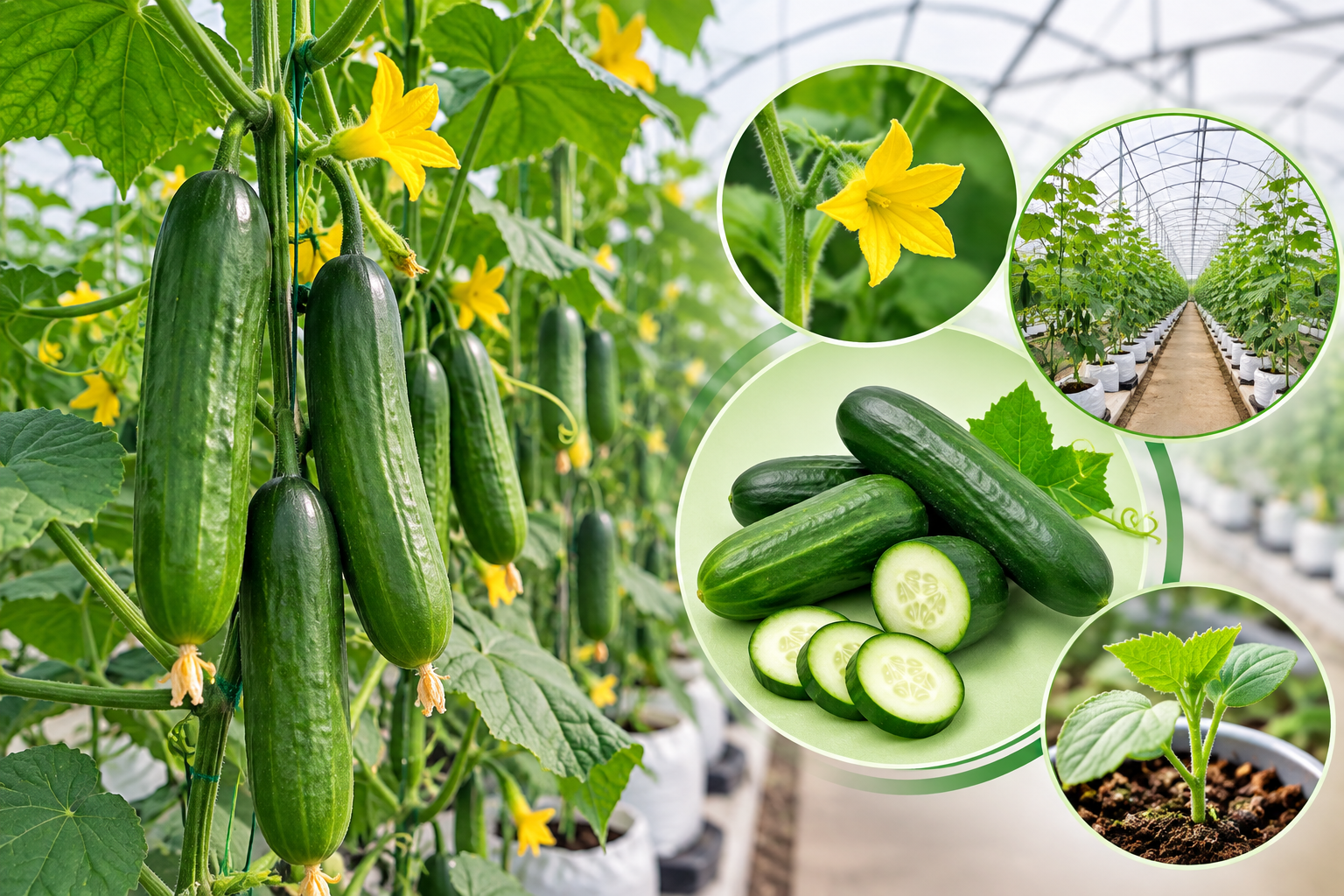
An investigation was conducted to identify the most desirable genotypes of parthenocarpic cucumber under protected cultivation. Experimental material consists of 23 genotypes of parthenocarpic cucumber including 1 check (KPCH-1) and the experiment was laid out in three replications with support of Randomized Block Design. ANOVA revealed significant differences among the genotypes for 17 traits. Based on the genotypes' mean performance for all traits investigated, m earliest days to first flower (26.80) and minimum inter-nodal length (7.22 cm) was observed in genotype BRPCU-1×BRPCU-8, whereas maximum number of flowers per node (2.20), number fruits per vine (31.47) and yield per vine (3.96 kg) was observed in genotype BRPCU-1×BRPCU-8. The lowest node to the first flower (3.27) was observed in genotype BRPCU-2×BRPCU-7. Earliest days to first picking (39.80 days) whereas highest TSS (3.87 °Brix) and longest span of harvesting (58.67 days) was noted in genotype in BRPCU-2×BRPCU-5. The highest average fruit weight was recorded in genotype BRPCU-2×BRPCU-8 (143.07 g), while the highest fruit length was observed in genotype BRPCU-5 (20.73 cm). Genotype BRPCU-3×BRPCU-8 (3.90 cm) had maximum fruit diameter. Maximum vine length was recorded in BRPCU-6×BRPCU-7 (3.15 m). The best top-performing genotypes identified in the present study were BRPCU-1×BRPCU-8, BRPCU-2×BRPCU-5, and BRPCU-3×BRPCU-8 were superior for most of the fruit yield components and quality traits.
References
[1] U. Afangideh and E. A. Uyoh (2007). Genetic variability and correlation studies in some varieties of cucumber (Cucumis sativus L.). Jordan J. Agric. Sci, 3: 376-384.
[2] M. Golabadi, P. Golkar and A. R. Eghteda (2012). Assessment of genetic variation in cucumber (Cucumis sativus L.) genotypes. Eur. J. Exp. Biol., 2: 1382-1388.
[3] G. V. Nagamani, J. S. A. Kumar, T. B. M. Reddy, A. M. Rajesh, H. Amarananjundeswara , R. L. R. Reddy and B. Doddabasappa (2019). Performance of different parthenocarpic cucumber (Cucumis sativus L.) hybrids for yield and yield attributing traits under shade net house. Int. J. Curr. Microbiol. App. Sci., 8: 978-982.
[4] K. N. Shah, D. K. Rana and V. Singh (2018). Evaluation of genetic variability, heritability and genetic advance in cucumber (Cucumis sativus L.) for various quantitative, qualitative and seed characters. Int. J. Curr. Microbiol. App. Sci., 7(SI): 3296-3303.
[5] S. S. Singh, G. C. Yadav and K. Kathayat (2018). Study of genetic variability in cucumber. J. Hill Agric., 9: 39-43.
[6] H. Choudhary, D. K. Singh and S. R. Damke (2015). Genetic variability in Cucumis sativus var. hardwickii key to cucumber improvement. Int. j. Basic appl. agric. res., 13: 340-343.
[7] P. Mehta and P. Sharma (2020). Genetic evaluation for fruit yield and related traits in parthenocarpic cucumber. Int. J. Curr. Microbiol. App. Sci., 9: 1388-1404.
[8] N. Pushpalatha, M. Anjanappa, V. Devappa and M. Pitchaimuthu (2016). Genetic variability and heritability for growth and yield in cucumber (Cucumis sativus L.). J. Hortic. Sci., 11: 33-36.
[9] R. Kandasamy (2017). Variability studies in cucumber (Cucumis sativus L.). Asian J. Hort., 12: 84-87.
[10] Bhagwat, V. Srinivasa, S. Bhammanakati and A.S. Shubha (2018). Evaluation of cucumber (Cucumis sativus L.) genotypes under hill zone of Karnataka, India. Int. J. Curr. Microbiol. App. Sci., 7: 837-842.
[11] A. G. Gaikwad, A. M. Musmade, S. S. Dhumal and H. G. Sonawane (2011). Variability studies in cucumber (Cucumis sativus L.). Eco. Env. Cons., 17: 799-802.
[12] S. Pal, H. R. Sharma, A. K. Rai and R. K. Bhardwaj (2016). Genetic variability, heritability and genetic gain for yield and quality traits in cucumber (Cucumis sativus L.). Bioscan, 11: 1985-1990.
[13] J. P. Kumar, S. Syed, S. S. S. P. Reddy, M. L. Lakshmi and D. S. Reddy (2018). Studies on correlation and path-coefficient analysis for yield and its contributing characters in Cucumber (Cucumis sativus L.). Int. J. Chem. Stud., 6: 1649-1653.
[14] P. Ranjan, K. K. Gangopadhyay, M.K. Bag, A. Roy, R. Srivastava, R. Bhardwaj and M. Dutta (2015). Evaluation of cucumber (Cucumis sativus L.) germplasm for agronomic traits and disease resistance and estimation of genetic variability. Indian J. Agric. Sci., 85: 234 239.
[15] K. Pragathi (2014). Evaluation of cucumber (Cucumis sativus L.) hybrids for production potential and qualitative traits under net house conditions. M.Sc. Thesis, Department of Vegetable Science, Dr. Y. S. R. Horticultural University, Anantharajupet. pp1-125.
Downloads
Published
Issue
Section
License
Copyright (c) 2024 Author (s)

This work is licensed under a Creative Commons Attribution-NonCommercial-NoDerivatives 4.0 International License.
Copyright © The Author(s). Effective from 1 July 2026, articles published in Emergent Life Sciences Research (ELSR) are distributed under the Creative Commons Attribution 4.0 International License (CC BY 4.0), which permits use, sharing, distribution, reproduction, and adaptation in any medium or format, provided that appropriate credit is given to the original author(s) and the source, a link to the license is provided, and any changes made are indicated.
Articles published before 1 July 2026 remain subject to the license applicable at the time of their original publication, including the Creative Commons Attribution-NonCommercial-NoDerivatives 4.0 International License (CC BY-NC-ND 4.0), where applicable.