Development and validation of QuEChERS method for neonicotinoids in cotton
DOI:
https://doi.org/10.31783/elsr.2019.51817Keywords:
cotton, HPLC, neonicotinoids, QuEChERS, validationAbstract
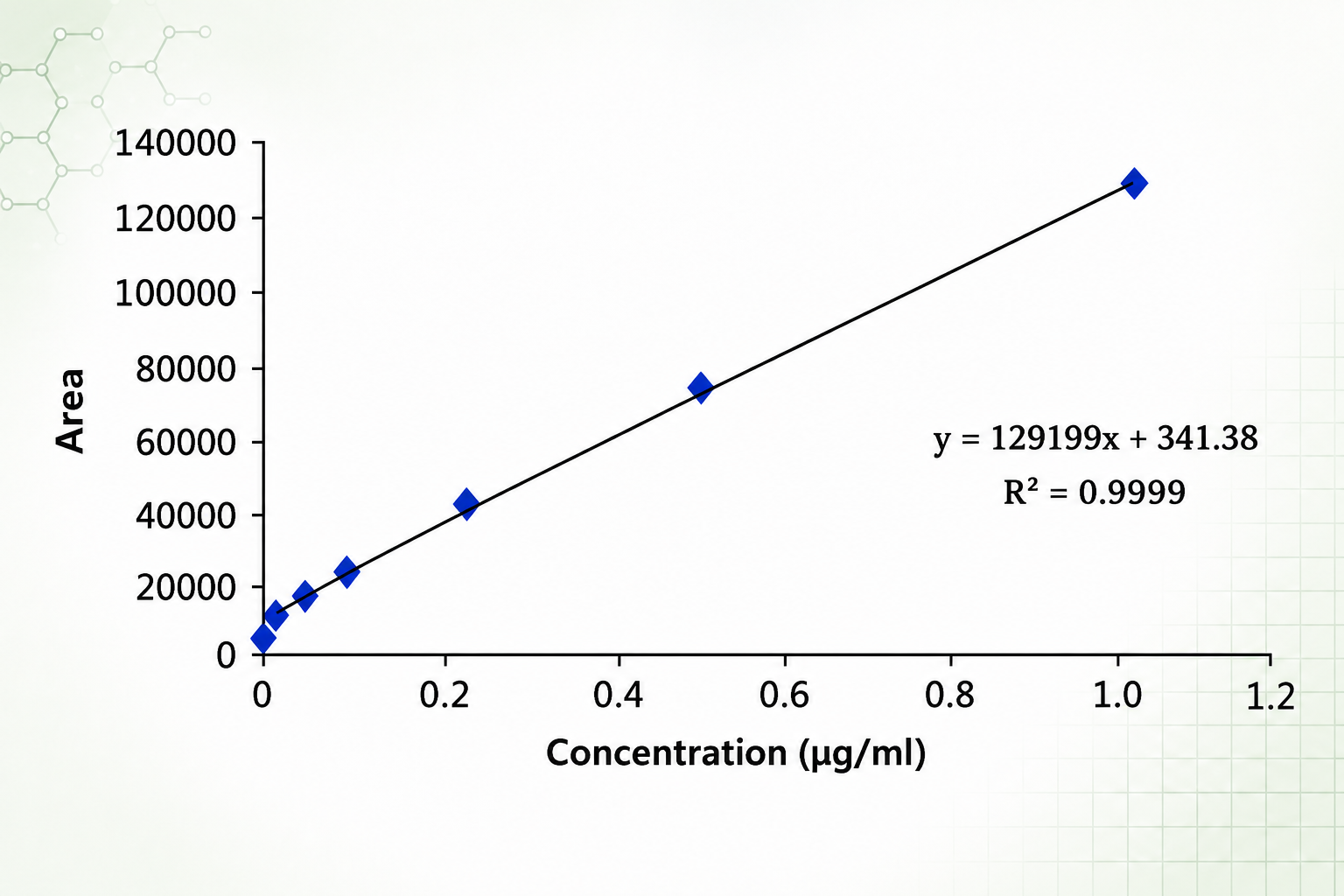
Simple and efficient analytical method was standardized and validated for the estimation of residues of three neonicotinoids viz. imidacloprid, thiacloprid and thiamethoxam on cotton leaves, flowers, nectariferous tissue and pollen. The samples were spiked with the standards at 0.01, 0.25 and 0.50 mg/kg levels. Acetonitrile was used for the extraction of the pesticides from the respective commodity and QuEChERS method involving the use of dispersive-solid phase extraction (DSPE) was employed for the sample clean-up. The clear extract in acetonitrile obtained was further used for the quantification of all the three pesticides with High Performance Liquid Chromatography (HPLC) equipped with PDA detector and C18 column. HPLC grade acetonitrile, water (70:30 v/v) was used as a mobile phase at 0.30 ml/min. Distinct peaks at retention time of 16.07, 22.24 and 13.06 min were obtained for imidacloprid, thiacloprid and thiamethoxam, respectively. The consistent recoveries above 80 percent were obtained for all the substrates at different spiking levels. Selectivity, linearity, lower limit of quantitation, precision and accuracy were also evaluated during the validation of the methodology.
References
[1] K. Matsuda, M. Shimomura, M. Ihara, M. Akamatsu and D.B. Sattelle (2005). Neonicotinoids show selective and diverse actions on their nicotinic receptor targets: electrophysiology, molecular biology, and receptor modeling studies. Biosci. Biotech. Biochem., 69: 1442-1452.
[2] P. Jeschke, R. Nauen, M. Schindler and A. Elbert (2011). Overview of the status and global strategy for neonicotinoids. J. Agri. Food Chem., 59: 2897-2908.
[3] V. Magesh, Z. Zhu, T. Tang, S. Chen, L. Li, L. Wang and K. K. Verma et al., (2011). Toxicity of neonicotinoids to honey bees and detoxification mechanism in honey bees. J. Environ. Sci. Toxicol. Food Tech., 11: 102-110.
[4] B. A. Woodcock, J. M. Bullock, R. F. Shore, M. S. Heard, M. G. Pereira, J. Redhead, L. Ridding et al., (2017). Country-specific effects of neonicotinoid pesticides on honeybees and wild bees. Science, 356: 1393-1395.
[5] T. Iwasa, N. Motoyama, J. T. Ambrose and R. M. Roe (2004). Mechanism for the differential toxicity of neonicotinoid insecticides in the honeybee. Crop Prot., 23: 371-378.
[6] F. Zhang, Y. Li, C. Yu and C. Pan (2012). Determination of Six Neonicotinoid Insecticides Residues in Spinach, Cucumber, Apple and Pomelo by QuEChERS Method and LC–MS/MS. Bull. Env. Contam. Toxicol., 88: 885-890.
[7] S. Liu, Z. Zheng, F. Wei, Y. Ren, W. Gui, H. Wu and G. Zhu (2010). Simultaneous determination of seven neonicotinoid pesticide residues in food by ultraperformance liquid chromatography tandem mass spectrometry. J. Agri. Food Chem., 58: 3271-3278.
[8] M.P. Galeano, M. Scordino, L. Sabatino, V. Pantò, G. Morabito, E. Chiappara and P. Traulo et al., (2013). UHPLC/MS-MS Analysis of Six Neonicotinoids in Honey by Modified QuEChERS: Method Development, Validation, and Uncertainty Measurement. Int. J. Food Sci., 2013: 863904. doi: 10.1155/2013/863904
[9] C. Mohan, Y. Kumar, J. Madan, N. Saxena and D. Lal (2009). Simultaneous evaluation of neonicotinoids in cotton seed cake using reverse phase high-performance liquid chromatography. J. Sci. Food Agric., 89: 1250-1252.
[10] G. Codling, Y.A. Naggar, J.P. Giesy and A.J. Robertson (2016). Concentrations of neonicotinoid insecticides in honey, pollen and honey bees (Apis mellifera L.) in central Saskatchewan, Canada. Chemosphere 144: 2321-2328.
[11] G. Jyot and B Singh (2017). Development and Validation of an HPLC Method for Determination of Thiamethoxam and Its Metabolites in Cotton Leaves and Soil. J. AOAC Int., 100: 796-803.
[12] S.K. Sahoo, (2015). Uptake and metabolism of imidacloprid in cotton (Gossypium hirsutum Linn.) and its persistence in soil PhD dissertation, Punjab Agricultural University. http://krishikosh.egranth.ac.in/bitstream/1/5810015908/1/PAU-Sanjay%20Kumar%20Sahoo.pdf
[13] SANTE (2017). Document No. SANTE/11813/2017, Method Validation and Quality Control Procedures for Pesticide Residues Analysis in Food and Feed https://ec.europa.eu/food/sites/food/files/plant/docs/pesticides_mrl_guidelines_wrkdoc_2017-11813.pdf
Downloads
Published
Issue
Section
License
Copyright (c) 2019 Author (s)

This work is licensed under a Creative Commons Attribution-NonCommercial-NoDerivatives 4.0 International License.
Copyright © The Author(s). This is an open access article distributed under the terms of the Creative Commons Attribution-NonCommercial-NoDerivatives 4.0 International License (CC BY-NC-ND 4.0), which permits unrestricted non-commercial use, distribution, and reproduction in any medium, provided the original author(s) and source are properly credited, and the work is not modified or adapted.