Jasminum multiflorum (Burm. f.) Andrews (Oleaceae) - a new host plant record for Saissetia coffeae (Walker) (Coccidae: Hemiptera) from Assam, India
DOI:
https://doi.org/10.31783/elsr.2019.511822Keywords:
ornamental plants, pests, polyphagy, sap sucker, scale insectAbstract
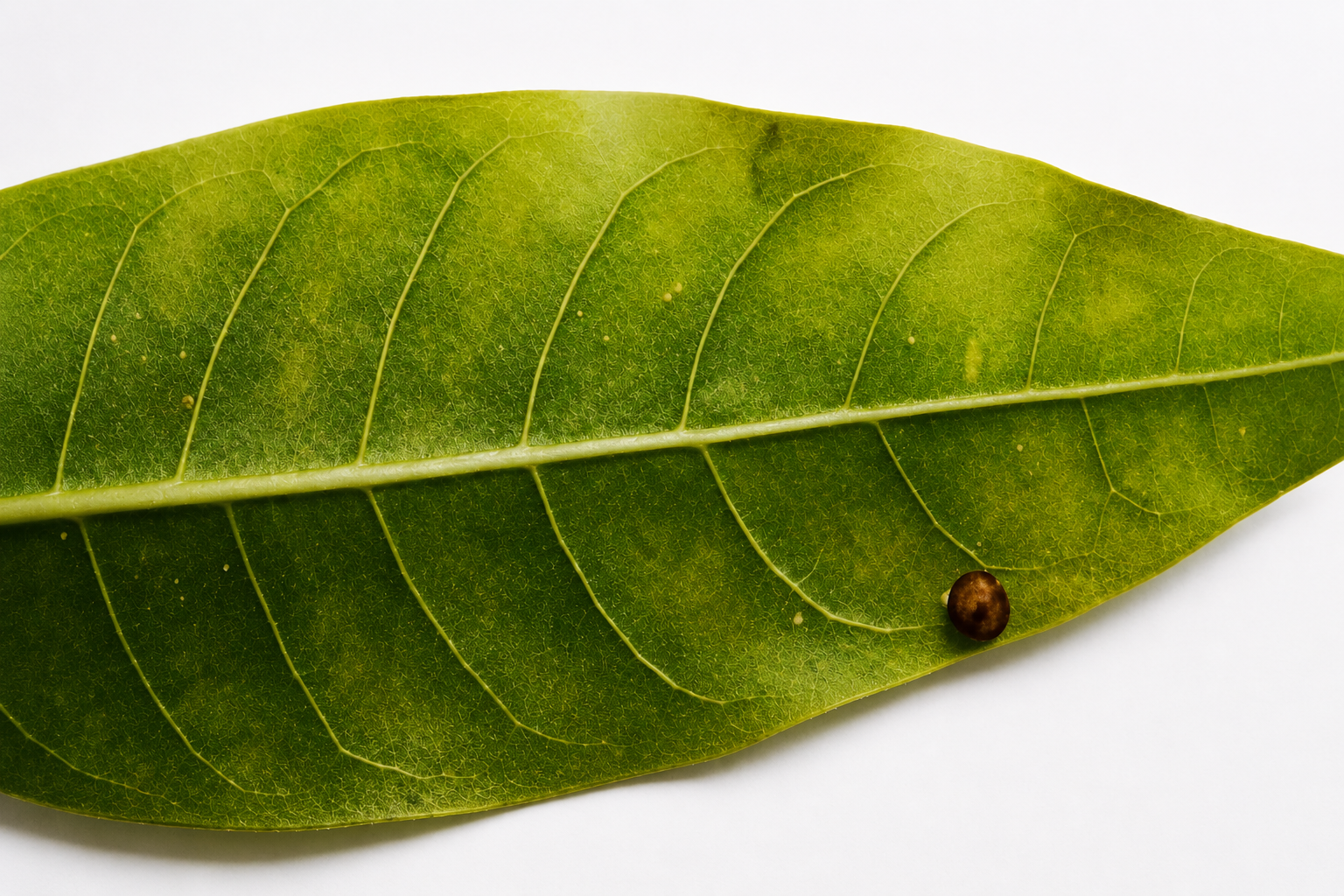
Jasminum multiflorum (Burm.f.) Andrews, alternately known as winter jasmine, Indian jasmine, downy jasmine and/ or star jasmine is reported for the first time as a host for the hemispherical scale insect Saissetia coffeae (Walker) from Assam, India.
References
[1] P. J. Gullan and J. H. Martin (2009). Sternorrhyncha:(Jumping Plant-Lice, Whiteflies, Aphids, and Scale Insects). In Encyclopedia of insects (pp. 957-967). Academic Press.
[2] P. J. Gullan and L. G. Cook (2007). Phylogeny and higher classification of the scale insects (Hemiptera:Sternorrhyncha:Coccoidea). Zootaxa, 1668: 413-425.
[3] A Dziedzicka (1988). Welnowce szklarniowe (Homoptera, Coccinea, Pseudococcidae) [in Polish]. Zeszyty Problemowe Postępów Nauk Rolniczych, 333: 87-91.
[4] M. Kosztarab (1996). Scale insects of northeastern North America: identification, biology, and distribution. Virginia Museum of Natural History.
[5] P. J. Gullan, Y. Ben-Dov and C. J. Hodgson (1997). Soft Scale Insects-Their Biology, Natural Enemies and Control.
[6] R. C. Henderson, A. Sultan and A. W. Robertson (2010). Scale insect fauna (Hemiptera: Sternorrhyncha:Coccoidea) of New Zealand’s pygmy mistletoes (Korthalsella: Viscacea) with description of three new species: Leucapsis albotecta, L. trilobata (Diaspididae) and Eriococcus korthalsellae (Eriococcidae). Zootaxa, 2644: 1-24.
[7] P. S. Green (1965). The name jasmine. Arnoldia, 25: 71-74.
[8] S. K. Bhattacharjee (1980). Native jasmines of India. Indian Perfumer.
[9] P. S. Green (2004). Oleaceae. In: J. W. Kadereit, (Ed.) The families and genera of vascular plants Volume VII Flowering Plants: Dicotyledons: Lamiales (except Acanthaceae including Avicenniaceae), Springer-Verlag, Berlin, Germany, pp. 296-306.
[10] A. B. Rendle (1925). The Classification of Flowering Plants: Volume 2, Dicotyledons (Vol. 2). CUP Archive.
[11] L. H. Bailey (1958). Manual of cultivated plants. Revised Edition. Revised Edition.
[12] P. Veluswamy, T. Thangaraj and S. Muthuswamy (1975). A study on germination of seeds of some Jasminum species and clones. S. Indian Hort., 23: 71-72.
[13] J. D. Hooker (1897). The Flora of British India (Vol. 7). L. Reeve.
[14] S. K. Jain and R. A. De Filipps (1991). Medicinal plants of India. Reference Publications.
[15] L. M. Perry and J. Metzger (1980). Medicinal Plants of East and South-East Asia: Attributed Properties and Uses. MIT Press.
[16] C. J. Hodgson and R. C. Henderson (2000). Coccidae (Insecta: Hemiptera: Coccoidea). Fauna of New Zealand, 41.
[17] D. Nafus (2000). Hemispherical scale Insect (Saissetia coffeae [Walker]) Agricultural Pests of the Pacific. ADAP, Honolulu, US. https://www.ctahr.hawaii.edu/adap/Publications/ADAP_pubs/2000-8.pdf (accessed on 19 July, 2016).
[18] CABI (2017). Saissetia coffeae (hemispherical scale). In: Invasive Species Compendium. Wallingford, UK: CAB International. http://www.cabi.org/isc/datasheet/48202 (accessed on 19 July, 2016).
[19] CABI (2018). Jasminum multiflorum (star jasmine). In: Invasive Species Compendium https://www.cabi.org/isc/datasheet/115016 (accessed on 05 July, 2018).
[20] Conservation Interbnational (2004). Hot Spots Revisited. https://biodiversityhotspots.org/XP/hotspots/himalaya (accessed on 05 July 2018)
Downloads
Published
Issue
Section
License
Copyright (c) 2019 Author (s)

This work is licensed under a Creative Commons Attribution-NonCommercial-NoDerivatives 4.0 International License.
Copyright © The Author(s). This is an open access article distributed under the terms of the Creative Commons Attribution-NonCommercial-NoDerivatives 4.0 International License (CC BY-NC-ND 4.0), which permits unrestricted non-commercial use, distribution, and reproduction in any medium, provided the original author(s) and source are properly credited, and the work is not modified or adapted.