Silver nanoparticles: magic bullets of agriculture
DOI:
https://doi.org/10.31783/elsr.2019.514247Keywords:
agriculture, antimicrobial, bio-efficacy, nanoparticles, silverAbstract
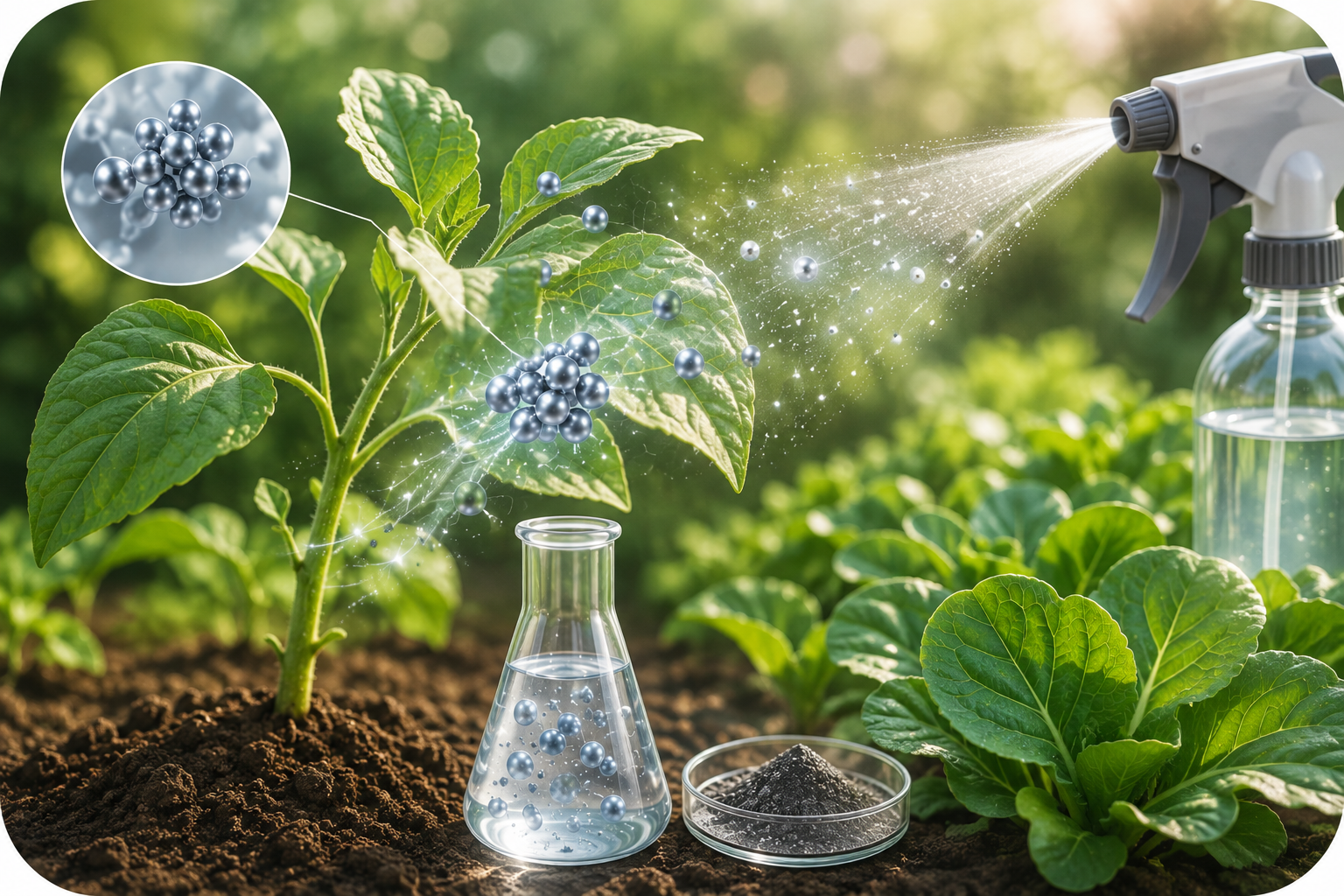
Silver nanoparticles have well-evolved as antimicrobial agents and a nano-drug carrier with enormous success in the field of medicine. The particles act as magic bullets that carry the active ingredient along with it, prompting the synergistic outcomes with dual functionary. The particles are also setting up in the field of agriculture and are supposed to bring a new era of agrochemicals. A lot of work has been done and significant work is under the process, but no compilation about the impact of the work is done to give a better vision. Thus, the present article was designed to give an insight into the applications of modified and unmodified silver nanoparticles in agriculture.
References
[1] M. Ahamed, M. S. Alsalhi and M. K. Siddiqui (2010). Silver nanoparticle applications and human health. Clin. Chim. Acta, 411: 1841-1848.
[2] S. L. Harper, J. Hutchison, B. L. Maddux and R. L. Tanguay (2010). Integrative strategies to understand nanomaterial biological interactions. International perspectives on environmental nanotechnology: applications and implications. 2: 51-56.
[3] M. N. A. Hasaneen, H. M. M. Abdel-Aziz, D. M. A. El-Bialy and A. M. Omer (2014). Prepration of chitosan nanoparticles for loading with NPK fertilizer. Afr. J. Biotechnol., 13: 3158-3164.
[4] T. K. Barik, B. Sahu and V. Swain (2008). Nano-silica from medicine to pest control. Parasitol. Res., 103: 253-258.
[5] M. Gajbhiye, J. Kesharwani, A. Ingle, A. Gade and M. Rai (2009). Fungus mediated synthesis of silver nanoparticles and its activity against pathogenic fungi in combination of fluconazole. Nanomedicine, 5: 382-386.
[6] A. Goswami, I. Roy, S. Sengupta and N. Debnath (2010). Novel applications of solid and liquid formulations of nanoparticles against insect pests and pathogens. Thin Solid Films, 519: 1252-1257.
[7] O. F. Owolade, D. O. Ogunleti and M. O. Adenekan (2008). Titanium dioxide affects disease development and yield of edible cowpea. Electronic J. Environ., Agri. Food Chem., 7: 2942-2947.
[8] B. S. Sekhon (2014). Nanotechnology in agri-food production: An overview. Nanotechnol. Sci. Appl., 7: 31-53.
[9] M.R. De Moura, F.A. Aouda and L.H.C. Mattoso (2008). Preparation of chitosan nanoparticles using methacrylic acid. J. Colloid Interface Sci. 321: 477-83.
[10] Y. Ju-Nam and J. R. Lead (2008). Manufactured nanoparticles: an overview of their chemistry, interactions and potential environmental implications. Sci. Total Environ., 400: 396-414.
[11] P. Bordes, E. Pollet and L. Averous (2009). Nano-biocomposites: biodegradable polyester/nanoclay systems. Prog. Polym. Sci., 34: 125-155.
[12] G. Scrinis and K. Lyons (2007). The emerging nano-corporate paradigm: nanotechnology and the transformation of nature, food and agrifood systems. Int. J. Sociology Food Agri., 15: 22-44.
[13] M. Sharon, A. Kr. Choudhary and R. Kumar (2010). Nanotechnology in agricultural diseases and food safety. J. Phytol., 2: 83-92.
[14] H. Bouwmeester, S. Dekkers, M. Y. Noordam, W. I. Hagens, A. S. Bulder, C. Heer and S. E.C.G.ten Voorde et al. (2009). Review of health safety aspects of nanotechnologies in food production. Regul. Toxicol. Pharmacol., 53: 52-62.
[15] R. Nair, S. H. Varghes, B. G. Nair, T. Maekawa, Y. Yoshida and D. S. Kumar (2010). Nanoparticulate material delivery to plants. Plant Sci., 179: 154-163.
[16] L. L. Bergeson (2010). Nanosilver: US EPA’s pesticide office considers how best to proceed. Environmental Quality Management, 19: 79-85.
[17] Jianhui Yan, K. Huang, Y. Wang and S. Liu (2005). Study on anti-pollution nano preparation of dimethomorph and its performance. Chin. Sci. Bull., 50: 108-112.
[18] A. Ravindran, P. Chandran and S. S. Khan (2013). Biofunctionalized silver nanoparticles: advances and prospects. Colloids Surf. B Biointerfaces, 105: 342-352.
[19] S. Y. Yeo, H. J. Lee and S. H. Jeong (2003). Preparation of nanocomposite fibers for permanent antibacterial effect. J. Mater. Sci., 38: 2143-2147.
[20] P. S. Stewart and J. W. Costerton (2001). Antibiotic resistance of bacteria in biofilms. Lancet, 358: 135-138.
[21] J. Fabrega, S. N. Luoma, C. R. Tyler, T. S. Galloway and J. R. Lead (2011). Silver nanoparticles: behaviour and effects in the aquatic environment. Environ. Int., 37: 517-531.
[22] C. N. Lok, C. M. Ho and R. Chen (2006). Proteomic analysis of the mode of antibacterial action of silver nanoparticles. J. Proteom. Res., 5: 916-924.
[23] H. C. Neu (1992). The crisis in antibiotic resistance. Science, 257: 1064-1073.
[24] M. M. Priya, B. K. Selvi and J. Paul (2011). Green Synthesis of silver nanoparticles from the leaf extracts of Euphorbiahirta and Neriumindicum. Dig. J. Nanomater. Biostruct. 6: 869-77.
[25] C. Marambio-Jones and E. M. V. Hoek (2010). A review of the antibacterial effects of silver nanomaterials and potential implications for human health and the environment. J. Nanopart. Res., 12: 1531-1551.
[26] A. Sidhu, S. R. Ghatelwal, K. Gumber and A. Bala (2017). Augmented antifungal potential of benzothiazol-2-ylcarbamodithioates as hybrid-silver aqua nanoformulations. Appl. Nanosci., 7: 617-623.
[27] Y.-K. Jo, B.H. Kim and G. Jung (2009). Antifungal activity of silver ions and nanoparticles on phytopathogenic fungi. Plant Dis., 93: 1037-1043.
[28] S. W. Kim, J. H. Jung, K. Lamsal, Y. S. Kim, J. S. Min and Y. S. Lee (2012). Antifungal effects of silver nanoparticles (AgNPs) against various plant pathogenic fungi. Mycobiology, 40: 53-58.
[29] I. Ocsoy, M.L. Paret, M.A. Ocsoy, S. Kunwar, T. Chen, M. You and W. Tan (2013). Nanotechnology in plant disease management: DNA-directed silver nanoparticles on graphene oxide as an antibacterial against Xanthomonas perforans. ACS Nano, 7: 8972-8980.
[30] M. Y. Babu, V. J. Devi, C. M. Ramakritinan, R. Umarani, N. Taredahalli and A. K. Kumaraguru (2014). Application of biosynthesized silver nanoparticles in agricultural and marine pest control. Curr. Nanosci., 10: 374-381.
[31] K. B. Narayanan and H. H. Park (2014). Antifungal activity of silver nanoparticles synthesized using turnip leaf extract (Brassica rapa L.) against wood rotting pathogens. Eur. J. Plant Pathol., 140: 185-192.
[32] S. Mishra, B. R. Singh, A. Singh, C. Keswani, A. H. Naqvi and H. B. Singh (2014). Biofabricated silver nanoparticles act as a strong fungicide against Bipolaris sorokiniana causing spot blotch disease in wheat. PLoS ONE, 9: e97881. doi:10.1371/journal.pone.0097881.
[33] V. Mahdizadeh, N. Safaie and F. Khelghatibana (2015). Evaluation of antifungal activity of silver nanoparticles against some phytopathogenic fungi and Trichoderma harzianum. J. Crop Prot., 4: 291-300.
[34] Z. K. Xia, Q. H. Ma, S. Y. Li, D. Q. Zhang, L. Cong, Y. L. Tian, R. Y. Yang (2016). The antifungal effect of silver nanoparticles on Trichosporon asahii. J. Microbiol. Immunol. Infect., 49: 182-188.
[35] A. M. Elgorban, A. E. R. M. El-Samawaty, M. A. Yassin, S. R. Sayed, S. F. Adil, K. M. Elhindi and M. Bakri et al. (2016). Antifungal silver nanoparticles: synthesis, characterization and biological evaluation. Biotechnol. Biotechnol. Equip., 30: 56-62.
[36] V. M. Varghese, R. S. Dhumal, S. S. Patil, A. R. Paradkar and P. K. Khanna (2009). Synthesis and In-vitro antimycobacterial studies of cysteine capped silver nano-particles. Synth. React. Inorg. Met.-Org. Nano-Metal Chem., 39: 554-558.
[37] S. S. Naz, M. R. Shah, N. U. Islam, A. Khan, S. Nazir, S. Qaisar and S. S. Alam (2014). Synthesis and bioactivities of silver nanoparticles capped with 5-Amino-β-resorcylic acid hydrochloride dehydrate. J. Nanobiotechnology, 12: 34. doi: 10.1186/s12951-014-0034-8.
[38] S.M. Ali, N.M.H. Yousef and N.A. Nafady (2015). Application of biosynthesized silver nanoparticles for the control of land snail Eobania vermiculata and some plant pathogenic fungi. J. Nanomater., doi: 10.1155/2015/218904.
[39] S. S. Hojjat (2015). Impact of silver nanoparticles on germinated fenugreek seed. Int. J. Agri. Crop Sci., 8: 627-630.
[40] Pallavi, C. M. Mehta, R. Srivastava, S. Arora and A. K. Sharma (2016). Impact assessment of silver nanoparticles on plant growth and soil bacterial diversity. 3Biotech. 6: 254. doi: 10.1007/s13205-016-0567-7.
[41] M. Rouhani, M.A. Samih and S. Kalantari (2012). Insecticide effect of silver and zinc nanoparticles against Aphis nerii boyer de fonscolombe (hemiptera: aphididae). Chil. J. Agr. Res., 72: 590-594.
Downloads
Published
Issue
Section
License
Copyright (c) 2019 Author (s)

This work is licensed under a Creative Commons Attribution-NonCommercial-NoDerivatives 4.0 International License.
Copyright © The Author(s). This is an open access article distributed under the terms of the Creative Commons Attribution-NonCommercial-NoDerivatives 4.0 International License (CC BY-NC-ND 4.0), which permits unrestricted non-commercial use, distribution, and reproduction in any medium, provided the original author(s) and source are properly credited, and the work is not modified or adapted.