Utilization of oil palm wastes for vermicomposting
DOI:
https://doi.org/10.31783/elsr.2019.516772Keywords:
biomass, organic manure, palm, vermicompostAbstract
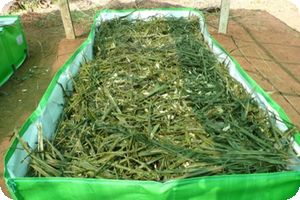
Recycling of organic wastes from gardens by converting them into stabilized decomposed products known as compost or organic manure is the basis for sustainable crop production systems. Compost not only supplies plant nutrients but also improves the soil physico-chemical properties and support the activities of beneficial microorganisms and soil fauna. High vegetable oil yield potential (4-6 t ha-1 of oil) of Oil Palm (Elaeis guineensis Jacq.) has been one of the the main driving forces behind promoting this crop for cultivation under irrigated conditions by the Government of India. The yield levels of 4-6 tonnes ha-1 of oil are possible provided the crop is supplied with all the necessary inputs. With an oil yield of 4-6 tonnes which accounts for about 20 % of the fresh fruit bunches (FFB), the total biomass that is harvested in the form of FFB will be 25 tonnes or more.
References
[1] V. M. Reddy (1997). Management of major and secondary nutrients in Oil Palm – A Review. In. Proc. of workshop on Nutrient management of Oil Palm Plantation in South India. July, 1997 at Hyderabad.
[2] U. Omoti (1989). Fertilizer use economy in Oil Palm plantations in Nigeria through nutrient recycling. In: Proc. Int.Conf on palm and Palm Products. Dupes, Benin City, Nigeria.
[3] P. T. Varghese, S. Sunitha and K. U. K. Nampoorthiri (2007). Integrated plant nutrient management in oil palm plantation through recycling of palm wastes. Recent Advances in Plantation Crops Research, pp130-133.
[4] M. S. Gawankar, R. C. Gajbhiye and S. Arulraj (2010). Nutritional requirement of oil palm in Konkan region. J. Plant. Crops, 38: 183-l87.
Downloads
Published
Issue
Section
License
Copyright (c) 2019 Author (s)

This work is licensed under a Creative Commons Attribution-NonCommercial-NoDerivatives 4.0 International License.
Copyright © The Author(s). This is an open access article distributed under the terms of the Creative Commons Attribution-NonCommercial-NoDerivatives 4.0 International License (CC BY-NC-ND 4.0), which permits unrestricted non-commercial use, distribution, and reproduction in any medium, provided the original author(s) and source are properly credited, and the work is not modified or adapted.