Evaluation of biochemical, antioxidant and antibacterial properties of cow urine
DOI:
https://doi.org/10.31783/elsr.2019.520107Keywords:
antibacterial, antioxidant, cow urine, DPPH, paper chromatographyAbstract
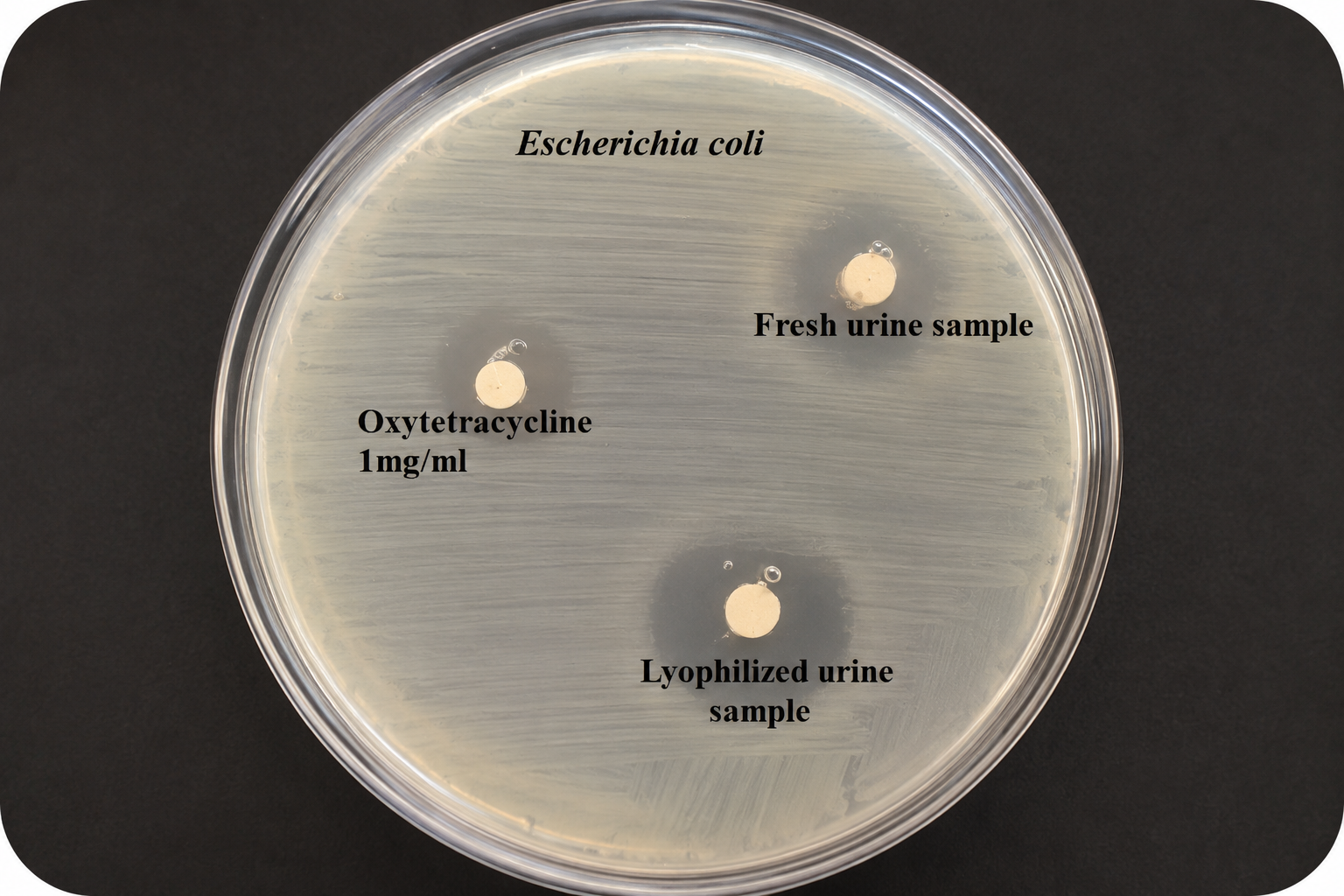
Cow urine is considered to possess immense therapeutic properties. The aim of the study was to evaluate the biochemical, antioxidant and antimicrobial potential of cow urine. We have used paper chromatography, DPPH antioxidant assay as well as disc diffusion assay to establish the presence of amino acids in the urine and also to portray its antimicrobial and antioxidant potential. We have been able to identify arginine, glutamine and serine in the cow urine. Cow urine proved to be an effective antibacterial agent as depicted by the zone of inhibition in disc diffusion assay. DPPH assay confirms cow urine as a potent antioxidant. The study concludes that cow urine can be used as an effective antimicrobial as well as antioxidant.
References
[1] G. S. Pandey (2009). Chunekar, K. C. Bhav Prakash Nighantu (Indian Materia Medica) of Sri Bhavamisra (c. 1600-1600 AD)-Ath Mutravargh, 18.
[2] R. S. Chauhan and N. Garg (2003). Cow therapy as an alternative to antibiotic. presented at the Indian Science Congress, Bangalore, Karnataka.
[3] S. Raad, D. V. Deshmukh, S. N. Harke and M. S. Kachole (2013). Antibacterial activity of cow urine against some pathogenic and non- pathogenic bacteria. Int. J. Pharmaceutical Sciences Res., 4: 1534-1539.
[4] S. P. S. Khanuja, S. Kumar, A. K. Shasany, J. S. Arya, M. P. Darokar, M. Singh and Prachi Sinha et al., (2002). U.S. Patent No. 6,896,907. Washington, DC: U.S. Patent and Trademark Office.
[5] L. S. Praba, M. Gnanasaraswathi, J. R. P. Rajadurai, N. Ramya and D. S. Nandhini (2015). Potential source of fresh and photoactivated gomutra for study of antioxidant and antipathogenic activities against various pathogens. Asian J Pharm Clin Res., 8: 459-462.
[6] V. Thongboonkerd, K. R. McLeish, J. M. Arthur and J. B. Klein (2002). Proteomic analysis of normal human urinary proteins isolated by acetone precipitation or ultracentrifugation. Kidney Int., 62: 1461-1469.
[7] N. S. Rudolph (1999). Biopharmaceutical production in transgenic livestock. Trends Biotechnol., 17: 367-374.
[8] J. Adachi, C. Kumar, Y. Zhang, J. V. Olsen and M. Mann (2015). The human urinary proteome contains more than 1500 proteins, including a large proportion of membrane proteins. Genome Biol., 7: R80.
[9] S. P. S. Khanuja, S. Kumar, A. K. Shasany, J. S. Arya, M. P. Darokar, M. Singh and P. Sinha et al., (2005). Use of bioactive fraction from cow urine distillate (‘go-mutra’) as a bio-enhancer of anti-infective, anti-cancer agents and nutrients. US6896907B2.
[10] M. Karsheva, E. Kirova and S. Alexandrova (2013). Natural antioxidants from citrus mandarin peels. extraction of polyphenols; effect of operational conditions on total polyphenols contents and antioxidant activity. J. Chem. Technol. Metall., 48: 35-41.
[11] A. B. Aliyu, H. Ibrahim, A. M. Musa, M. A. Ibrahim, A. O. Oyewale and J. O. Amupitan (2010). In vitro evaluation of antioxidant activity of Anisopus mannii N.E. Br. Afr. J. Biotechnol., 9: 2437-2441.
[12] E. Jarald, S. Edwin, V. Tiwari, R. Garg and E. Toppo (2008). Antioxidant and antimicrobial activities of cow urine. Global J. Pharmacol., 2: 20-22.
[13] F. P. Minocheherhomji and B. M. Vyas (2014). Study of the antimicrobial activity of cow urine and medicinal plant extracts on pathogenic human microbial strains. Int. J. Adv. Pharm. Biol. Chem., 3: 836-840.
[14] K. T. R. Prashith, B. C. Nishanth, K. S. V. Praveen, D. Kamal, M. Sandeep and H. K. Meghraj (2010). Cow urine concentrate: a potent agent with antimicrobial and anthelmintic activity. J. Pharm. Res., 3:1025-1027.
[15] O. H. Lowry, N. J. Rosebrough, A. L. Farr and R. J. Randall (1951). Protein measurement with the Folin phenol reagent. J. Biol. Chem., 193: 265-275.
[16] M. R. Saha, S. M. R. Hasan, R. Akter, M. M. Hossain, M. S. Alam, M. A. Alam and M. E. H. Mazumder (2008). In vitro free radical scavenging activity of methanol extract of the leaves of Mimusops elengi Linn. Bangl. J. Vet. Med., 6: 197-202.
[17] S. Vats and K. Miglani (2011). Synergistic antimicrobial effect of cow urine and Azadirachta indica on infectious microbes. Int. J. Parmaceutical Sci. Res., 2: 1781-1785.
[18] S. H. Marshall and G. Arenas (2003). Antimicrobial peptides: A natural alternative to chemical antibiotics and a potential for applied biotechnology. Electron. J. Biotechnol., 6: 271-284.
[19] J. Awapara and Y. Sato (1956). Paper chromatography of urinary amino acids. Clin. Chim. Acta, 1: 75-79.
[20] M. Badadani, S. V. Suresh Babu and K. T. Shetty (2007). Optimum conditions of autoclaving for hydrolysis of proteins and urinary peptides of prolyl and hydroxyprolyl residues and HPLC analysis. J. Chromatogr. B, 847: 267-274.
[21] S. Wate, D. Dhanjode, N. Duragkar and M. Tajne (2011). Antioxidant potential of cow urine and its fractions: a comparative study. Int. J. Univers. Pharm. Life Sci., 1: 146-154.
[22] V. Sarsar, K. K. Selwal, M. K. Selwal, R. Pannu and P. K. Tyagi (2013). Evaluation of antibacterial activity of photoactivated cow urine against human pathogenic strains. Environ. Exp. Biol.,11: 201-203.
[23] C. P. Shah, D. M. Patel, P. D. Dhami, J. Kakdia, D. Bhavsar, U. D. Vachhani and M. N. Trivedi et al, (2011). In vitro screening of antibacterial activity of cow urine against pathogenic human bacterial strains. Int. J. Curr. Pharm. Res., 3: 91-92.
[24] P. K. Tyagi, S. Tyagi, V. Sarsar and R. Pannu (2013). Cow urine: an antimicrobial activity against pathogens and their possible uses. Int. J. Pharm. Res. Sch., 2: 427-433.
Downloads
Published
Issue
Section
License
Copyright (c) 2019 Author (s)

This work is licensed under a Creative Commons Attribution-NonCommercial-NoDerivatives 4.0 International License.
Copyright © The Author(s). Effective from 1 July 2026, articles published in Emergent Life Sciences Research (ELSR) are distributed under the Creative Commons Attribution 4.0 International License (CC BY 4.0), which permits use, sharing, distribution, reproduction, and adaptation in any medium or format, provided that appropriate credit is given to the original author(s) and the source, a link to the license is provided, and any changes made are indicated.
Articles published before 1 July 2026 remain subject to the license applicable at the time of their original publication, including the Creative Commons Attribution-NonCommercial-NoDerivatives 4.0 International License (CC BY-NC-ND 4.0), where applicable.