Mutagenic sensitivity analysis of gamma irradiations in Cowpea (Vigna unguiculata L. Walp)
DOI:
https://doi.org/10.31783/elsr.2019.521216Keywords:
GR30, GR50, LD50, mutagen, regressionAbstract
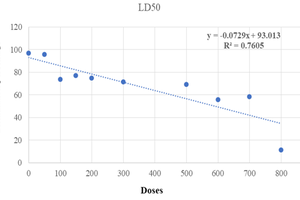
A study was undertaken in Cowpea (Vigna unguiculata L. Walp.) seeds to assess the mutagenic sensitivity of physical mutagen. Germination percentage gradually decreased in general with increase in dose/concentration of mutagen as similar condition was found in case of plant height. Here, 9and 14 different gamma doses were used to study the LD50 and GR30/GR50, respectively. LD50 value was 590.03 Gy based on germination percentage. GR30 and GR50 values based on regression formula on shoot length were 179.50 Gy and 318.68 Gy, respectively. The doses in between the range of 318 Gy - 179 Gy doses were most appropriate to induce variation in cowpea.
References
[1] W. M. Steele (1972). Cowpea in Africa. Doctoral thesis, University of Reading, Reading.
[2] A. E. Ghaly, and F. N. Alkoaik (2010). Extraction of protein from common plant leaves for use as human food. Am. J. Applied. Sci. 7, 331-342.
[3] S. Ceccarelli and S. Grando (2007). Decentralized-participatory plant breeding: an example of demand driven research. Euphytica, 155: 349-360.
[4] N. A. Tulmann, A. Ando, A. Figueira, R. R. Latado, P. C. dos Santos, L. S. Correa and L. E. P. Peres (2011). Genetic improvement of crops by mutation techniques in Brazil. Plant Mutation Rep., 2: 24-37.
[5] S. Nielen (2004). FAO/IAEA mutant variety database. Mutation plant breeding, IAEA/FAOvienna. Plant Cell Tissue Organ Cult., 65: 175-177.
[6] M. Maluszynski, I. Szarejko, C. R. Bhatia, K. Nichterlein and P. J. Lagoda (2009). Methodologies for generating variability. Part 4: Mutation techniques, in Plant Breeding and Farmer Participation, eds S. Ceccarelli and E.Weltzien (Rome:Food and Agriculture Organization of the United Nations), 159-194.
[7] D. P. Singh, S. P. Sharma, M. Lal, B. R. Ranwah and V. Sharma (2013). Induction of genetic variability for polygenic traits through physical and chemical mutagens in cowpea (Vigna unguiculata). Legume Res., 36: 10-14.
[8] E. Kovacs and A. Keresztes (2002). Effect of gamma and UV-BIC radiation on plant cells. Micron, 33:199-210.
[9] [39] A. Tanaka, N. Shikazono and Y. Hase (2010). Studies on biological effects of ion beams on lethality, molecular nature of mutation, mutation rate, and spectrum of mutation phenotype for mutation breeding in higher plants. J. Radiat. Res., 51: 223-233.
[10] S. Predieri (2001). Mutation induction and tissue culture in improving fruits. Plant Cell, Tiss. Org., 64: 185-210.
[11] A. B. Britt (1996). DNA Damage and Repair in Plants, Annual Reviews Plant biology. 47, p. 75-100.
[12] M. Girija and D. Dhanavel (2009). Mutagenic Effectiveness and Efficiency of Gamma Rays Ethyl Methane Sulphonate and Their Combined Treatments in Cowpea [Vigna unguiculata (L.) Walp]. Global J. Mol. Sci., 4: 68-75.
[13] S. G. Auti and B. J. Apparao (2009). Induced mutagenesis in mungbean (Vigna radiata (L.) Wilczek). Induced plant mutations in the genomics era. Food and Agriculture Organization of the United Nation, Rome, Italy, 97-100.
[14] S. S. Bhosle and V. S. Kothekar (2010). Mutagenic efficiency and effectiveness in cluster bean [Cyamopsis tetragonoloba (L.) Taub.]. J. Phytology. 2: 21-27.
[15] O. F. Adekola and F. Oluleye (2007). Induction of Genetic variation in cowpea [Vigna unguiculata (L.) Walp.] by gamma radiation. Asian J. Plant Sci., 6:869-873.
[16] E. Freese (1963). Molecular mechanism of mutations. Molecular Genetics. Edited by JH Taylor. Academic Press New York, 207-269.
[17] A. Ángeles-Espino, A. J. Valencia-Botín, G. Virgen-Calleros, C. Ramírez-Serrano, L. ParedesGutiérrez and S. Hurtado-De la Peña (2013). Lethal dosis (LD50) determination using Co60 on Agave tequilana var. Azul vitroplantlets. Rev. Fitotec. Mex., 36: 381-386.
[18] P. Songsri, B. Suriharn, J. Sanitchon, S. Srisawangwong and T. Kesmala (2011). Effects of gamma radiation on germination and growth characteristics of physic nut (Jatropha curcas L.). J Biological Sci., 11: 268-274.
[19] J. D. Barshile and B. J. Apparao (2009). Genetic improvement of chickpea (Cicer arietinum L.) using induced mutations. Induced plant mutations in genomic era. Rome: Food and Agriculture Organization of the United Nations, 91-94.
[20] D. Dhanavel, P. Pavadai, L. Mullainathan, D. Mohana, G. Raju, M. Girija and C. Thilagavathi (2008). Effectiveness and efficiency of chemical mutagens in Cowpea [Vigna unguiculata (L.) Walp.]. Afr. J. Biotech., 7: 4116-4117.
[21] C. F. Konzak (1965). Efficient chemical mutagenesis, in: The use of induced mutations in plant breeding. In Report of the FAO/IAEA technical meeting organized by the food and agriculture organization of the United Nations and the International Atomic Energy Agency in cooperation with the European Association for Research on Plant Breeding, Rome, Italy, 25 May 1964 (pp. 49-70). Pergamon Press.
[22] A. D. Lawhale (1982). Note on genetic variability in quantitative characters of cowpea in the M3 generation. Indian J. Agric. Sci., 52: 22-23.
[23] A. Wani (2009). Mutagenic effectiveness and efficiency of gamma rays, Ethyl Methane Sulphonate and their combination treatments in Chickpea (Cicer arietinum L.). Asian J. Plant Sci., 8: 318-321.
Downloads
Published
Issue
Section
License
Copyright (c) 2019 Author (s)

This work is licensed under a Creative Commons Attribution-NonCommercial-NoDerivatives 4.0 International License.
Copyright © The Author(s). Effective from 1 July 2026, articles published in Emergent Life Sciences Research (ELSR) are distributed under the Creative Commons Attribution 4.0 International License (CC BY 4.0), which permits use, sharing, distribution, reproduction, and adaptation in any medium or format, provided that appropriate credit is given to the original author(s) and the source, a link to the license is provided, and any changes made are indicated.
Articles published before 1 July 2026 remain subject to the license applicable at the time of their original publication, including the Creative Commons Attribution-NonCommercial-NoDerivatives 4.0 International License (CC BY-NC-ND 4.0), where applicable.