
Development of Amla (Emblica officinalis) ready to serve beverage fortified with dietary fiber
DOI:
https://doi.org/10.31783/elsr.2020.610615Keywords:
Ready to Serve (RTS) beverage, dietary fiber, amla, fortificationAbstract
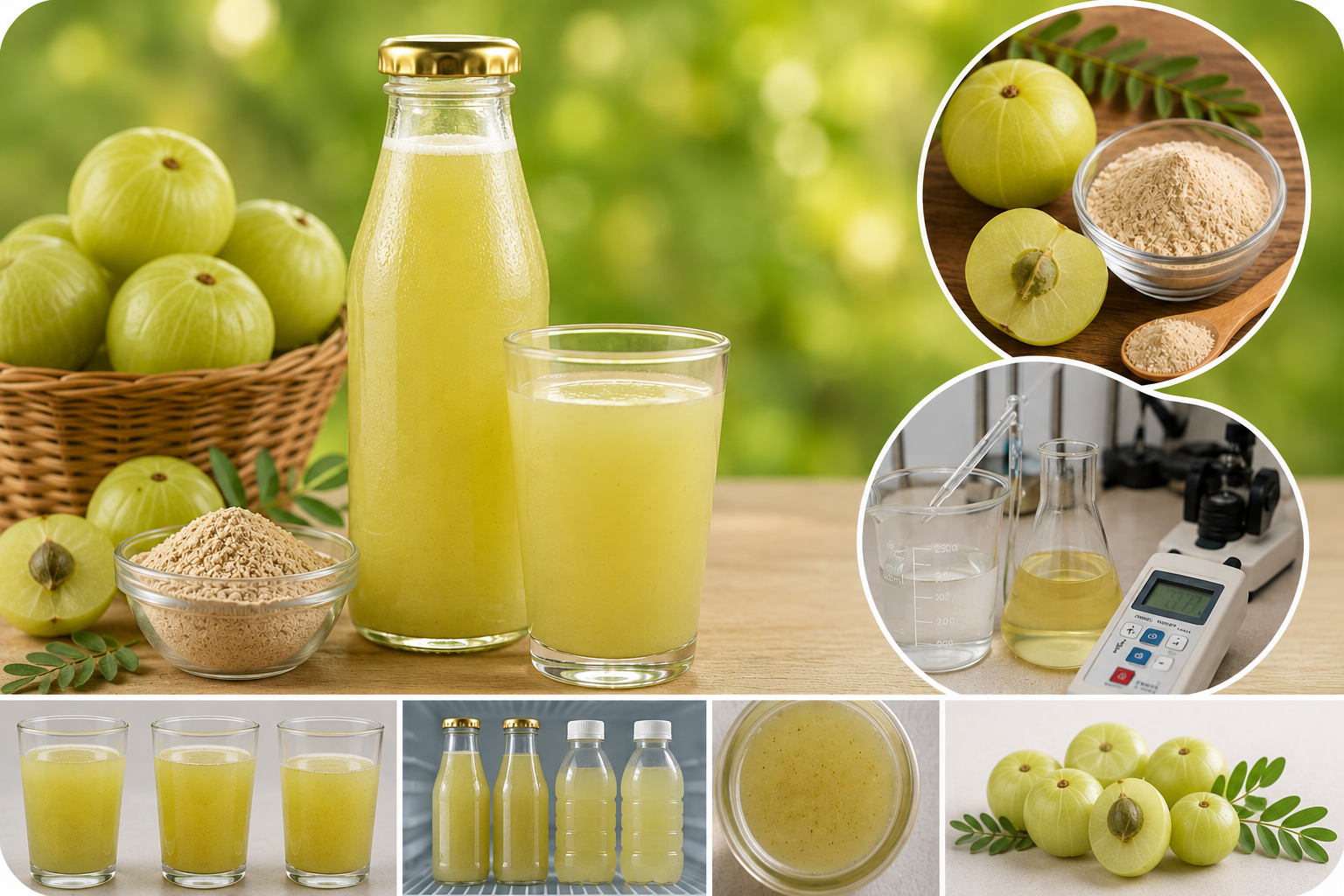
Fruit beverages are one of the popular categories of beverages that are consumed across the world. They are rich source of carbohydrates and have high availability of important vitamins and minerals. While preparation of juices the residues and the dietary fiber present in the fruits are removed during filtration as waste. Hence, the present investigation was carried out to standardize the fortification of dietary fiber into amla Ready to Serve (RTS) beverages. The amla RTS beverages were fortified with different concentration levels (0.5%, 1% and 3%) of dietary fiber extracted from the amla fruit with the aim of increasing the dietary fiber intake. The physico-chemical characteristics such as pH, total soluble solids, acidity, ascorbic acid, total sugar, reducing sugar and total dietary fiber were analyzed in fruit juices and organoleptically evaluated to assess the maximum acceptability of the products. Juice characteristics such as clarity, turbidity, non- enzymatic browning (NEB) and color were analyzed. The standardized RTS beverages were packed in glass bottles and PET bottles and stored under refrigeration and storage behaviour was studied. RTS beverage fortified with 0.5 per cent dietary fiber was found to be best in their sensory characteristics and physical properties.
References
[1] J. E. Lozano (2006). Fruit Manufacturing: Scientific basis, engineering properties and deteriorative reactions of technological importance. Springer., 1-230.
[2] A.A Zabidah, K.W. Kong and I. Amin (2011). Antioxidant properties of tropical juices and their effects on in vitro hemoglobin and low density lipoprotein (LDL) oxidations. Int. Food Res. J., 18: 549-556.
[3] A. Serena and K. E. B. Knudsen (2007). Chemical and physicochemical characterization of co-products from vegetable food and agro industries. Anim. Feed Sci. Technol., 139: 109-124.
[4] W. J. Dahl and M. L. Stewart (2015). Position of the Academy of Nutrition and Dietetics: Health Implications of Dietary Fiber. J. Acad. Nutr. Diet., 115: 1861-1870.
[5] N. Sudharani, U. S. Hiremath and H. B. Shivaleela (2013). Standardization of ash gourd and amla based instant juice and soup mixes. Global J. Biol. Agri. Health Sci., 2: 10-19.
[6] B. P. Singh, I. P. Singh, S. P. Singh and K. A. Kumar (1987). Physico-chemical composition of different cultivars of aonla. J. Indian Food Packer, 41: 7-10.
[7] S. Dasaroju and K. M. Gottumukkala (2014). Current Trends in the Research of Emblica officinalis (Amla): A Pharmacological Perspective. Int. J. Pharm. Sci. Rev. Res., 24: 150-159.
[8] M. Yoshimoto, O. Yamakawa and H. Tanoue (2005). Potential chemo preventive properties and varietal difference of dietary fiber from sweet potato (Ipomoea batatas L.) root. Jpn. Agr. Res. Q., 39: 37-43.
[9] T. S. Ma and G. Zuazaga (1942). Micro-Kjeldahl determination of nitrogen. A new indicator and an improved rapid method. Ind. Eng. Chem., (Analytical Edition) 14: 280-282.
[10] R. S. Saini, K. D. Sharma., O. P. Dhankar and R. A. Kaushik (2000). Laboratory manual of analytical techniques in horticulture. Agrobios Pub. Jodphur. India.
[11] S. Ranganna (1986). Handbook of analysis and quality control for fruit and vegetable products. Tata McGraw-Hill Education, 1986.
[12] H. Koksel, G-H. Ryu, O. O. Ozbas, A. Basman and Perry KW Ng (2003). Development of bulgur-like product using extrusion cooking. J. Sci. Food Agric., 83: 630-636.
[13] M. A. Amerine, R. M. Pangborn and E. B. Roessler (1965). Principles of sensory evaluation of food.
[14] R. A. Baker and R. G. Cameron (1999). Clouds of citrus juices and juice drinks. Food Technol., 53: 64-69.
[15] T. Beveridge (2002). Opalescent and cloudy fruit juices: formation and particle stability. Crit. Rev. Food Sci. Nutr., 42: 317-337.
[16] A. Akesowan and A. Choonhahirun (2013). Effect of enzyme treatment on guava juice production using response surface methodology. J. Anim. Plant Sci., 23: 114-120.
[17] S. Nagar, A. Mittal and V. K. Gupta (2012). Enzymatic clarification of fruit juices (apple, pineapple and tomato) using purified Bacillus pumilus SV-85S xylanase. Biotechnol. Bioprocess Eng., 17: 1165-1175.
[18] V. I. Candrawinata, B. L. Blades, J. B. Golding, C. E. Stathopoulos and P. D. Roach (2012). Effect of clarification on the polyphenolic compound content and antioxidant activity of commercial apple juices. Int. Food Res. J., 19: 1055- 1061.
[19] E.Arena, B. Fallico and E. Maccarone (2001). Thermal damage in blood orange juice: kinetics of 5-hydroxymethyl-2-furancarboxaldehyde formation. Int J Food Sci Technol., 36:145-151.
[20] S. Ranganna (1995). Manual of analysis of fruits and vegetables products, Tata McGraw Hill.
[21] J. Farkas (1984). Testing methods in food microbiology. Elsevier Science Ltd.
[22] K. A. Gomez and A. A. Gomez (1984). Statistical procedures for agricultural research. John Wiley and Sons.
[23] A. Gandhi (1998). Clear or translucent liquid beverage with soluble fiber and nutrients. U.S. Patent No. 5,851,578. Washington, DC: U.S. Patent and Trademark Office.
[24] P. Sathya, Lejaniya, C. Srinivasan, V. Madhupriya and S. Sasikumar (2016). Fortification of milk and milk product. Int. J. Sci. Envir. Technol., 5: 4125- 4129.
[25] W.Thongsombat, A. Sirichote and S. chanthachun (2007). The production of Guava juice fortified with dietary fibre. Songklanakarin J.Sci, Technol., 29: 187-196.
[26] L.T Cesar, M. F. Cabral, G. A. Maia, R.W. Figueiredo, M. R. A. Miranda, P. H. M. Sousa and I. M. Brasil et al., (2014). Effects of clarification on physicochemical characteristics, antioxidant capacity and quality attributes of açaí (Euterpeoleracea Mart.) juice. J. Food Sci. Technol., 51: 3293-3300.
[27] D. T. Bornare and Sumaiya Khan (2015). Physicochemical and Sensory Evaluation of [RTS] Beverage by Incorporating Banana Pseudostem Juice in Papaya. Int. J. Eng. Res. Technol. 4: 403-406.
[28] P. Ramachandran and S. Nagarajan (2014). Quality characteristics, nutraceutical profile, and storage stability of aloe Gel-Papaya functional beverage blend. Int. J. Food Sci., DOI: https://doi.org/10.1155/2014/847013.
[29] M. Valero, N. Recrosio, D. Saura, N. Munoz, N. Marti and V. Lizama (2007). Effect of ultrasonic treatment in orange juice processing. J. Food Eng., 80: 509-516.
[30] H. Hamid and N. S. Thakur (2017). Studies on preparation and preservation of ready-to-serve (rts) beverage from underutilized mulberry (Morus alba L.) Fruits and its quality evaluation during storage. Int. J. Curr. Microbiol. App. Sci., 6: 1067-1079.
[31] R. Sasikumar and K. Vivek (2015). Process development of therapeutic RTS beverage from blend of aloe vera and pine apple. J. Agric. Technol., 2: 7-12.
[32] AOAC (1995). Official Methods of Analysis, The Association of Official Agricultural Chemists, Washington DC, 24th edition. 254-257.
[33] R. L. Bhardwaj and S. Mukherjee (2011). Effects of fruit juice blending ratios on kinnow juice preservation at ambient storage condition. Afr. J. Food Sci., 5: 281-286.
[34] A. Jan and D. Masih (2012). Development and quality evaluation of pineapple juice blend with carrot and orange juice. Int. J. Scient. Res. Pub., 2: 1-8.
[35] K. K. Gaikwad, S. Singh and B. R. Shakya (2013). Studies on the development and shelf life of low calorie herbal anola ginger RTS beverage by using artificial sweeteners. J. Food Process Technol., 4. DOI: http://dx.doi.org/10.4172/2157-7110.1000200.
[36] R. L. Bhardwaj and S. Pandey (2011). Juice blends- A way of utilization of under-utilized fruits, vegetables, and spices: A Review. Crit. Rev. Food Sci. Nutr., 51: 563-570.
[37] B. C. Deka, V. Sethi and A. Saikia (2005). Changes in quality of mango- pineapple spiced beverage during storage. Indian J. Hort., 62: 71-75.
[38] R. Sindhu and B. S. Khatkar (2018). Preservation and storage of Lemon (Citrus Limon) Juice. Int. J. Adv. Eng. Res. Sci., 5: 154-158.
[39] R. B. Yadav, B. S. Yadav and N. Kalia (2010). Development and storage stability on whey based banana herbal (Mentha arvensis) beverage. Am. J. Food Technol., 5: 121-129.
[40] C. Tamilselvi, T. Krishnakumar and S. Amutha (2015). Preparation and quality evaluation of lime based herbal blended RTS beverage. Asian J. Dairy and Food Res., 34: 54-58.
[41] P. Pant, A. Kumar, N. Sonali and T. Kritika (2012). Studies on the preparation of RTS beverage from soy whey blended with kiwi fruit pulp. Int. J. Tropical Agric., 33: 3823-3829.
Downloads
Published
Issue
Section
License
Copyright (c) 2020 Author (s)

This work is licensed under a Creative Commons Attribution-NonCommercial-NoDerivatives 4.0 International License.
Copyright © The Author(s). This is an open access article distributed under the terms of the Creative Commons Attribution-NonCommercial-NoDerivatives 4.0 International License (CC BY-NC-ND 4.0), which permits unrestricted non-commercial use, distribution, and reproduction in any medium, provided the original author(s) and source are properly credited, and the work is not modified or adapted.