A review on the Phytochemistry and Pharmacological properties of Picralima nitida Durand and H. (Apocynaceae family): A potential antiCovid-19 medicinal plant species
DOI:
https://doi.org/10.31783/elsr.2020.616475Keywords:
covid-19, medicinal plant, Picralima nitida, phytochemistry, pharmacological activitiesAbstract
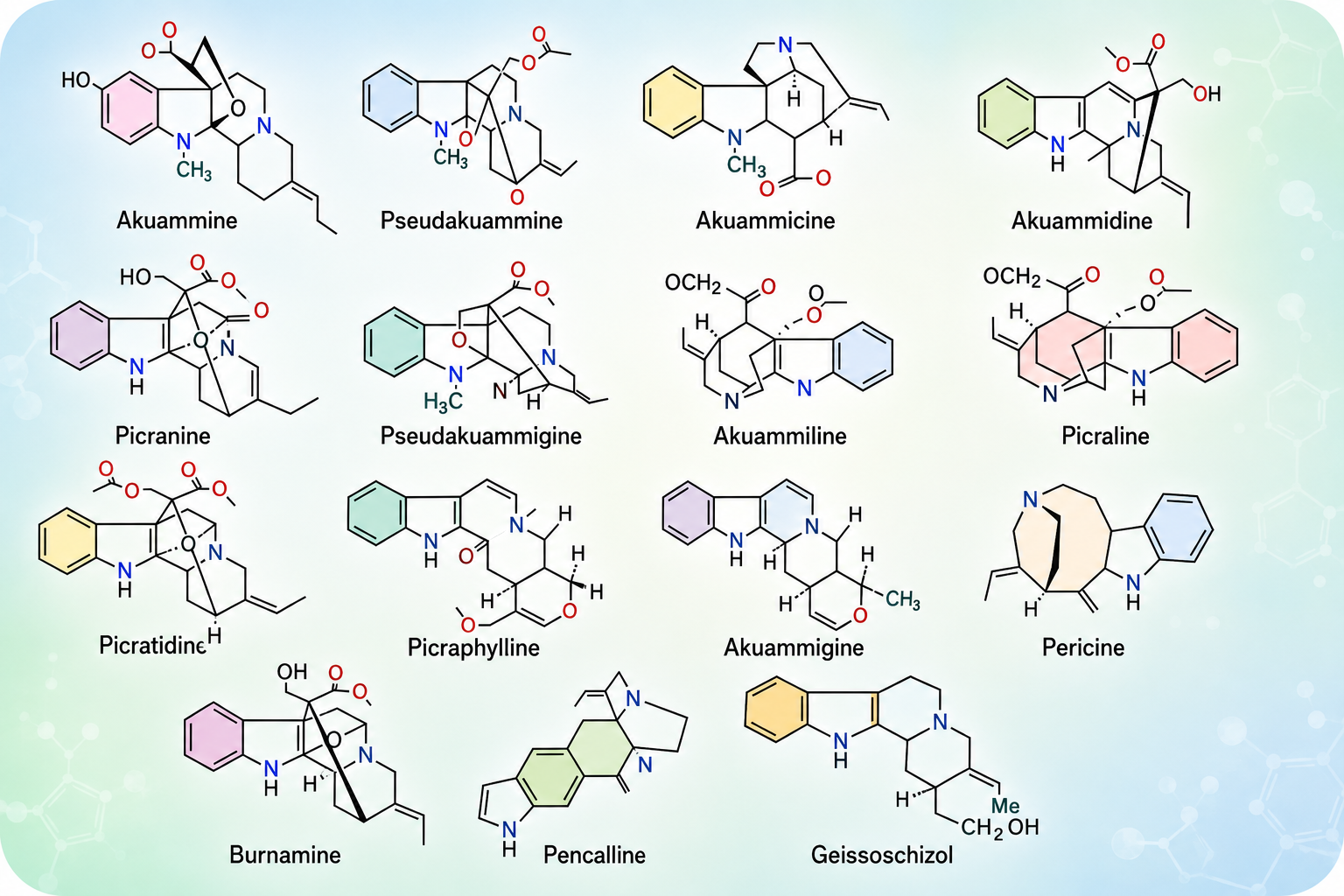
In this mini-literature review, the traditional use, nutritional value, phytochemistry and biological properties of P. nitida, a plant used as a conventional African medicine is described. The literature discussed in this investigation established that extracts from P. nitida were very efficient in the treatment of several diseases including malaria. Hence we anticipate that it may be effective against Covid-19 virus also. We suggest that in vitro and in vivo assays should be conducted to confirm the activity of the plant against SARS-CoV-2.
References
[1] P. T. Mpiana, K. N. Ngbolua, D. S. T. Tshibangu, J. T. Kilembe, B. Z. Gbolo, D. T. Mwanangombo and C. L. Inkoto et al., (2020). Aloe vera (L.) Burm. F. as a potential anti-COVID-19 plant: a mini-review of its antiviral activity. European J. Med. Plants, 31: 86-93.
[2] O. Erharuyi and A. Falodun (2012). Free radical scavenging activities of methanol extract and fractions of Picralima nitida (Apoceanacea). J. Appl. Sci. Environ. Manage., 16: 291-294.
[3] R. P. Borris (1996). Natural Product Research: Perspectives from a major pharmaceutical company. J. Ethnopharmacol., (51): 29-38.
[4] G. N. Anyasor, D. A. Aina, M. Olushola and A. F. Aniyikaye (2011). Phytochemical constituent, proximate analysis, antioxidant, antibacterial and wound healing properties of leaf extracts of Chromolaena Odorata. Ann. Biol. Res., 2: 441-451
[5] H. L. Nkasa, C. L. Inkoto, J-C. M. Muzomwe, E. I. Masengo, C. M. Muzomwe, C. M. Mulenga and K. M. Taba (2020). Phytochemical screening and antibacterial activity of phytomedecine mathesia, a drug use against buruli ulcer in republic democratic of the congo (drc). Eur. J. Pharm. Med. Res., 7: 52-56
[6] C. L. Inkoto, G. N. Bongo, P. M. Kapepula, C. A. Masengo, B. Z. Gbolo, C. Tshiama and N. K. Ngombe (2017). Microscopic and phytochemical assays of selected congolese medicinal plants: Aframomum alboviolaceum (Ridley) K. Schum, Annona senegalensis Pers. and Mondia whitei (Hook.f.) Skeels. Emer. Life Sci. Res., 3: 1-10.
[7] E. N. Ipona, C. L. Inkoto, G. N. Bongo, C. M. Mulenga, B. L. Ilinga, O. S. Shetonde and B. M. Mbala (2019). Ethno-botanical survey and ecological study of medicinal plants traditionally used against erectile dysfunction in Democratic Republic of the Congo; Bioscience and Bioeng., 4: 85-91.
[8] J. B. Iteku, O. Mbayi, G. N. Bongo, P. K. Mutwale, J. M. Wambale, E. Lengbiye and C. L. Inkoto (2019). Phytochemical analysis and assessment of antibacterial and antioxidant activities of Phytolacca dodecandra L. herit leaf extracts (Phytolaccaceae). Int. J. Biomedical Engineering Clinical Sci., 5: 31-39.
[9] D. D. Tshilanda, C. L. Inkoto, K. Mpongu, Z. Mata, P. M. Kapepula, D. S.-T. Tshibangu and G. N. Bongo et al., (2019). Microscopic Studies, Phytochemical and Biological Screenings of Ocimum canum. Int. J. Pharmacy Chem., 5: 61-67.
[10] J. E. Ajanohoun, N. Aboubakar, K. Diamante, M. E. Ebot, J. A. Ekpere and E. G. Enow-Orock et al., (1996). Contribution to ethnobotanical and floristic studies in Cameroun. Traditional medicine and Pharmacopoeia. Technical and Research Commission of the Organisation of African Unity. OAU/STRC; 1996, 60-61.
[11] T. F. Okujagu, S. O. Etatuvie, I. Eze, B. Iimoh, C. Nwokereke, C. Mbaoji, and Z. Mohammed (2008). Medicinal plants of Nigeria; South East Zone, Vol. 1." Lisida Consulting, Lagos.
[12] F. N. Osualaa, S. I. Inya-Agha, U. E. Odoh, C. O. Ezeugwu and S. C. Ohadoma (2018). Pharmacognostic studies on the seeds of Picralima Nitida Stapf (Apocynaceae). Int. J. Pharmacy, 548-563.
[13] L. B. K. Mabeku, J. Kouam, A. Paul and F. X. Etoa (2008). Phytochemical screening and toxicological profile of methanolic extract of Picralima nitida fruit rind (Apocynaceae). Toxicol Environ Chem., 90: 815-828.
[14] N. A. Obasi, U. C. Okorie, B. N. Enemchukwu, S. S. Ogundapo and G. Otuchristian (2012). Nutritional evaluation, phytochemical screening and antimicrobial effects of aqueous extract of Picralima nitida peel. Asian J. Biol. Sci., 5: 105-112.
[15] M. P. E. Ubulom, N. G. Imandeh, C. E. Udobi and I. IIya (2012). Larvicidal and antifungal properties of Picralima nitida (Apocynaceae) leaf extracts. Eur. J. Med. Plants, 2: 132-139.
[16] L. B. M. Kouitcheu, J. L. Tamesse and J. Kouam (2013). The anti-shigellosis activity of the methanol extract of Picralima nitida on Shigella dysenteriae type I induced diarrhoea in rats. BMC Complem Altern M., 13: 211. doi: 10.1186/1472-6882-13-211
[17] A. Cortegiani, G. Ingoglia, M. Ippolito, A. Giarratano and S. Einav (2020). A systematic review on the efficacy and safety of chloroquine for the treatment of COVID-19. J. Crit. Care, 57: 279-283.
[18] T. Y. Hu, M. Frieman and J. Wolfram (2020). Insights from nanomedicine into chloroquine efficacy against COVID-19. Nat. Nanotechnol., 15: 247-249.
[19] P. Gautret, J-C. Lagier, P. Parola, V. T. Hoang, L. Meddeb, M. Mailhe and B. Doudier et al., (2020). Hydroxychloroquine and azithromycin as a treatment of COVID-19: results of an open-label non-randomized clinical trial. Int. J. Antimicrob. Agents, doi: 10.1016/j.ijantimicag.2020.105949.
[20] W. Xinling, X. Wei, H. Gaowei, X. Shuai, S. Zhiping, L. Zezhong and X. Youhua et al., (2020). SARS-CoV-2 infects T lymphocytes through its spike protein-mediated membrane fusion. Cell. Mol. Immunol., doi: 10.1038/s41423-020-0424-9
[21] L. Wenzhong and L. Hualan (2020). COVID-19: attacks the 1-beta chain of hemoglobin and captures the porphyrin to inhibit human heme metabolism. ChemRxiv. Preprint.
doi: 10.26434/chemrxiv.11938173.v8.
[22] K. Siti, K. Hendra, K. Rizki, S. Suhartati and S. Soetjipto (2020). Potential inhibitor of Covid-19 main protease (Mpro) from several medicinal plant compounds by molecular docking study. Preprints; 2020030226. doi: 10.20944/preprints202003.0226.v1.
[23] M. M. Iwu (1993). Handbook or African medicinal plants, CRC press, London, Boca Raton, FL, 183-184.
[24] T. A. Henry and T. M. Sharp (1927). CCLIV.—The alkaloids of Picralima Klaineana. Journal of the Chemical Society (Resumed), 1950-1959.
[25] P. Tane, M. Tene and O. Sterner (2002). Picranitine, a new indole alkaloid from Picralima nitida (apocynaceae). Bull. Chem. Soc. Ethiop., 16: 165-168.
[26] J. R. Menzies, S. J. Paterson, M. Duwiejua and A. D. Corbett (1998). Opioid activity of alkaloids extracted from Picralima nitida (fam. Apocynaceae). Eur. J. Pharmacol., 350: 101-108.
[27] U.I. Okenwa and N.M. Mary-Ann (2014). Chemical profiling and antibacterial activity screening of the leaves of Picralima nitida (apocynaceae). Int. J. Medicinal Chemistry and Analysis, 4: 155-161.
[28] B.L. Moller, Seedorff and F. Nartey (1972). Alkaloids of Picralima nitida. Phytochemistry, 2620-2621.
[29] A. N. Linus (2016). Chemical profile of Picralima nitida Seeds used in ethnomedicine in West Africa. FUTOJNLS, 2: 110-122.
[30] I. C. Ezeamuzie, M. C. Ojinnaka, E. O. Uzogara and S. E. Oji (1994). Anti-inflammatory, antipyretic and anti-malarial activities of a West African medicinal plant- Picralima nitida. Afri. J. Medicine Med. Sci., 23: 85-90.
[31] J. E. Okokon, B. S. Antia, A. C. Igboasoiyi, E. E. Essien and H. O. C. Mbagwua (2007). Evaluation of antiplasmodial activity of ethanolic seed extract of Picralima nitida. J Ethnopharmacol., 111: 464-467
[32] G. François, L.A. Assi, J. Holenz and G. Bringmann (1996). Constituents of Picralima nitida display pronounced inhibitory activities against asexual erythrocytic forms of Plasmodium falciparum in vitro. J. Ethnopharmacol., 54: 113-117.
[33] J. Bickii, G.R.F. Tchouya, J.C. Tchouankeu and E. Tsamo (2007). Antimalarial activity in crude extracts of some Cameroonian medicinal plants. Afr J Trad. CAM., 4: 107-111.
[34] M. M. Iwu, J. E. Jackson, J. D. Tally and D. L. Klayman (1992). Evaluation of plant extracts for antileishmanial activity using a mechanism-based radiorespirometric microtechnique (RAM). Planta Medica, 58: 436-441.
[35] L. O. Wosu and C. C. Ibe (1989). Use of extracts of Picralima nitida bark in the treatment of experimental trypanosomiasis: A preliminary study. J Ethnopharmacol, 25: 263-268.
[36] U. M. E. Dibua, G. E. Odo, O. F. Nwabor and G. I. Ngwu (2013). Larvicidal activity of Picralima nitida, an environmental approach in malaria vector control. Am. J. Res. Comm., 40: 2325-2336.
[37] M. Duwiejua, E. Woode and D. D. Obiri (2002). Pseudo-akuammigine, an alkaloid from Picralima nitida seeds, has anti -inflammatory and analgesic actions in rats. J. Ethnopharmacol., 81: 73-79.
[38] C. V. Iroegbu and C. K. Nkere (2005). Evaluation of the antibacterial properties of Picralima nitida stem bark Extracts. Int. J. Mol. Med. Adv. Sci., 1:182-189.
[39] C. M. Teugwa, P. C. Mejiato, D. Zofou, B. T. Tchinda and F. F. Boyom (2013). Antioxidant and antidiabetic profiles of two African medicinal plants: Picralima nitida (Apocynaceae) and Sonchus oleraceus (Asteraceae). BMC Complem. Altern. M., 13: 175
[40] H. Shittu, A. Gray, B. Furman and L. Young (2010). Glucose uptake stimulatory effect of akuammicine from Picralima nitida (Apocynaceae). Phytochem. Lett., 3: 53-55.
[41] C. M. Edmund, S. O. Izuchukwu, O. O. Ebere, E. O. Chiadikobi, C. N. Ernest, A. A. Oluwa and N. U. Chukwuka (2014). In vitro Uterotonic Effects of Ethanolic Fruit Extract of Picralima nitida (Stapf) on isolated uterine smooth muscles of rats. J. Agri. Vet. Sci., 7: 37-43.
[42] I. M.-Donald, O.-U. Oghale, E. G. Ikechi and O. A. Orji (2016). Hepatoprotective potentials of Picralima nitida against in vivo carbon tetrachloride-mediated hepatotoxicity. J. Phytopharmacology, 5: 6-9
[43] J.M. Okonta, M. O. Adibe and C. M. Ubaka (2011). Antiulcer activity of methanolic extract and fractions of Picralima nitida seeds (Apocynacaea) in rats. Asian Pac. J. Trop. Med., 4: 13-15.
[44] N. G. Koffi, A. A. Emma and D. K. Stephane (2014). Evaluation of Picralima nitida acute toxicity in the mouse. Int. J Res. Pharm. Sci., 4: 18-22.
[45] N. Engel, A. Falodun, J. Kühn, U. Kragl, P. Langer and B. Nebe (2014). Pro-apoptotic and anti-adhesive effects of four African plant extracts on the breast cancer cell line MCF-7. BMC Complement. Altern. M., 14: 334.
[46] M. M. Iwu and D.L. Klayman (2002). Evaluation of the in vitro antimalarial activity of Picralima nitida extracts. J Ethnopharmacol., 36: 133-135.
[47] S. I. Inya-Agha, S. C. Ezea and O. A. Odukoya (2006). Evaluation of Picralima nitida: Hypoglycaemic activity, toxicity and analytical standards.Plant Med., 72: P_025. doi: 10.1055/s-2006-949825.
[48] C. N. Aguwa, C. V. Ukwe, S. I. Inya-Agha and J. M. Okonta (2001). Antidiabetic effect of Picralima nitida aqueous seed extract in experimental rabbit model. J. Nat. Rem., 1: 135-139.
[49] T. O. Fakeye, O.M. Itiola, H. A. Odelola (2000). Evaluation of the antimicrobial property of the stem bark of Picralima nitida (Apocynaceae). Phytother. Res., 14: 368-370.
[50] O. S. Taofik, B. O. Oyelola, A. O. Tajudeen, T. Y. Musa and O. D. Omotayo (2014). Toxicopathological evaluation of Picralima nitida seed aqueous extract in Wistar rats. Turk. J. Biochem., 39: 119-125.
Downloads
Published
Issue
Section
License
Copyright (c) 2020 Author (s)

This work is licensed under a Creative Commons Attribution-NonCommercial-NoDerivatives 4.0 International License.
Copyright © The Author(s). This is an open access article distributed under the terms of the Creative Commons Attribution-NonCommercial-NoDerivatives 4.0 International License (CC BY-NC-ND 4.0), which permits unrestricted non-commercial use, distribution, and reproduction in any medium, provided the original author(s) and source are properly credited, and the work is not modified or adapted.