
Traditional Ethno-veterinary knowledge prevalent amongst the Karbi tribe residing in Karbi Anglong, Assam, India
DOI:
https://doi.org/10.31783/elsr.2020.626066Keywords:
ethno-veterinary, Karbi anglong, phytotherapy, traditional healthcareAbstract
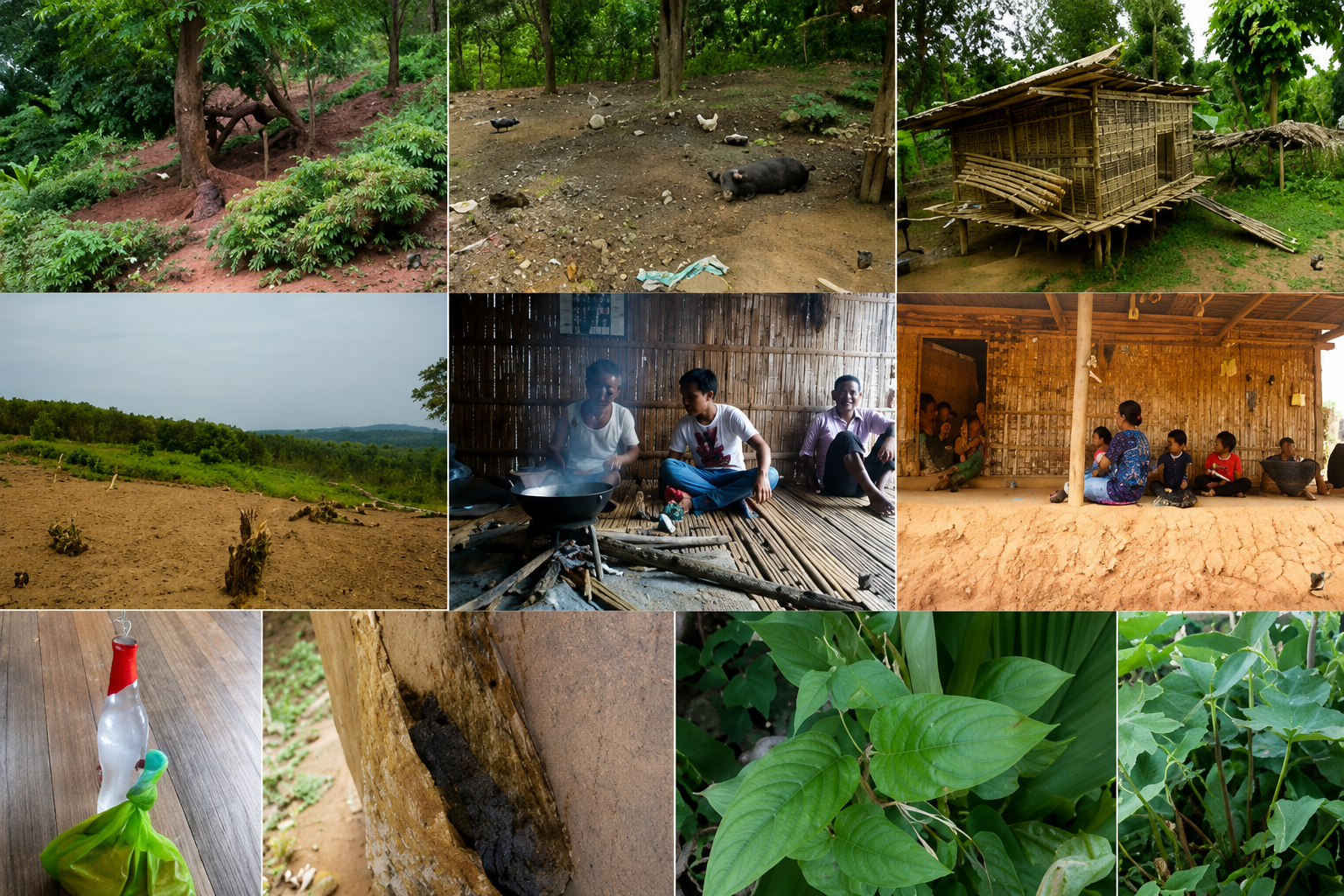
The present paper is an attempt at inventorising the traditional knowledge prevalent amongst the Karbi tribe pertaining to ethno-veterinary and livestock health practices. A total of 19 plant species and other non-plant material of ethno-veterinary importance in Karbi Anglong district of Assam were documented throughout the study period. Among these 19 recorded species, most of the medicinal plants are herbaceous and also available in the locality. Various plant parts including whole plant, leaf, stem, root, bark, seed, trunk, and fruit are used for ethno-veterinary preparation but the leaves constituted the major portion of plant parts used, followed by roots and whole plant. Out of 21 ethno-medicinal preparations, 13 preparations have been administered in the form of a single herb, and the rest 8 preparations were used as a combination of herbs and other materials. It was observed that the knowledge regarding ethno-veterinary medicine is still surviving among the elderly members of the communities. However, modern medical healthcare especially, the veterinary section in developing areas is reducing the use of medicinal plants for the treatment of livestock, and therefore, the practice of traditional knowledge for curing animal ailments is diminishing.
References
[1] P. C. Phondani, R. K. Maikhuri and C. P. Kala (2010). Ethno-veterinary uses of medicinal plants among traditional herbal healers in Alaknanda catchment of Uttarakhand, India. Afr. J. Trad. CAM., 7: 195-206.
[2] G. Mazars (1994). Traditional veterinary medicine in India. Rev. Sci. Tech., (Off. int. épizoot) 13: 443-451
[3] S. N. Balaji and P. V. Chakravarthi (2010). Ethno-veterinary practices in India-A Review. Vet. World, 3: 549-551.
[4] C. H. Rahman, A. Ghosh and S. Mandal (2009). Studies on ethnoveterinary medicinal plants used by the tribals of Birbhum district, West Bengal. J. Econ. Taxon. Bot., 33: 333-338.
[5] D. Kaur, K. Jaiswal and S. Mishra (2015). Ethnoveterinary practices in India: A Review. Eur. J. Pharm. Med. Res., 2: 139-143.
[6] S. A. K. A. Laskar, A. K. Das and B. K. Dutta (2015). Plants used in Ethno-Veterinary medicine by Halam tribe settled in Hailakandi District of Southern Assam, India. Int. J. Curr. Res., 7: 13136-13140.
[7] R. Rajkumari, R. K. Nirmala, P. K. Singh, A. K. Das, B. K. Dutta and A. Pinokiyo (2014). Ethno-veterinary plants used by the Chirus tribe of Manipur, Northeast India. Indian J. Tradit. Know., 13: 368-376.
[8] A. Das and R. Bordoloi (2016). Ethno medical importance of some plants used for the treatment of cattle diseases by the Tiwa tribe of Morigaon district of Assam, India. World J. Pharmacy Pharmaceutical Sci., 5: 1356-1365.
[9] S. Mehmud (2017). Ethno-veterinary plants used by different ethnic groups of Kamrup Rural district of Assam, India. Int. J. Appl. Res., 3: 308-310.
[10] R. Bharali, B. K. Dutta and P. Gogoi (2015). Studies on the Ethno-veterinary plants used by the Nepali community of Nagaon and Sonitpur Districts of Assam, India. Pleione, 9: 26-39.
Downloads
Published
Issue
Section
License
Copyright (c) 2020 Author (s)

This work is licensed under a Creative Commons Attribution-NonCommercial-NoDerivatives 4.0 International License.
Copyright © The Author(s). This is an open access article distributed under the terms of the Creative Commons Attribution-NonCommercial-NoDerivatives 4.0 International License (CC BY-NC-ND 4.0), which permits unrestricted non-commercial use, distribution, and reproduction in any medium, provided the original author(s) and source are properly credited, and the work is not modified or adapted.