A review on Gelato: An Italian delicacy
DOI:
https://doi.org/10.31783/elsr.2020.627481Keywords:
flavors, formulation, gelato, gelato ingredients, health benefits, low-fat productAbstract
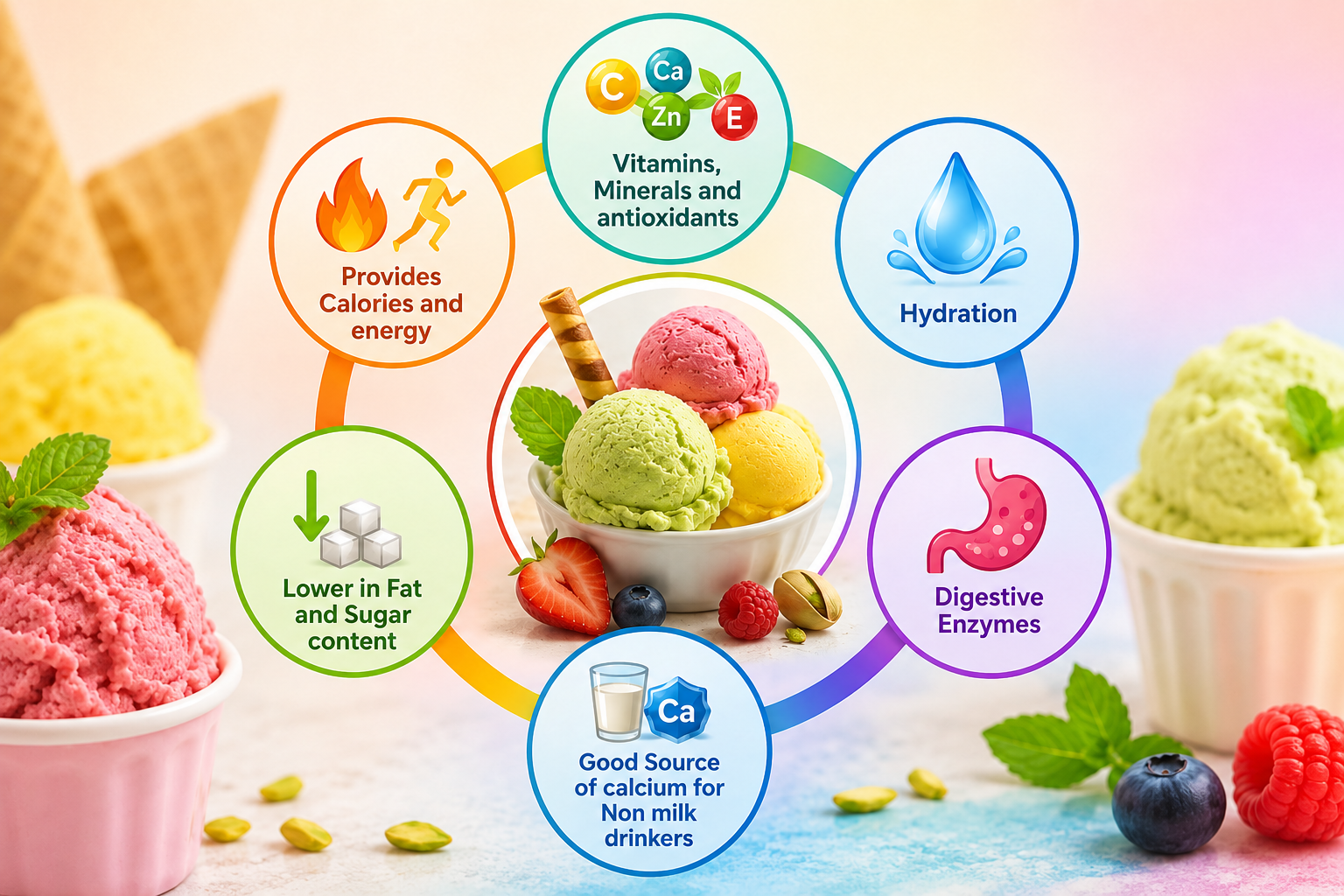
Gelato is very popular in the western world and is gaining popularity in India as well. The consumption of low-fat products has been increasing in recent years due to potential health benefits and nutritional advantages. Gelato has received much attention for both its health benefits and amazing taste. It is a fully natural variety of ice cream. Because of its serving condition (i.e. 10-15°C lower than traditional ice cream), gelato has a rich mouthfeel and offers a better taste. Vast varieties of different flavors make gelato a unique product as compared to the general ice cream available in the Indian market. Different fruits and horticultural products such as flowers, berries, and aromatic plants can also be incorporated into it. Fresh and natural ingredients such as milk, cream, skimmed milk powder, sugar, egg yolk and WPC (optional) make the gelato a natural and chemical-free delicacy. The health benefits of gelato are very diverse. The antioxidants present in gelato helps to reduce the free radicals which in terms reduces the aging effect on the human body. Regular consumption of gelato can boost the immune system thereby preventing several health hazards. The natural ingredients in the gelato make it costlier than the normal ice cream. The attractive color and delicious taste add beauty to the product. The serving condition and environment also affect consumer perception towards Gelato. Several research studies and advancements are being done to make it more palatable, acceptable, and nutritious.
References
[1] H. D. Goff (2018). The structure and properties of ice cream and frozen desserts. Book Chapter in Referance Module in Food Science, 1-8. doi: 10.1016/b978–0–08–100596–5.00833–7.
[2] W.C. Yackel and C. Cox (1992). Application of starch-based fat replacers. Food Tech. (Chicago). 46:146-148.
[3] E. Mahdian and R. Karazhian (2013). Effects of fat replacers and stabilizers on rheological, physicochemical and sensory properties of reduced-fat ice cream. J. Agric. Sci. Technol., 15: 1163-1174.
[4] Gelato history and facts (2015). Retrieved from http://www.gelatojunction.com/Gelato-History.html.
[5] R. T. Marshall, H. D. Goff and R.W. Hartel (2003) Soft-frozen dairy desserts. In: Ice cream. Springer, Boston, MA. doi.: 10.1007/978-1-4615-0163-3_10.
[6] S. Shamil, L.J. Wyeth, D. Kilcast (1992). Flavour release and perception in reduced-fat foods. Food Qual. Prefer., 3: 51-60
[7] V. Singh, J. David, K. Kishor and S. Mishra (2018). Effect of different level of rice flour on physico-chemical properties of low-fat frozen dessert, European J. Biotech. Biosci., 6: 01-04.
[8] L. Ferrari (2005). Gelato and gourmet frozen desserts - A professional learning guide. Lulu.com.
[9] H. D. Goff and R. W. Hartel (2013), Ice cream. Springer Science & Business Media.
[10] S. Deosarkar , C. D. Khedkar, S. D. Kalyankar and A. R. Sarode (2016). Ice cream: uses and method of manufacture. Reference Module in Food Science. Encyclopedia of Food and Health. Edition 1. Elsevier. 391-397.
[11] J. Destephano, K. Chida, A. Swartos, K. Davis and S. Chakrabarti (2002). Gelato Composition. United States Patent. Patent no. US 6,379,736 B1. 1,4,7.
[12] K. R. Thompson, D. H. Chambers and E.C. Iv (2009). Sensory characteristics of ice cream produced in The U.S.A. and Italy. J. Sens. Stud., 24: 396-414.
[13] C. Clarke (2015). The Science of Ice Cream, Royal Society of Chemistry, UK.
[14] United States Department of Agriculture (USDA) (2019). food data central, Retrived from: https://fdc.nal.usda.gov/fdc-app.html#/food-details/368296/nutrients,2019
[15] T. Kopfer (2009). Making artisan gelato: 45 recipes and techniques for crafting flavour-infused gelato and sorbet at home. quarry books.
[16] H. D. Goff (2003), The Ice cream e-Book, University of Guelph,Canada, Retrived from https://www.uoguelph.ca/foodscience/book/export/html/2003
[17] Q.A. Sayed, S. Anwar, R. Shukat and T. Zahoor (2018). Effects of different ingredients on texture of ice cream, J. Nutr. Health Food Eng., 8: 422-435.
[18] M. S. Alfaifi and C. E. Stathopoulos (2010a). Effect of Egg Yolk Substitution by Sweet Whey Protein Isolate on Some Gelato Ice Cream Physical Properties over Storage. Int. J. Dairy Tech., 63: 593-598.
[19] Antonelli (2015). Hot or cold process; which is the best way to prepare your ice cream/gelato ingredients?, Retrived From: https://antonelli.co.uk/blog/hot-or-cold-process-how-to-prepare-your-ice-cream-gelato-ingredients
[20] W. S. Arbuckle (2013). Ice cream. Springer Science and Business Media.
[21] D. B. Nedwell (1999). Effect of low temperature on microbial growth: lowered affinity for substrates limits growth at low temperature. FEMS Microbiol. Ecol., 30: 101-111,
[22] M. S. Alfaifi and C. E. Stathopoulos (2009). Effect of egg yolk substitution by sweet whey protein concentrate on some gelato ice cream physical properties over storage. J. Food and Nut. Res., 48: 183-188.
[23] M. S. Alfaifi and C. E. Stathopaulus (2010b). Effect of egg yolk substitution by sweet whey protein concentrate (WPC), on physical properties of Gelato ice cream, Int. Food Res. J., 17: 787-793.
[24] P. Siripinyo, P. Chaiyapong and W. Narkrugsaw (2017). Effect of jellose and passion fruit concentrate on some of physical properties and sensory characteristics of passion fruit gelato ice cream. VRU Res. Development J. Science Technol., 12: 67-77.
[25] E. Casiraghi, R. Foschino , C. Alamprese and A. Moles (2017). Research and innovation in hand-crafted gelato: four years of research into alternative ingredients. Retrieved from http://www.italiangelato.info/research-and-ingredients/research-and-innovation-in-hand-crafted-gelato-four-years-of-research-into-alternative-ingredients.kl,201
[26] M. Rinaldi, C. Dall’Asta, M. Paciulli, S. Guizzetti, D. Barbanti and E. Chiavaro (2014). Innovation in the Italian ice cream production: effect of different phospholipid emulsifiers. Dairy Sci. Technol., 94: 33-49.
[27] V. A Alika and Y. Atma (2018). The organoleptic and physicochemical characteristic of gelato by fish bone gelatin addition. J. Applied Sci. Advanced Technol., 1: 31-37.
[28] R. Sacchi, N. Caporaso, G. A. Squadrilli, A. Paduano, M. L. Ambrosino, S. Cavella and A. Genovese (2019). Sensory profile, biophenolic and volatile compounds of an artisanal ice cream (‘gelato’) functionalised using extra virgin olive oil. Int. J. Gastron Food Sci., 18: 100173. doi: 10.1016/j.ijgfs.2019.100173.
[29] S. A. Kanse, K. D Chopde and S. Shingh (2020). Development of vitamin C and antioxidants enriched artisanal Gelato Ice cream by incorporating gulkand. Multilogic in Science, 10: 1168-1173..
[30] M. Ristow, K. Zarse, A. Oberbach, N. Klöting, M. Birringer, M. Kiehntopf, M. Stumvoll et al., (2009). Antioxidants prevent health-promoting effects of physical exercise in humans. Proc. Natl. Acad. Sci. U.S.A., 106: 8665-8670.
[31] V. Sanguigni, M. Manco, R. Sorge, L. Gnessi and D. Francomano (2017). Natural antioxidant ice cream acutely reduces oxidative stress and improves vascular function and physical performance in healthy individuals. Nutrition, 33: 225-233.
[32] A. Makris and G. D. Foster (2011). Dietary approaches to the treatment of obesity. Psychiatr. Clin. N. Am., 34: 813-827.
[33] K. Kantono, N. Hamid, D. Shepherd,Y. H. T. Lin, C. Brard, G. Grazioli and B. T. Carr, (2018). The effect of music on gelato perception in different eating contexts. Food Res. Int., 113: 43-56.
Downloads
Published
Issue
Section
License
Copyright (c) 2020 Author (s)

This work is licensed under a Creative Commons Attribution-NonCommercial-NoDerivatives 4.0 International License.
Copyright © The Author(s). This is an open access article distributed under the terms of the Creative Commons Attribution-NonCommercial-NoDerivatives 4.0 International License (CC BY-NC-ND 4.0), which permits unrestricted non-commercial use, distribution, and reproduction in any medium, provided the original author(s) and source are properly credited, and the work is not modified or adapted.