Northeast India: A treasury of medicinal plants
DOI:
https://doi.org/10.31783/elsr.2022.810521Keywords:
Northeast India, medicinal plants, pharmacologyAbstract
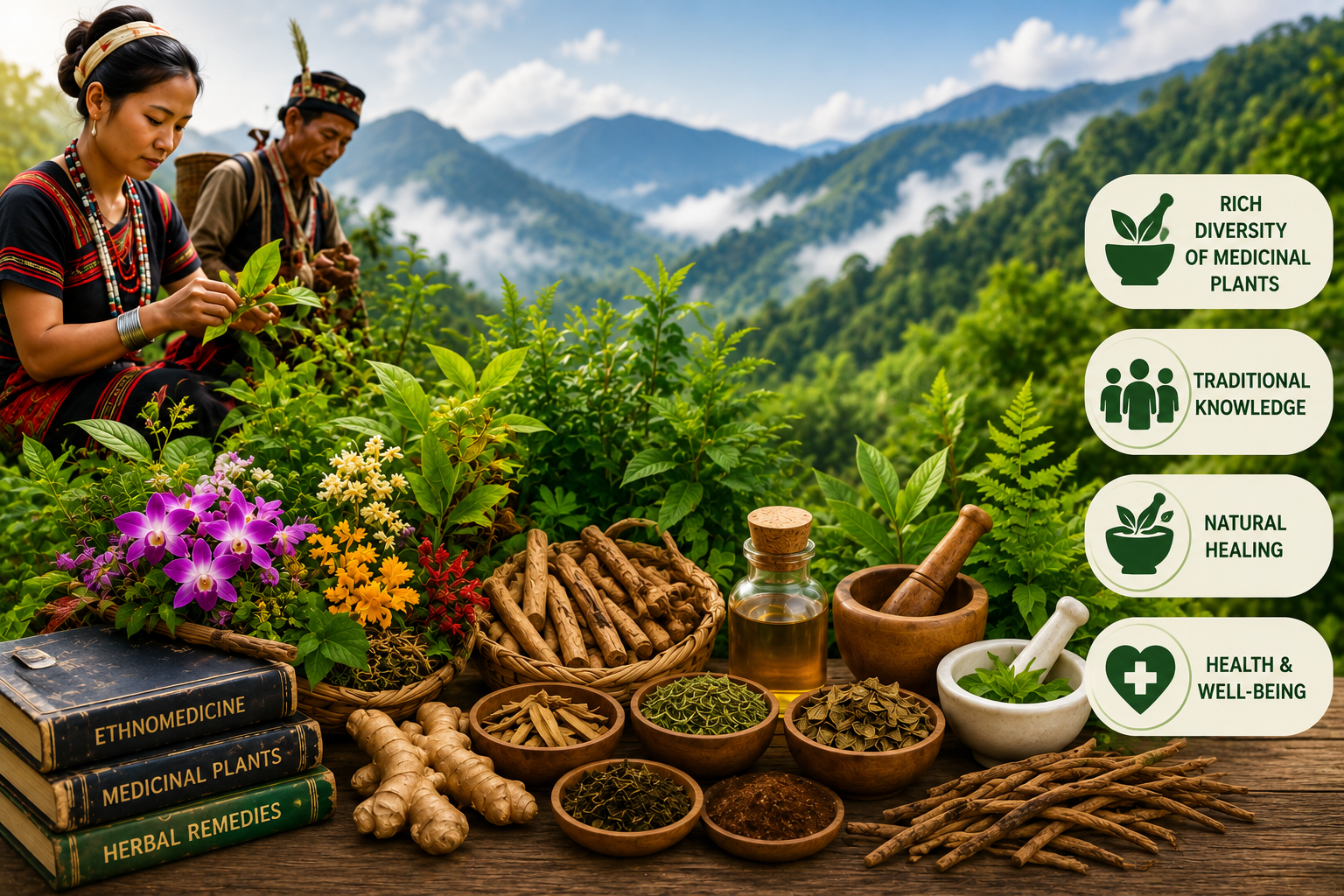
The North-eastern region of India encompasses eight states viz. Arunachal Pradesh, Assam, Manipur, Meghalaya, Mizoram, Nagaland, Sikkim and Tripura. It is perhaps the most extravagant store of medicinal plants in the World. It is considered that the medicinal plants are the foundation of the conventional medicine. Almost 80% of the world populaces depend on conventional medications for essential medical services, a large portion of which include the utilization of extracts of medicinal plants. This conventional practice of medication assumes a significant part in the medical care of rural people for a wide range of diseases. They practice their own traditional healthcare system as they have an in-depth knowledge and understanding about plants, both conventional and non-conventional for their food and for medicine. This review thus underlines the different medicinal plants found across the entire north-eastern region and their respective potential uses or medicinal plant utilization for the significant well-being of mankind.
References
[1] B. K. Dutta and P. K. Dutta (2005). Potential of ethnobotanical studies in North East India: An overview. Indian J. Tradit. Knowl., 4: 7-14.
[2] A. A. Mao, T. Hynniewta and M. Sanjappa (2009). Plant wealth of Northeast India with reference to ethnobotany. Indian J. Tradit. Knowl., 8: 96-103.
[3] B. De, T. Debbarma, S. Sen and R. Chakraborty (2010). Tribal life in the environment and biodiversity of Tripura, India. Current World Environ., 5: 59-66.
[4] R. Shankar and M. Rawat (2006). Medicinal plants activities for change in the socio-eco nomic status in rural areas of north east India. Bull. Arunachal Forest Res., 22: 58-63.
[5] D. K. Hore (1998). Diversity in Agricultural plants-an experience with North-East India. In: Agriculture Biodiversity and Climate Change, Souvenir, (North Eastern Hill University, Shillong), 1998: 11-13.
[6] S. Chatterjee, A. Saikia, P. Dutta, D. Ghosh, G. Pangging, A. K. Goswami (2006). Biodiversity significance of North East India. WWF-India, New Delhi, 1-71. http://trpenvis.nic.in/test/doc_files/BiodiversitySignificanceNEIndia_WWF.pdf
[7] K. Garg and R. K. Singh (2017). Indian Journal of Traditional Knowledge: A bibliometric study. Library Herald, 55: 488-502.
[8] A. A. Mao, T. Hynniewta and M. Sanjappa (2009). Plant wealth of North with reference to ethnobotany. Indian J. Tradit. Knowl., 8: 255-266.
[9] M. Sharma and B. Das (2018). Medicinal plants of northeast region of India: a small review. Int. J. Curr. Pharm. Res., 10: 11-12.
[10] R. Chakraborty, Biplab De, N. Devanna and S. Sen (2012). North-East India an ethnic storehouse of unexplored medicinal plants. J. Nat. Prod. Plant Resour., 2: 143-152.
[11] B. A. Choudhury, S. K. Saha, M. Konwar, K. Sujith and A. Deshamukhya (2019). Rapid drying of northeast India in the last three decades: Climate change or natural variability? J. Geophys. Res. Atmos., 124: 227-237.
[12] R. Dutta (2014). Climate change and its impact on tea in Northeast India. (2014). J. Water Clim. Change, 5: 625-632.
[13] S. Roy, A. K. Barooah, K. Z. Ahmed, R. D. Baruah, A. K. Prasad and A. Mukhopadhyay (2020). Impact of climate change on tea pest status in northeast India and effective plans for mitigation. Acta Ecol., Sin., 40: 432-442.
[14] A. N. M. I. Ali and I. Das (2003). Tribal situation in north east India. Stud. Tribes and Tribals, 1: 141-148.
[15] P. K. Chandra (2005). Ethnomedicinal botany of the Apatani in the Eastern Himalayan region of India. J. Ethnobiol. Ethnomedicine, 1: 1-8.
[16] K. Singh, B. Pakem, S. Roy and A. Basu (1994). People of India: 1994. Anthropological Survey of India. Seagull Books Pvt. Ltd. Calcutta.
[17] A. C. Bhagabati, Tribal transformation in Assam and North East India: An appraisal of emerging ideological dimensions. Presidential Address, Section of Anthropology and Archaeology. in 75th Indian Science Congress, Pune. Indian Science Congress Association, Calcutta. 1988.
[18] K. R. Kirtikar and B. D. Basu (1935). Indian Medicinal Plants, Vol. II. Lalit Mohan Publication, Allahabad.
[19] H. Tynsong, Dkhar, M. and B. Tiwari (2020). Review: Traditional ecological knowledge of tribal communities of North East India. Biodiversitas J. Biological Diversity, 21: 3209-3224.
[20] M. Mazid, T.A. Khan and F. Mohammad (2012). Medicinal plants of rural India: a review of use by Indian folks. Indo Global J. Pharmaceutical Sci., 2: 286-304.
[21] Kala, C.P. Revitalizing traditional herbal therapy by exploring medicinal plants: A case study of Uttaranchal State in India. in Indigenous Knowledges: Transforming the Academy, Proceedings of an International Conference. 2004. Pennsylvania State University.
[22] P. K. Chandra, P. P. Dhyani and B. S. Sajwan (2006). Developing the medicinal plants sector in northern India: challenges and opportunities. J. Ethnobiol. Ethnomedicine, 2: 32. https://doi.org/10.1186/1746-4269-2-32.
[23] N. Myers (1990). The world's forests and human populations: The environmental interconnections. Population and Development Review, 16: 237-251.
[24] Farooquee, N.A., B. S. Majila, and C. P. Kala (2004). Indigenous knowledge systems and sustainable management of natural resources in a high altitude society in Kumaun Himalaya, India. J. Hum. Ecol., 16: 33-42.
[25] A. Cunningham (1998). Medicinal plants and sustainable trade. In Medicinal Plants: A Global Heritage. Proceedings of the International conference on medicinal plants for survival. 1998. International Development Research Center. 109-121.
[26] S. Liu, L. Ye, J. Tao, C. Ge, L. Huang and J. Yu (2017). Total flavones of Abelmoschus manihot improve diabetic nephropathy by inhibiting the iRhom2/TACE signalling pathway activity in rats. Pharm. Biol., 56: 1-11.
[27] I. M. Liu, T. F. Tzeng, and S. S. Liou (2010). Abelmoschus moschatus (Malvaceae), an aromatic plant, suitable for medical or food uses to improve insulin sensitivity. Phytother. Res., 24: 233-239.
[28] N. K. Bhattarai (1990). Medical ethnobotany in the Karnali zone, Nepal. Econ. Bot., 46: 257-261.
[29] M. H. Eshrat (2003). Effect of Coccinia indica (L.) and Abroma augusta (L.) on glycemia, lipid profile and on indicators of end-organ damage in streptozotocin induced diabetic rats. Indian J. Clin. Biochem., 18: 54-63.
[30] D. J. Taur, R. N. Patil and R. Y. Patil (2017). Antiasthmatic related properties of Abrus precatorius leaves on various models. J. Tradit. Complement. Med., 7: 428-432.
[31] S. Yasmin, M. A. Kashmiri, M. N. Asghar, M. Ahmad and A. Mohy-ud-Din (2010). Antioxidant potential and radical scavenging effects of various extracts from Abutilon indicum and Abutilon muticum. Pharma. Biol., 48: 282-289.
[32] S. J. Stohs and D. Bagchi (2015). Antioxidant, anti‐inflammatory, and chemoprotective properties of Acacia catechu heartwood extracts. Phytother. Res., 29: 818-824.
[33] M. Akram, A. Hamid, A. Khalil, A. Ghaffar, N. Tayyaba, A. Sayeed and M. Ali et al., (2014). Review on medicinal uses, pharmacological, phytochemistry and immunomodulatory activity of plants. Int. J. Immunopathol. Pharmacol., 27: 313-319.
[34] F. A. J. Ashu, J. Na-Iya, B. E. N. Wamba, J. Kamga, P. Nayim, B. Ngameni and V. P. Beng et al., (2020). Antistaphylococcal activity of extracts, fractions, and compounds of Acacia polyacantha wild (Fabaceae). Evid. Based Complementary Altern. Med., https://doi.org/10.1155/2020/2654247.
[35] N. S. Zahidin , S. Saidin , R. M. Zulkifli , I. I. Muhamad , H. Ya'akob and H. Nur (2017). A review of Acalypha indica L. (Euphorbiaceae) as traditional medicinal plant and its therapeutic potential. J. Ethnopharmacol., 207: 146-173.
[36] V. Chinnasamy, V. Subramaniyan, S. Chandiran, S. Kayarohanam, D. C. Kanniyan, V. S. S. R. Velaga and S. Muhammad (2019). Antiarthritic activity of Achyranthes aspera on formaldehyde - induced arthritis in rats. Open Access Med. J. Med Sci., 7: 2709-2714.
[37] S. Zhang, Q. Zhang, D. Zhang, C. Wang and C. Yan (2018). Anti-osteoporosis activity of a novel Achyranthes bidentata polysaccharide via stimulating bone formation. Carbohydr. Polym., 184: 288-298.
[38] D. Paramanick, R. Panday, S. S. Shukla and V. Sharma (2017). Primary pharmacological and other important findings on the medicinal plant Aconitum heterophyllum (aruna). J. Pharmacopuncture, 20: 89-92.
[39] M. S. Aslam and M. S. Ahmad (2016). Analgesic and anti-inflammatory activity of genus Aconitum: a phytochemical and ethnopharmacological review. Recent. Adv. Biol. Med., 2: 923.
[40] R. Singh, P. K. Sharma and R. Malviya (2011). Pharmacological properties and ayurvedic value of Indian buch plant (Acorus calamus): a short review. Advan. Biol. Res., 5: 145-154.
[41] N. Bagyawantha, G. Panagoda and B. Bandara (2014). Anti-candidal activity of Acronychia pedunculata. Proceedings of the Peradeniya University Research Sessions. Sri Lanka, 18: p. 324.
[42] M. N. Uddin, T. Alam, M. A. Islam, T. A. Khan, R. U. Zaman, S. Azam and A. M. Kamal et al., (2020). Evaluation of carbon tetrachloride fraction of Actinodaphne angustifolia Nees (Lauraceae) leaf extract for antioxidant, cytotoxic, thrombolytic and antidiarrheal properties. Biosci. Rep., 40: BSR20201110. https://doi.org/10.1042/BSR20201110.
[43] S. Dehdari and H. Hajimehdipoor (2018). Medicinal properties of Adiantum capillus-veneris Linn. In traditional medicine and modern Phytotherapy: A review article. Iran. J. Public Health, 47: p. 188-197.
[44] K. Moorthy, R. Vinodhini, B. Senthilkumar, T. Punitha, D. Senbagam and N. Thajuddin (2014). Phytochemical analysis, in-vitro anti-microbial activity of Indian medicinal ferns Adiantum lunulatum and Hemionitis arifolia. J. Pharmacy Res., 8: 1671-1676.
[45] M. S. Baliga, K. R. Thilakchand, M. P. Rai, S. Rao and P. Venkatesh (2013). Aegle marmelos (L.) Correa (Bael) and its phytochemicals in the treatment and prevention of cancer. Integr. Cancer Ther., 12: 187-196.
[46] L. C. Ming (1999). Ageratum conyzoides: A tropical source of medicinal and agricultural products. Perspectives on new crops and new uses, (Alexandria), pp469-473.
[47] C. P. Khare (2008). Indian medicinal plants: an illustrated dictionary. 2008: Springer Science & Business Media.
[48] W. K. Kayani, E. Dilshad, T. Ahmed, H. Ismail and B. Mirza (2016). Evaluation of Ajuga bracteosa for antioxidant, anti-inflammatory, analgesic, antidepressant and anticoagulant activities. BMC Complement. Altern. Med., 16: 375. https://doi.org/10.1186/s12906-016-1363-y.
[49] A. K. Indrayan, N. Kumar, D. K. Tyagi and A. Gaur (2012). Nutritive value of rhizome of the ginger resembling Alpinia allughas Rose. and characteristics of various extracted materials from the rhizome. J. Indian Chem. Soc., 89: 557-561.
[50] S. Arulmozhi, P. M. Mazumdar, P. Ashok and L. S. Narayanan (2007). Pharmacological activities of Alstonia scholaris Linn. (Apocynaceae)-A review. PHCOG. Rev., 1: 163-170. [51] S. Arya and N. Sunny (2016). Assessment of tree diversity and resource use pattern in bath Putu forest, Itanagar, Arunachal Pradesh. Int. J. Environ. Sci., 5: 166-172.
[52] A. H. M. Rahman and M. I. A. Gulshana (2014). Taxonomy and medicinal uses on amaranthaceae family of Rajshahi, Bangladesh. Applied Ecol. Environ. Sci., 2: 54-59.
[53] N. Garaniya and A. Bapodra (2014). Ethno botanical and phytopharmacological potential of Abrus precatorius L.: A review. Asian Pac. J. Trop. Biomed., 4: S27-S34.
[54] A. Dey and J. N. De, (2011). Aristolochia indica L.: A review. Asian J. Plant Sci., 108-116.
[55] N. Sharma, R. Singh and R. Pandey (2016). In vitro propagation and conservation of Bacopa monneiri L. Methods Mol. Biol., 1391: 153-171.
[56] D. R. Jaimik, L. P. Nimish, G. P. Ritesh, N. P. Jivani and M. B. Nayna (2011). Phytopharmacological properties of Bambusa arundinacea as a potential medicinal tree: An overview. J. Applied Pharma. Sci., 1: 27-31.
[57] S. K. Dash and S. Padhy (2006). Review on ethnomedicines for diarrhoea diseases from Orissa: prevalence versus culture. J. Hum. Ecol., 20: 59-64.
[58] S. Raja and I. Ramya (2016). A review on ethnopharmacology, phytochemistry and pharmacology of Buddleja asiatica. Int. J. Pharmaceutical Sciences Res., 7: 4697-4709.
[59] D. A. Burli and A. B. Khadeb (2007). A Comprehensive review on Butea monosperma (Lam.) Kuntze. Pharmacognosy Rev., 1: 333-337.
[60] E. W. C. Chan, J. Tangah, S. Baba, H. T. Chan, M. Kainuma and T. Inoue (2018). Caesalpinia crista: A coastal woody climber with promising therapeutic values. J. App. Pharm. Sci., 8: 133-140.
[61] J. A. Junejo, M. Rudrapal, L. M. Nainwal and K. Zaman (2017). Antidiabetic activity of hydro-alcoholic stem bark extract of Callicarpa arborea Roxb. with antioxidant potential in diabetic rats. Biomed. Pharmacother., 95: 84-94.
[62] V. Yadav, S. Jayalakshmi, R. K. Singla and A. Patra (2011). Preliminary assessment of anti-inflammatory activity of Callicarpa macrophylla Vahl. leaves extracts. Indo Global J. Pharma. Sci., 1: 219-222.
[63] S. Palanichamy and S. Nagarajan (1990). Antifungal activity of Cassia alata leaf extract. J. Ethnopharmacol., 29: 337-340.
[64] S. Bhalerao and T. Kelkar (2012). Traditional medicinal uses, phytochemical profile and pharmacological activities of Cassia fistula Linn. Int Res J Biol Sci, 2012. 1(5): 79-84.
[65] J. P. Yadav, V. Arya, S. Yadav, M. Panghal, S. Kumar, S. Dhankhar (2010). Cassia occidentalis L.: A review on its ethnobotany, phytochemical and pharmacological profile. Fitoterapia, 81: 223-230.
[66] V. Prakash, N. Jaiswal and M. Srivastava (2017). A review on medicinal properties of Centella asiatica. Asian J. Pharm. Clin. Res., 10: 69-74.
[67] M. M. Kliks (1985). Studies on the traditional herbal anthelmintic Chenopodium ambrosioides L.: ethnopharmacological evaluation and clinical field trials. Soc. Sci. Med., 21: 879-886.
[68] V Gupta (2006). Plants used in folklore medicine by Bangnis of East Kameng, Arunachal Pradesh. Natural Product Radiance. 5: 52-59.
[69] C. V. Rao, M. Vijayakumar, K. Sairam and V. Kumar (2008). Antidiarrhoeal activity of the standardised extract of Cinnamomum tamala in experimental rats. J. Nat. Med., 62: 396-402.
[70] G. Amresh, P. Singh and Ch. V. Rao (2007). Antinociceptive and antiarthritic activity of Cissampelos pareira roots. J. Ethnopharmacol., 111: 531-536.
[71] B. Subba, C. Srivastav, R. C. Kandel (2016). Scientific validation of medicinal plants used by Yakkha community of Chanuwa VDC, Dhankuta, Nepal. Springerplus, 5: 155. https://doi.org/10.1186/s40064-016-1821-5.
[72] C. Musara, E. B. Aladejana and S. M. Mudyiwa (2020). Review of the nutritional composition, medicinal, phytochemical and pharmacological properties of Citrus reticulata Blanco (Rutaceae). F1000Research, 9: 1387. https://doi.org/10.12688/f1000research.27208.1.
[73] S. Mishra, S. Moharana and M. Dash (2011). Review on Cleome gynandra. Int. J. Res. Pharmacy Chem., 1: 681-689.
[74] S. Nandi and L. M. Lyndem. (2016). Clerodendrum viscosum: Traditional uses, pharmacological activities and phytochemical constituents. Nat. Prod. Res., 30: 497-506.
[75] G. Rosangkima and G. C. Jagetia (2015). Anticancer, antioxidant and analgesic properties of Croton caudatus Geisel leaf extracts. Int. J. Curr. Res., 7: 20640-20646.
[76] P. Pande, L. Tiwari and H. Pande (2007). Ethnoveterinary plants of Uttaranchal-A review. Indian J. Tradit. Knowl., 6: 444-458.
[77] D. Bora, S. Mehmud, K. K. Das and H. Medhi (2016). Report on folklore medicinal plants used for female health care in Assam (India). Int. J. Herbal Med., 4: 4-13.
[78] R. Shankar and M. Rawat (2008). Medicinal plants used in traditional medicine in Lohit and Dibang valley districts of Arunachal Pradesh. Indian J. Tradit. Knowl., 7: 288-295.
[79] D. G. Kumar, A. Syafiq and Y. Ruhaiyem (2015). Traditional uses, phytochemical and pharmacological aspects of Emilia sonchifolia (L.) DC. Int. J. Res. Ayurveda Pharm., 6: 551-556.
[80] K. Ghalot, V. K. Lal and S. Jha (2011). Phytochemical and pharmacological potential of Flemingia Roxb. Ex W.T Aiton (Fabaceae). Int. J. Phytomedicine, 3: 294-307.
[81] B. Singh and S. Borthakur (2011). Wild medicinal plants used by tribal communities of Meghalaya. J. Econ. Taxon. Bot., 35: 331-339.
[82] U. Das and M. S. Islam (2019). A review study on different plants in Malvaceae family and their medicinal uses. Am. J. Biomedical Science Res., 3: 94-97.
[83] K. Shingnaisui, T. Dey, P. Manna and J. Kalita (2018). Therapeutic potentials of Houttuynia cordata Thunb. against inflammation and oxidative stress: A review. J. Ethnopharmacol., 220: 35-43.
[84] P. Borah, P. Gogoi, A. C. Phukan and J. Mahanta (2006). Traditional medicine in the treatment of gastrointestinal diseases in upper Assam. Indian Journal of Traditional Knowledge. 5: 510-512.
[85] L. Bhuyan and Y. Pangu (2018). High altitude medicinal plants of Tawang District, Arunachal Pradesh. Bull. Arunachal Forest Res., 33: 35-43.
[86] Y. S. Y. Yeap, N. K. Kassim, R. C. Ng, G. C. L. Ee, L. S. Yazan and K. H. Musa (2017). Antioxidant properties of ginger (Kaempferia angustifolia Rosc.) and its chemical markers. Int. J. Food Prop., 20(sup1): 1158-1172.
[87] H. Hussain, J. Hussain, A. Al-Harrasi, Z. K. Shinwari (2011). Chemistry of some species genus Lantana. Pak. J. Bot., 43: 51-62.
[88] M. Kamle, D. K. Mahato, K. E. Lee, V. K. Bajpai, P. R. Gajurel, K. S. Gu and P. Kumar (2019). Ethnopharmacological properties and medicinal uses of Litsea cubeba. Plants. 8: 150. https://doi.org/10.3390/plants8060150.
[89] Khan, M.H. and P. Yadava, Antidiabetic plants used in Thoubal district of Manipur, Northeast India. 2010. Indian Journal of Traditional Knowledge. 9(3): 510-514.
[90] E. Yadav, M. Mani, P. Chandra, N. Sachan, A. K. Ghosh (2012). A review on therapeutic potential of Lygodium flexuosum Linn. Phcog Rev., 6: 107-114.
[91] F. Saqib, Z. Mushtaq, K. H. Janbaz, I. Imran, S. Deawnjee, M. Zia-Ul-Haq and L. Dima (2018). Pharmacological basis for the medicinal use of Michelia champaca in gut, airways and cardiovascular disorders. Asian Pac. J. Trop. Med., 11: 292-296.
[92] S. K. Sahu, , D. Das, N. K. Tripathy, H. K. Sundeep Kumar and M. Bannerjee (2011). Anti-inflammatory, analgesic and antipyretic effects of Mollugo pentaphylla L. Rasayan J. Chem., 4: 533-538.
[93] R. Pezzani, S. Vitalini and M. Iriti (2017). Bioactivities of Origanum vulgare L.: an update. Phytochem. Rev., 16: 1253-1268.
[94] G. Murtem and P. Chaudhry (2016). An ethnobotanical study of medicinal plants used by the tribes in upper Subansiri district of Arunachal Pradesh, India. Am. J. Ethnomedicine, 3: 35-49.
[95] S. Sharma and S. Kumar (2013). Phyllanthus reticulatus Poir.-an important medicinal plant: a review of its phytochemistry, traditional uses and pharmacological properties. Int. J. Pharmaceutical Sci. Res., 4: 2528-2534.
[96] T. Wangpan and S. Tangjang (2020). Status of Medicinal Plants in Context of Arunachal Pradesh. In: Environmental concerns and sustainable development. Springer Nature. 63-80.
[97] S. Garbyal, A. Grover, K. K. Aggarwal and C. R. Babu (2007). Traditional phytomedicinal knowledge of Bhotias of Dharchula in Pithoragarh. Indian J. Tradit. Knowl., 6: 360-364.
[98] N. Jamir (2010). Traditional knowledge of Lotha-Naga tribes in Wokha district, Nagaland. Indian J. Tradit. Knowl., 9: 45-48.
[99] E. Mukherjee, S. Gantait, S. Kundu, S. Sarkar, S. Bhattachaaryya (2019). Biotechnological interventions on the genus Rauvolfia: recent trends and imminent prospects. Appl. Microbiol. Biotechnol., 103: 7325-7354.
[100] S. R. Sigdel, M. B. Rokaya and B. Timsina (2013). Plant inventory and ethnobotanical study of Khimti hydropower project, central Nepal. Scientific World, 11: 105-112.
[101] A. Roy and R. Geetha (2013). Evaluation of the antibacterial activity of the ethanolic extract of Solanum verbascifolium–an in vitro study. Research J. Pharmacy Tech., 6: 1359-1361. [102] K. Mandal, Y. Dobhal and B. C. Joshi (2010). An Updated Review on Solanum viarum Dunal. Recent Trends Pharmaceutical Sci. Res., 2: 1-6.
[103] H. Tag, A. Das and H. Loyi (2007). Anti-inflammatory plants used by the Khamti tribe of Lohit district in eastern Arunachal Pradesh India. Nat. Prod. Radiance. 6: 334-340.
[104] R. Shankar, S. Neyaz, G. Anku and L. W. Rungsung (2020). Exploration, Conservation, and Cultivation of Stephania japonica (Thunb.) Miers. 2020. J. Drug Res. Ayurvedic Sci., 5:139-142.
[105] H. Sharma and M. Garg (2015). A review of traditional use, phytoconstituents and biological activities of Himalayan yew, Taxus wallichiana. J. Integr. Med., 13: 80-90.
[106] J. B. Morris (1999). Legume genetic resources with novel value added industrial and pharmaceutical use. In: J. Janick (ed.), Perspectives on new crops and new uses. ASHS Press, Alexandria, 196-201.
[107] L. Tlau and L. Lalawmpuii (2020). Commonly used medicinal plants in N. Mualcheng, Mizoram, India. Science Vision, 20: 156-161.
[108] S. Bhandari, U. Dobhal, M. Sajwan and N. S. Bisht (2008). Trichosanthes tricuspidata: a medicinally important plant. Trees for Life J., 3: 1-4.
[109] Q. H. Zhang, S. H. Zheng, X. T. Wang, W. Y. Zhu, and L. Z. Feng (2020). Chloroplast characterizations and phylogenetic position of an endangered orchid, Vanda coerulea (Orchidaceae). Mitochondrial DNA Part B, 5: 329-330.
[110] Toyang, N.J. and R. Verpoorte, A review of the medicinal potentials of plants of the genus Vernonia (Asteraceae). J. Ethnopharmacol., 146: 681-723.ure. J. Rural Stud., 88: 126-137.
Downloads
Published
Issue
Section
License
Copyright (c) 2022 Author (s)

This work is licensed under a Creative Commons Attribution-NonCommercial-NoDerivatives 4.0 International License.
Copyright © The Author(s). This is an open access article distributed under the terms of the Creative Commons Attribution-NonCommercial-NoDerivatives 4.0 International License (CC BY-NC-ND 4.0), which permits unrestricted non-commercial use, distribution, and reproduction in any medium, provided the original author(s) and source are properly credited, and the work is not modified or adapted.