Integrated Nutrient Management influencing the yield and growth of Maize (Zea mays L.) in Central India
DOI:
https://doi.org/10.31783/elsr.2022.812834Keywords:
inorganic fertilizer, maize, organic manures, soil healthAbstract
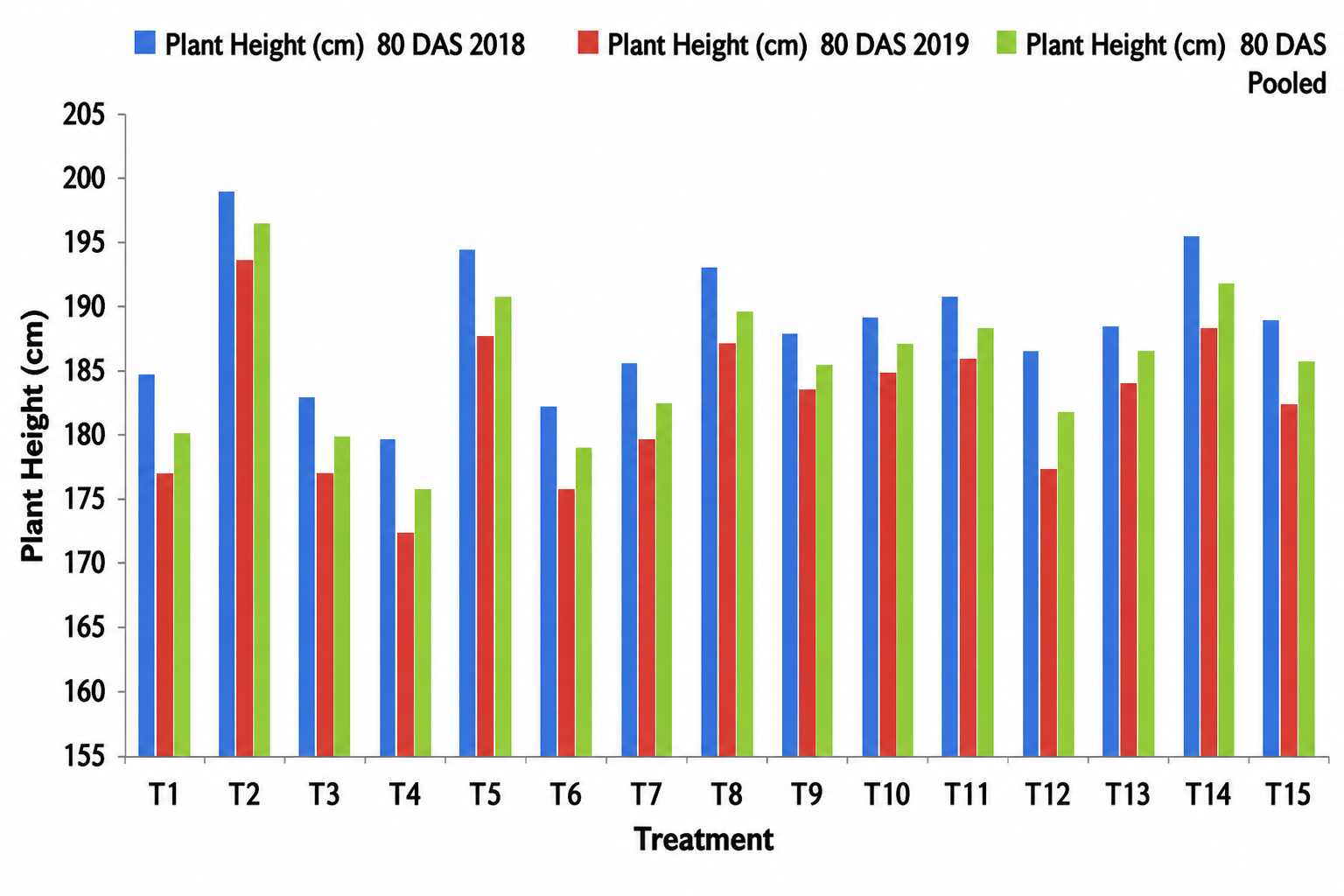
Increasing worldwide demand for food items with limited per capita land for cropping will be a major challenge. Corn (Zea mays L.) is one of the world's most important cereal crops, second only to wheat and rice. To increase crop output and maintain soil health, Integrated Nutrient Management combines chemical fertilizers with organic manures through a biological process. An integrated plant nutrient supply system could aid in achieving balanced fertilization goals, which would improve the soil's physicochemical qualities on a long-term basis. The treatment T2 (100 percent N2 through Urea + Boron @ 3 kg. ha-1) has emerged superior over other treatments and shows better growth, yield, followed by T14 (50 percent N2 through Urea + 25 percent N2 through FYM + 25 percent N2 through Azotobactor @ 3 kg. ha-1), while the treatment T4 (50 percent N2 through Urea + 25 percent N2 through FYM + 25 percent N2 through Azotobactor @ 3 kg. ha-1).
References
[1] B. M. Humtsoe, J. Dawson and P. Rajana (2018). Effect of Nitrogen, Boron and Zinc as Basal and Foliar application on growth and Yield of Maize (Zea mays L.). J. Pharmacogn. Phytochem., 7: 1-4.
[2] L. C. Mahesh, K. N. Kalyanamurthy, Y. M. Ramesha, H. Yogeeshappa, K. M. Kumarshiva and H. Prakash (2010). Effect of Integrated Nutrient Management on Growth and Yield of maize (Zea mays L.). Int. J. Agric. Sci., 6: 275-277.
[3] R. Mahler and R. Bull (1982). Essential plant micronutrients: molybdenum in Idaho [Soils]. Current Information Series-Idaho University.
[4] S. Mahto and S. Neupane (2017). Comparative study of impact of Azotobactor and Tricoderma with other fertilizers on maize growth. J. Maize Res. Devel., 3: 1-16.
[5] J. P. Tetrawal, R. Baldev and D. S. Meena (2011). Effect of Integrated Nutrient Management on productivity, profitability, nutrient uptake and soil fertility in rain-fed maize (Zea mays L.). Indian J. Agron., 56: 373-376.
[6] A. Masih, N. Swaroop and Y. Upadhya (2018). Effects of integrated nutrient management on Maize (Zea mays L.); An Economic analysis. Int. J. Fauna Biol. Stud., 5: 152-153.
[7] A. U. Mohsin, J. Ahmad, A. U. H. Auhmad, R. M. Ikram and K. Mubeen (2012). Effect of Nitrogen application through Different combination of Urea and FYM on the performance of Spring maize. J. Ani. Plant Sci., 22: 195-198.
[8] G. Singh, G. L. Sharma, G. L. Golada and S. Lal (2011). Integrated Nutrient Management on quality protein Maize (Zea mays L.). J. Progressive Agric., 2: 65-67.
[9] M. V. Naseb, H. R. Mobasser and H. R. Ganjali (2015). Effect of different level of vermicompost on yield and quality of maize varieties. Biol. Forum Int. J., 7: 856-860.
[10] L. Singh, S. Kumar, K. Singh and D. Singh (2017). Effect Of Integrated Nutrient Management On Growth And Yield Attributes Of Maize Under Winter Session (Zea mays L.). J. Pharmacogn. Phytochem., 6: 1625-1628.
[11] A. E. A. Omar (2014). Effect of FYM and phosphorus fertilization on yield and its components of Maize (Zea mays L.). Asian J. Crop Sci., 6: 15-26.
[12] P. K. Ramaswami, K. Bhaskar and S. Ignasimuthu (2011). Influence of vermicompost on kernel yield of Maize (Zea mays L.). Elixir Agric., 36: 3119-3121.
[13] M. G. Sujatha, B. S. Lingaraju, Y. B. Pallel and K. V. Ashalatha (2008). Importance of integrated nutrient management practices in maize under rainfed condition. Karnataka J. Agric. Sci., 21: 334-338.
[14] U. Rani, G. Padmaja and P. C. Rao (2014). Integrated Effects of Organic manures and Inorganic fertilizers on soil phosphate activity and yield of maize-spinach cropping system. Agric. Sci. Digest., 34: 31-35.
[15] M. Saleem, Y. M. Khanif; I. Fauziah; A. W. Samsauri and B. Hafeez (2011). Importance of boron for agricultural productivity: a review. Int. Res. J. Agric. Sci. Soil Sci., 1: 299-300.
[16] S. K. Sethi and S. P. Adhikari (2012). Azotobactor a plant growth promoting rhizobacteria used as bio-fertilizer. Dynamic Biochemistry Process, Biotech. Molecular Biol. 6: 68-73.
[17] A. Shakoor, M. Ashraf, L. Shah, A. Ali, A. Khan, A. Sher and Misbahullah (2015). Impact of Farm Yard Manure, Nitrogen, Phosphorus and potassium on Maize Crop. Acad. Res. J. Agri. Sci. Res., 3: 219-223.
[18] S. S. Raskar, V. V. Sonai and P. A. Patil (2013). Study of economics of maize as influenced by different levels of nitrogen, phosphorus and zinc. Int. J. Sci. and Res. Pub. 3: 1-3.
[19] D. Roychowdhury, S. Mondal and S. K. Banerjee (2017). The effect of biofertilizers and the effect of Vermicompost on the cultivation and productivity of Maize: A Review. Adv. Crop Sci. Tech., 5: 261. doi: 10.4172/2329-8863.1000261.
[20] K. Verma, A. D. Bindra, J. Singh, S. C. Negi, N. Datt, U. Rana and S. Manuja (2018). Effect of integrated nutrient management on growth, yield attributes and yield in Maize-Wheat cropping system in mid hills of Himachal Pradesh. Int. J. Pure Applied Biosci., 6: 282-301.
Downloads
Published
Issue
Section
License
Copyright (c) 2022 Author (s)

This work is licensed under a Creative Commons Attribution-NonCommercial-NoDerivatives 4.0 International License.
Copyright © The Author(s). This is an open access article distributed under the terms of the Creative Commons Attribution-NonCommercial-NoDerivatives 4.0 International License (CC BY-NC-ND 4.0), which permits unrestricted non-commercial use, distribution, and reproduction in any medium, provided the original author(s) and source are properly credited, and the work is not modified or adapted.