Socio-economic elevation through open sea cage farming-Evidence from Mandapam region of Tamil Nadu, India
DOI:
https://doi.org/10.31783/elsr.2022.816062Keywords:
adoption, cage culture, demonstration, lobster, success storyAbstract
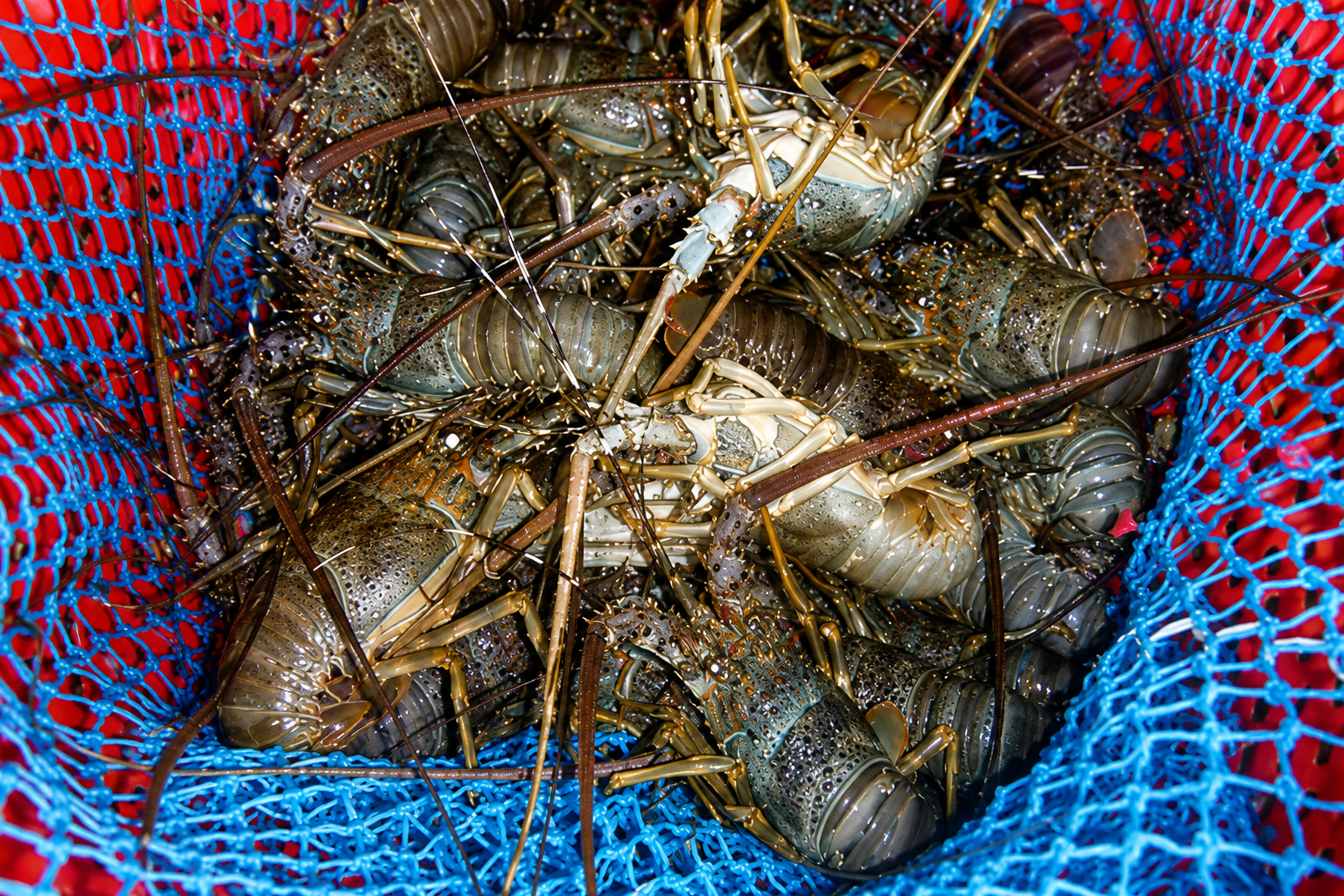
Cage culture guarantees the multiplication of seafood output and revenue generation from a small unit area when compared to significant capital investment oriented onshore farming technologies. The Mandapam Centre for Sustainable Aquaculture (MCeSA) of Tamil Nadu Dr. J. Jayalalithaa Fisheries University (TNJFU) through the cage culture demonstration as part of the NFDB-funded project ‘Open Sea Cage Culture of Marine Finfishes along the Coast of Ramanathapuram District in Tamil Nadu’ is continuously involved in disseminating this valuable technology which provides higher yield and income to meet the alternative livelihood needs and to uplift the socio-economic conditions of the coastal fisherfolk in Ramanathapuram District, Tamil Nadu. Case studies were undertaken in the region to assess the impact of MCeSA and a success story of Mr. V. Nagadas, one of the NFDB scheme beneficiaries is shared here who has implemented the cage culture of lobster and earned a total profit of 280000 INR. The farmer's success and the MCeSA's technical guidance and support are now inspiring other fishermen to adopt the farming.
References
[1] K. N. Saleela, B. Santhosh, M. K. Anil, S. Jasmine, C. Unnikrishnan and A. R. Pillai (2017). Spiny Lobsters and potential of sea cage culture spiny Lobster resources in India. In: training on recent advances in mariculture, vizhinjam research centre of CMFRI, Vizhinjam, Thiruvananthapuram, Kerala, pp57-62.
[2] G. S. Rao, R.M. George, M. K. Anil, K. N. Saleela, S. Jasmine, H. J. Kingsly and G. H. Rao (2010). Cage culture of the spiny lobster Panulirus homarus (Linnaeus) at Vizhinjam, Trivandrum along the south-west coast of India. Indian J. Fish., 57: 23-29.
[3] B. Johnson, A. A. Nazar and R. Jayakumar (2016). Analysis of training effectiveness of marine ornamental fish culture training programmes. Mar. Fish. Infor. Serv., T & E Ser., 229: 3-7.
[4] B. Johnson, A. A. Nazar, R. Jayakumar, G. Tamilmani, M. Sakthivel, P. Ramesh Kumar and G. Gopakumar et al., (2019). Adoption of sea cage farming of cobia (Rachycentron canadum) by fishermen self-help groups as a diversified livelihood option: A success story from Ramanathapuram District, Tamil Nadu, India. Indian J. Fish., 66: 118-124.
[5] S. Das, S. S. Dana, and B. Saha (2020). Success story of FFDA beneficiary farmer: A case study. Indian J. Ext. Educ., 56: 201-203.
Downloads
Published
Issue
Section
License
Copyright (c) 2022 Author (s)

This work is licensed under a Creative Commons Attribution-NonCommercial-NoDerivatives 4.0 International License.
Copyright © The Author(s). This is an open access article distributed under the terms of the Creative Commons Attribution-NonCommercial-NoDerivatives 4.0 International License (CC BY-NC-ND 4.0), which permits unrestricted non-commercial use, distribution, and reproduction in any medium, provided the original author(s) and source are properly credited, and the work is not modified or adapted.