Assessment of combining ability in tomato genotypes (Solanum lycopersicum L.) for quality traits
DOI:
https://doi.org/10.31783/elsr.2022.816369Keywords:
GCA, line, SCA, tester, tomatoAbstract
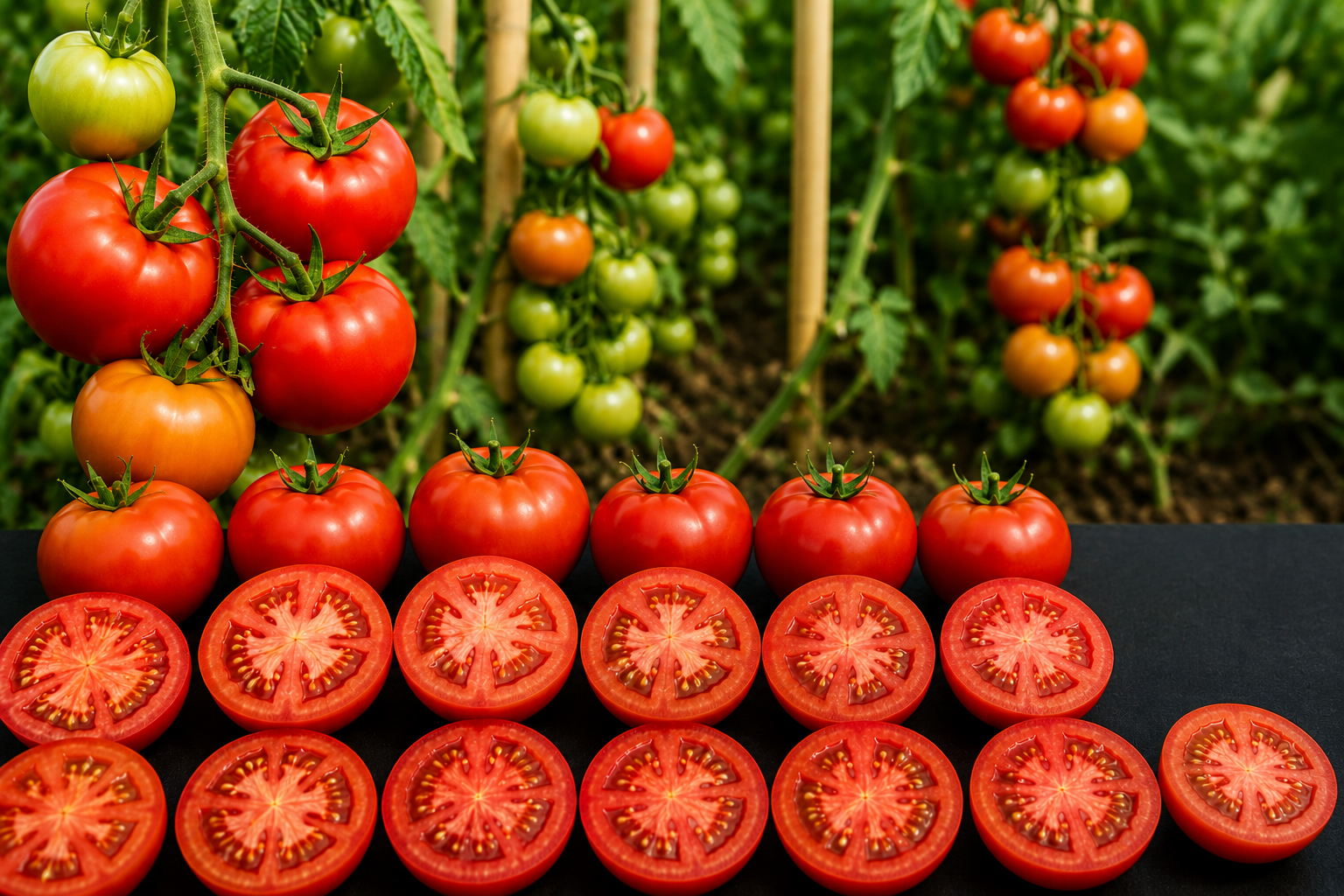
Combining ability effects (GCA and SCA) were estimated using seventeen parents including fourteen females and three males of tomato (Solanum lycopersicum L.) and their hybrids developed through line × tester method. The results indicated that the lines, HUB46 for fruit firmness and number of locules, HUB36 for fruit pH (-ve direction) and shelf life, HUB3 for equatorial diameter and TSS, HUB45 for pericarp thickness and polar diameter whereas, among testers Arka Vikas for fruit firmness, pericarp thickness, fruit pH (+ve direction), polar diameter exhibited significant gca effects and considered as good general combiners. Cross combinations HUB3×DMT-2 for fruit firmness and pericarp thickness, HUB10×DMT-2 for number of locules, HUB47× Arka Vikas for fruit pH (+ve direction), HUB14× Arka Vikas for TSS, shelf life and polar diameter, HUB4×PKM-1 for equatorial diameter exhibited significant positive sca effects and regarded as good specific combiners.
References
[1] Y. K. Narasimhamurthy and P. H. R. Gowda (2013). Line× tester analysis in tomato (Solanum lycopersicum L.) identification of superior parents for fruit quality and yield-attributing traits. Int. J. Plant Breed., 7: 50-54.
[2] R. Srivastava, V. M. Prasad, S. Marker, B. Vikram and V. Bahadur (2019). Combining ability analysis for earliness, yield and quality components in tomato (Solanum lycopersicum L.). Int. J. Curr. Microbiol. App. Sci., 8: 878-887.
[3] K. C. Bhalala and R. R. Acharya (2019). Assessment of combining ability using Line× tester analysis over environments in tomato (Solanum lycopersicum L.). J. Pharmacogn. Phytochem., 8: 4478-4485.
[4] O. Gayosso-Barragán, A. López-Benítez, S. A. Rodríguez-Herrera, J. N. Ek-Maas, D. M. Hidalgo-Ramos and J. S. G. J. Alcala-Rico (2019). Studies on combining ability in tomato (Solanum lycopersicum L.). Agronomy Res., 17: 77-85.
[5] S. K. Yadav, B. K. Singh, D. K. Baranwal and S. S. Solankey (2013). Genetic study of heterosis for yield and quality components in tomato (Solanum lycopersicum). Afr. J. Agri. Res., 8: 5558-5591.
[6] M. A. H. E.-Gabry, T. I. H. Solieman and A. I. A. Abido (2014). Combining ability and heritability of some tomato (Solanum lycopersicum L.) cultivars. Sci Hortic., 167: 153-157.
[7] Nadeem Hasan, Asif Saeed, Amir Shakeel, M. F. Saleem, A. Ahmad and S. Yasin (2014). Genetic analysis to find suitable parents for development of tomato hybrids. Agric. Forestry, 60: 255-265.
[8] R. Kumar , K. Srivastav, N. P. Singh , N. K. Vasistha , R. K. Singh and M. K. Singh (2013). Combining ability analysis for yield and quality traits in tomato (Solanum lycopersicum L.). J. Agric. Sci., 5: 213-218.
[9] D N. Soresa, G. Nayagam, N. Bacha and Z Jaleta (2020). Heterosis in tomato (Solanum lycopersicum L.) for yield and yield component traits. Advances in Res., 21: 141-152.
[10] T. Raj, M. L. Bhardwaj and S. Pal (2016). Estimation of heterosis for quality traits in tomato (Solanum lycopersicum L.). J. Pharmacogn. Phytochem., 7: 2401-2404.
Downloads
Published
Issue
Section
License
Copyright (c) 2022 Author (s)

This work is licensed under a Creative Commons Attribution-NonCommercial-NoDerivatives 4.0 International License.
Copyright © The Author(s). This is an open access article distributed under the terms of the Creative Commons Attribution-NonCommercial-NoDerivatives 4.0 International License (CC BY-NC-ND 4.0), which permits unrestricted non-commercial use, distribution, and reproduction in any medium, provided the original author(s) and source are properly credited, and the work is not modified or adapted.