Assessment of the impact of treated and untreated Sewage water on growth and productivity of Okra (Abelmoschus esculentus L. Moench)
DOI:
https://doi.org/10.31783/elsr.2022.81119126Keywords:
irrigation conjunctive mode, okra production, water qualityAbstract
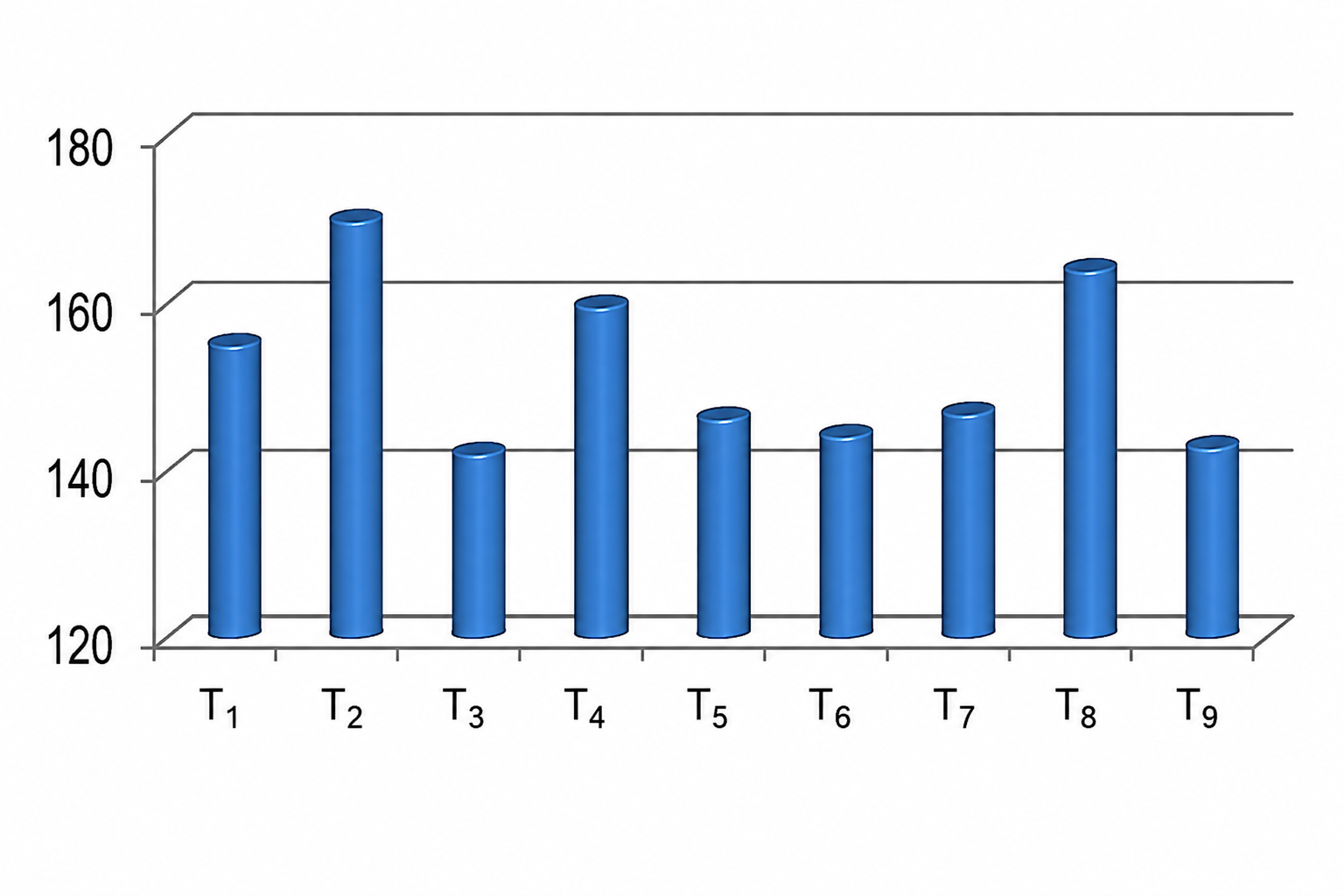
During the summer of 2018, an experiment was done at the Agronomy Field Unit, College of Agriculture, Navile, Shivamogga, and Karnataka. Okra (cv. Arka Anamika) is primarily grown for its fruits and used as a vegetable because its fruits and leaves contain calcium, iron, proteins, and vitamins, all of which are dietary supplements required for a basic diet. Vegetable demand is higher in urban areas even though they are grown in sewage water and are better for human consumption. As a result, okra was chosen as the test crop, and it was watered with Normal Water (NW), Treated Sewage Water (TSW), and Untreated Sewage Water (UTSW) separately and in conjunctive mode, resulting in nine treatments reproduced three times using the RCBD design. The treated and untreated sewage water obtained from college where it is created in huge amounts and on a continual basis. To grow the crops, the recommended package was followed. In comparison to the application of NW, TSW and UTSW irrigation changed the soil’s chemical properties. The results indicated that TSW application resulted in a larger height (168.50), number of leaves (33.00), and number of branches (4.47). However, sewage-irrigated soils were much below the salinity threshold, resulting in improved crop growth components and yield. TSW application resulted in a higher fruit production of 32.35 t ha-1 compared to NW (25.20 t ha-1) and UTSW applications (21.61 t ha-1).
References
[1] S. O. Fakayode (2005). Impact assessment of industrial effluent on water quality of the receiving Alaro River in Ibadan, Nigeria, Afr. J. Environ. Assess. Manag., 10: 1-13.
[2] N. Haruvy (1997). Agricultural reuse of wastewater: Nation-wide cost-benefit analysis. Agric. Ecosyst. Environ., 66: 113-119.
[3] M. Qadir, D. Wichelns, L. Raschid-Sally, P. G. Mccornick, P. Drechsel, A. Bahari, and P. S. Minhas (2010). The challenges of wastewater irrigation in developing countries. Agric. Water Manag., 97: 561-568.
[4] M. V. Manjunatha, B. H. Prasanna Kumara, A. S. Sunil and H. Manjunatha (2017). Yield, water productivity and economics of green chilli as influenced by engineered constructed wetland treated and untreated domestic sewage water. Int. J. Curr. Microbiol. App. Sci., 6: 2125-2132.
[5] F. Pedrero, I. Kalavrouziotis, J. J. Alarcoa, P. Koukoulakis and T. Asano (2010). Use of treated municipal wastewater in irrigated agriculture-Review of some practices in Spain and Greece. Agric. Water Manag., 97: 1233-1241.
[6] V. E. Rubatzky and M. Yamaguchi (1997). World vegetables: principles, production, and nutritive values. Chapman and Hall, New York, USA.
[7] S. Priya, C. Varun, K. T. Brahm, S .C. Shubhendra, S. Sobita, S. Bilalc, and A. B. Abidia, (2014). An overview on okra (Abelmoschus esculentus) and its importance as a nutritive vegetable in the world. Int. J. Pharma Bio Sci., 4: 227-233.
[8] P. Sharma and A. Kaushal (2015). Economics of growing okra under drip fertigation, Indian J. Sci. Tech., 8: 18-23.
[9] FAO (1985). Appendix 3 FAO Irrigation water quality guidelines.
[10] E. Yaser, H. Mostafa and G. Ahmad (2008). Effect of municipal wastewater with manure and chemical fertilizer on grain yield and yield components in corn KoSc 704. J. Agron., 7: 277-280. doi: 10.3923/ja.2008.277.280.
[11] A. A. Arunachalam, V. Veerabadran and A. Muthusankara (1995). Integrated nitrogen supply system for finger millet, Indian J. Agron., 40: 109-111.
[12] S. Purushottam, S. Sadashivaiah and K. R. Kulkarni (1990). Response of ragi varieties to nitrogen levels during summer season, Curr. Res., 19: 116-119.
[13] K. A. Yudhistra and R. M. Vikram (2007). Effects of municipal sewage irrigation on the growth of tomato plants on sandy soils at Kalpakkam, Tamilnadu, India. Nature Environ. Poll. Tech., 6: 549-556.
[14] A. F. Fonseca, A. J. Melfi, F. A. Monteiro, C. R. Montes, V. V. deAlmeida and U. Herpin (2007). Treated sewage effluent as a source of water and nitrogen for Tifton 85 bermuda grass. Agric. Water Manag., 87: 328-336.
Downloads
Published
Issue
Section
License
Copyright (c) 2022 Author (s)

This work is licensed under a Creative Commons Attribution-NonCommercial-NoDerivatives 4.0 International License.
Copyright © The Author(s). This is an open access article distributed under the terms of the Creative Commons Attribution-NonCommercial-NoDerivatives 4.0 International License (CC BY-NC-ND 4.0), which permits unrestricted non-commercial use, distribution, and reproduction in any medium, provided the original author(s) and source are properly credited, and the work is not modified or adapted.