Traits of significance for temperature variability on cold tolerance of maize inbred lines under field conditions
DOI:
https://doi.org/10.31783/elsr.2023.91117185Keywords:
cold stress, growth stage, inbred lines, maize, tolerantAbstract
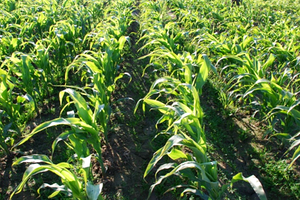
In cool locations like Northern India, for hybrid maize, temperature is the crucial factor in yield and there are relatively few sources of corn that can withstand freezing or cold stress. Under field conditions, the tolerance/resistance of 200 inbred lines to low temperature stress was assessed. The relationship of weather fluctuations was studied on crop growth and cold stress parameters. During the first and second phases of the cold spell (stage I and stage II), inbred plants responded to the cold and frost by starting to yellow and dry their leaves. The findings showed that there was a lot of genetic variation for the tolerance/sensitivity-controlling characteristics. Sixty inbred lines demonstrated minimal leaf yellowing and healthy plant development in the presence of persistent cold stress. Thirty six inbred lines were found moderately tolerant and the rest of them were susceptible to cold/frost at less than 10°C. Among the resistant source inbred lines, the lines with the higher recovery of more than 50 % for yellowing of leaves as well as plant growth of more than 20 % respectively, among the selected resistant/ tolerant inbred lines include HKI 1352-2 and HKI 1348-6-2 of white maize, HKI 766, HKI 463 and HKI 1160 of normal maize and HKI PC 4B of popcorn.
References
[1] P. Miedema (1982). The effects of low temperature on Zea mays. Adv. Agron., 35: 93-129.
[2] M. Farooq, T. Aziz, A. Wahid, D. J. Lee and K. H. M. Siddique (2009). Chilling tolerance in maize: agronomic and physiological approaches. Crop Pasture Sci., 60: 501-516.
[3] Y. Fracheboud, J.M. Ribaut, M. Vargas, R. Messmer and P. Stamp (2002). Identification of quantitative trait loci for cold- tolerance of photosynthesis in maize (Zea mays L.). J. Exp. Bot., 53: 1967-1977.
[4] P. Stamp (1986). Chilling stress in maize. In Breeding of Silage Maize: Eucarpia Proceeding, O. Dolstra, P. Miedema (Eds.), Wageningen, The Netherlands, pp43-50.
[5] E. A. Lee, M. A. Staebler and M. Tollenaar (2002). Genetic variation in physiological discriminators for cold tolerance–early autotrophic phase of maize development. Crop Sci., 42: 1919-1929.
[6] C. Jompuk, Y. Fracheboud, P. Stamp and J. Leipner (2005). Mapping of quantitative trait loci associated with chilling tolerance in maize (Zea mays L) seedlings grown under field conditions. J. Exp. Bot., 56: 1153–1163.
[7] E. Aberg and E. Akerberg (1958). Cool tolerance studies in maize grown under northern conditions. Ann. Royal Coll. Sweden., 24: 477-494.
[8] B. S. Dhillon, R. K. Shanna, V. V. Malborra and A. S. Khehra (1988). Evaluation of maize germplasm for tolerance to low temperature stress under field and laboratory conditions. J. Agron. Crop Sci., 160: 89-93.
[9] A. K. Hardacre and H. A. Eagles (1989). The temperature response of young hybrid maize plants adapted to different climates. NZ. J. Crop Hort. Sci., 17: 9-17.
[10] V. Mahajan, G. K Chikkappa, B. Kumar, K. R. Sai, A. Bilal and V. Kumar (2012). Performance of single cross maize hybrids during winter season of northern India. Indian J. Genet., 72: 372-375.
[11] J. J. Rahn and D. M. Brown (1971). Corn canopy temperatures during freezing or near freezing conditions. Can. J. Pl. Sci., 51: 173-175.
[12] B. Ahmad, V. Kumar, A. Singode, V. Mahajan and K. P. Singh (2014). Evaluation of maize (Zea mays) inbred lines for tolerance to low temperature stress under field conditions. Ind. J. Agri. Sci., 84: 873-876.
[13] J. J. Mock and S. A. Eberhart (1972). Cold tolerance in adapted maize populations. Crop Sci., 12: 466-469.
[14] J. J. Mock and W. H. Skrdla (1978). Evaluation of maize plant introductions for cold tolerance. Euphytica, 27: 27-32.
[15] J. A. Greaves (1996). Improving suboptimal temperature tolerance in maize–the search for variation. J. Exp. Bot., 47: 307-323.
Downloads
Published
Issue
Section
License
Copyright (c) 2023 Author (s)

This work is licensed under a Creative Commons Attribution-NonCommercial-NoDerivatives 4.0 International License.
Copyright © The Author(s). This is an open access article distributed under the terms of the Creative Commons Attribution-NonCommercial-NoDerivatives 4.0 International License (CC BY-NC-ND 4.0), which permits unrestricted non-commercial use, distribution, and reproduction in any medium, provided the original author(s) and source are properly credited, and the work is not modified or adapted.