Histopathological examination of the hepatoprotective effect of curcumin with piperine on thioacetamide induced hepatotoxicity in rats
DOI:
https://doi.org/10.31783/elsr.2023.925160Keywords:
curcumin, histopathology, kidney, liver, piperine, thioacetamideAbstract
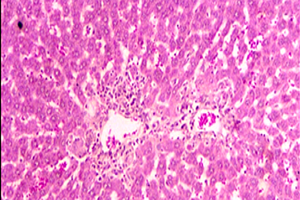
Piperine possesses bio-enhancer characteristics, while curcumin has a long history of traditional use in reviving the liver and treating illnesses and dysfunction of the liver. Thus, the goal of the current investigation was to ascertain the hepatoprotective potential of curcumin and piperine after oral administration on albino rat liver damage caused by thioacetamide. In this study, the animals were divided into five groups, each containing four rats. Groups II (received thioacetamide on the eighth day), III (received curcumin orally for seven days), IV, and V received a single dose of thioacetamide on the eighth day of the experiment. For seven days, a group I received normal saline as a control. For seven days, Group III received 200 mg of curcumin per kg of body weight. Groups IV and V received piperine for 7 days combined with curcumin at doses of 200 and 400 mg per kg of body weight, respectively. Rats of all the groups were sacrificed on the 10th day of the study. The thioacetamide treated group showed severe necrosis, hemosiderosis, and mononuclear cell infiltration around the central vein. The curcumin-treated group showed minimal hepatic necrosis and mild degenerative changes indicating restoration of normal architecture due to the hepatoprotective property of respective treatments against thioacetamide. The histo-architecture of the kidney treated with thioacetamide showed pathological changes as evidenced by tubular degeneration and distorted architecture. Treatment groups showed improvement in renal pathology.
References
[1] T. H. Leu and M. C. Maa (2002). The molecular mechanisms for the antitumorigenic effect of curcumin. Curr. Med. Chem. Anticancer Agents, 2: 357-370.
[2] M. Naito, X. Wu, H. Nomura, M. Kodama, Y. Kato and T. Osawa (2002). The protective effects of tetrahydrocurcumin on oxidative stress in cholesterol-fed rabbits. J. Atheroscler. Thromb., 9: 243-250.
[3] M. E. Egan, M. Pearson, S. A. Weiner, V. Rajendran, D. Rubin, J. Glöckner-Pagel, Susan Canny et al., (2004). Curcumin, a major constituent of turmeric, corrects cystic fibrosis defects. Science, 304: 600-602.
[4] I. Gukovsky, C. N. Reyes, E. C. Vaquero, A. S. Gukovskaya and S. J. Pandol (2003). Curcumin ameliorates ethanol and nonethanol experimental pancreatitis. Am. J. Physiol. Gastrointest. Liver Physiol., 284: G85-G95.
[5] E. J. Park, C. H. Jeon, G. Ko, J. Kim and D.H. Sohn (2000). Protective effect of curcumin in rat liver injury induced by carbon tetrachloride. J. Pharm. Pharmacol., 52: 437-440.
[6] K. Y. Yang, L. C. Lin, T. Y. Tseng, S. C. Wang and T. H. Tsai (2007). Oral bioavailability of curcumin in rat and the herbal analysis from Curcuma longa by LC–MS/MS. J. Chromatogr. B., 853: 183-189.
[7] H. Shapiro, M. Ashkenazi, N. Weizman, M. Shahmurov, H. Aeed and R. Bruck (2006). Curcumin ameliorates acute thioacetamide‐induced hepatotoxicity. J. Gastroenterol. Hepatol., 21: 358-366.
[8] K. Janakiraman and R. Manavalan (2008). Studies on effect of piperine on oral bioavailability of ampicillin and norfloxacin. Afr. J. Tradit. Complementary Altern. Med., 5: 257-262.
[9] S. M. Salama, M. A. Abdulla, A. S. Alrashdi, S. Ismail, S. S. Alkiyumi and S. Golbabapour (2013). Hepatoprotective effect of ethanolic extract of Curcuma longa on thioacetamide induced liver cirrhosis in rats. BMC Complement. Altern. Med., 13: 56. doi: 10.1186/1472-6882-13-56.
[10] Armed Forces Institute of Pathology (1960). Manual of histological and special staining technique. 2nd Edn., McGraw-hill book company, New York.
[11] G. W. Snedecor and W. G. Cochran (1989). Statistical Methods, 8th Edn., The lowa State College Press, Inc. USA.
[12] R. Bruck, M. Ashkenazi, S. Weiss, I. Goldiner, H. Shapiro, H. Aeed and O. Genina et al., (2007). Prevention of liver cirrhosis in rats by curcumin. Liver Int., 27: 373-383.
[13] F. A. Kadir, F. Othman, M. A. Abdulla, F. Hussan and P. Hassandarvish (2011). Effect of Tinospora crispa on thioacetamide-induced liver cirrhosis in rats. Indian J. Pharmacol., 43: 64. doi: 10.4103/0253-7613.75673.
[14] M. Salahshoor, S. Mohamadian, S. Kakabaraei, S. Roshankhah and C. Jalili (2016). Curcumin improves liver damage in male mice exposed to nicotine. J. Tradit. Complement. Med., 6: 176-183.
[15] C. C. Hsieh, H. L. Fang and W. C. Lina (2008). Inhibitory effect of Solanum nigrum on thioacetamide-induced liver fibrosis in mice. J. Ethnopharmacol., 119: 117-121.
[16] V. Soetikno, S. D. P. Sari, L. U. Maknun, N. K. Sumbung, D. N. I. Rahmi, B. A. W. Pandhita and M. Louisa et al., (2019). Pre-treatment with curcumin ameliorates cisplatin-induced kidney damage by suppressing kidney inflammation and apoptosis in rats. Drug Res., 69: 75-82.
[17] S. Dorğru-Abbasoğlu, Ö. Kanbağli, J. Balkan, U. Cevikbaş, G. Aykac-Toker and M. Uysal (2001). The protective effect of taurine against thioacetamide hepatotoxicity of rats. Hum. Exp. Toxicol., 20: 23-27.
[18] P. Schyman, R. L. Printz, S. K. Estes, K. L. Boyd, M. Shiota and A. Wallqvist (2018). Identification of the toxicity pathways associated with thioacetamide-induced injuries in rat liver and kidney. Front. Pharmacol., 9: 1272. doi: 10.3389/fphar.2018.01272.
[19] M. E. Caballero, J. Berlanga, D. Ramirez, P. Lopez-Saura, R. Gozalez, D. N. Floyd and T. Marchbank et al., (2001). Epidermal growth factor reduces multiorgan failure induced by thioacetamide. Gut, 48: 34-40.
[20] N. Venkatesan, D. Punithavathi and V. Arumugam (2000). Curcumin prevents adriamycin nephrotoxicity in rats. Br. J. Pharmacol., 129: 231-234.
[21] M. Uzunhisarcikli and A. Aslanturk (2019). Hepatoprotective effects of curcumin and taurine against bisphenol A-induced liver injury in rats. Environ. Sci. Pollut. Res., 26: 37242-37253.
[22] M. Bishnoi, K. Chopra, L. Rongzhu and S. K. Kulkarni (2011). Protective effect of curcumin and its combination with piperine (bioavailability enhancer) against haloperidol-associated neurotoxicity: cellular and neurochemical evidence. Neurotox. Res., 20: 215-225.
[23] D. Rathee, A. Kamboj, R.K. Savhdev and S. Sidhu (2018). Hepatoprotective effect of Aegle marmelos augmented with piperine co-administration in paracetamol model. Rev. Bras. Farmacogn., 28: 65-72.
Downloads
Published
Issue
Section
License
Copyright (c) 2023 Author (s)

This work is licensed under a Creative Commons Attribution-NonCommercial-NoDerivatives 4.0 International License.
Copyright © The Author(s). This is an open access article distributed under the terms of the Creative Commons Attribution-NonCommercial-NoDerivatives 4.0 International License (CC BY-NC-ND 4.0), which permits unrestricted non-commercial use, distribution, and reproduction in any medium, provided the original author(s) and source are properly credited, and the work is not modified or adapted.