Effect of sodium fluoride on germination, seedling growth and biochemical attributes in linseed varieties (Linum usitatissimum L.)
DOI:
https://doi.org/10.31783/elsr.2023.92314324Keywords:
proline, relative water content, seedling growth, sodium fluorideAbstract
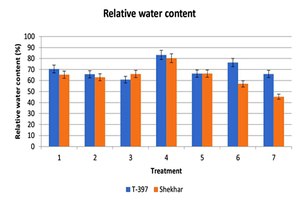
Fluoride is a potential threat to crop plants due to its inherent toxicity and its ability to move within plant tissues. The goal of the current study was to determine how sodium fluoride affected physiological, morphological, and biochemical parameters during the germination and seedling development of the T-397 and Shekhar linseed cultivars. Seeds were exposed to various sodium fluoride (NaF) concentrations (0.1 mM, 0.5 mM, 1.0 mM, 2.5 mM, 5.0 mM, and 10.0 mM) during the experiment. The findings of this investigation unequivocally demonstrated the substantial detrimental effects of sodium fluoride on multiple aspects of linseed growth and development. As the NaF concentration increased, the adverse impacts were magnified, highlighting a concentration-dependent relationship. Notably, the levels of total soluble sugars and proline content exhibited a remarkable fourfold increase as the sodium fluoride concentration escalated. This observation suggests that sodium fluoride may disrupt the normal metabolic processes in linseed, leading to alterations in sugar and proline metabolism. Interestingly, even at the lowest tested concentration of 0.1 mM NaF, linseed displayed susceptibility to fluoride-induced growth inhibition. This suggests that even at very modest levels of contamination, linseed cultivars are susceptible to fluoride stress, which may have an impact on crop yield in fluoridated areas. It is important to remember that this study did not definitively show any differences in the examined cultivars' sensitivity to fluoride stress; therefore more investigation is required to identify which type of linseed is more susceptible to this stress.
References
[1] S. K. Jha, A. K. Nayak and Y. K. Sharma (2009). Fluoride toxicity effects in onion (Allium cepa L.) grown in contaminated soils. Chemosphere, 76: 353-356.
[2] A. Ghosh, K. Mukherjee, S. K. Ghosh and B. Saha (2013). Sources and toxicity of fluoride in the environment. Res. Chem. Intermed., 39: 2881-2915.
[3] M. Baunthiyal and S. Ranghara (2014). Physiological and biochemical responses of plants under fluoride stress: an overview. Fluoride, 47: 287-293.
[4] N. P. Gritsan (1993). Cytogenetic effects of gaseous fluorides on grain crops. Fluoride, 26: 23-32.
[5] N. Elloumi, F. B. Abdallah, I. Mezghani, A. Rhouma and M. Boukhrisb (2005). Effect of fluoride on almond seedling in culture solution. Fluoride, 38: 193-198.
[6] P. Bernfeld (1955). [17] Amylases, α and β. Methods Enzymol., 1: 149-158.
[7] D. I. Arnon (1949). Copper enzymes in isolated chloroplasts. Polyphenoloxidase in Beta vulgaris. Plant Physiol., 24: 1-15.
[8] M. Dubois, K. A. Guilles, J. K. Hamilton, P. A. Rebers and F. Smith (1956). Calorimetric method for the determination of sugars and related substances. Anal. Chem., 28, 350-356.
[9] M. M. Bradford (1976). A rapid and sensitive method for the quantitation of microgram quantities of protein utilizing the principle of protein-dye binding. Anal. Biochem., 72: 248-254.
[10] L. S. Bates, R. P. Waldeen and I. D. Teale (1973). Rapid determination of free proline for water stress studies. Plant Soil, 39: 205-207.
[11] V. G. Panse and P. V. Sukhatme (1954). Statistical Methods for Agricultural Workers. ICAR, New Delhi i.
[12] D. Bhargava and N. Bhardwaj (2010). Effect of sodium fluoride on seed germination and seedling growth of Triticum aestivum Var. RAJ. 4083. J. Phytol., 2: 41-43.
[13] J. Song, G. Feng, C. Y. Tian and F. S. Zhang (2005). Strategies for adaptation of Suaeda physophora, Haloxylon ammodendron and Haloxylon persicum to a saline environment during seed germination stage. Ann Bot-London. 96: 399-405.
[14] G. N. Al-Karaki (2001). Germination, sodium and potassium concentrations of barley seeds as influenced by salinity. J. Plant Nutr., 24: 511-522.
[15] M. Almansouri, J.-M. Kinet and S. Lutts (2001). Effect of salt and osmotic stress on germination in durum wheat (Triticum durum Desf.). Plant Soil, 231: 243-254.
[16] A. Feigin, I. Rylski and J. Shalhevet (1984). Response of melon plants to different concentration of NO3 and Cl in saline nutrient solutions. In: Paper presented in soil salinity under irrigation–processes and management, International conference, International Soc. Soil Sci. and Israel Soc. Soil SC ii, Bet Dagan, Israel.
[17] M. T. Davies G. R. Port and A. W. Davison (1998). Effects of dietary and gaseous fluoride on the aphid Aphis fabae. Environ. Pollut., 99: 405-409.
[18] H. C. Sharma (1985). Effect of hydrogen fluoride fumigation in Triticum aestivum, Brassica juncea and Phaseolus aureus plants. Fluoride, 18: 15-22.
[19] D. Sabal, T. I. Khan and R. Saxena (2006). Effect of sodium fluoride on cluster bean (Cyamopsis tetragonoloba) seed germination and seedling growth. Fluoride, 39: 228-230.
[20] K. A. Kumar and A. V. B. Rao (2008). Physiological responses to fluoride in two cultivars of Mulberry. World J. Agric. Sci., 4: 463-466.
[21] N. Singh (2013). Effect of fluoride toxicity on the growth yield and sterility behaviour of wheat (Triticum aestivum L.) and barley (Hordeum vulgare L.). PhD thesis, Botany, Choudhary Charan Singh University. India
[22] M. Y. Ashraf, G. Sarwar, M. Ashraf, R. Afaf and A. Sattar (2002). Salinity induced changes in α-amylase activity during germination and early cotton seedling growth. Biol. Plantarum, 45: 589-591.
[23] F. Yomazoe (1962). Symptoms of mechanism of injury to crops exposed to hydrogen fluoride. Bull. Natl. Inst. Agri. Sci. Ser. B, 12: 1-25.
[24] S. Gupta, S. Banerjee and S. Mondal (2009). Phytotoxicity of fluoride in the germination of paddy (Oryza sativa) and its effect on the physiology and biochemistry of germinated seedlings. Fluoride, 42: 142-146.
[25] A. Kumar (2000). Effect of sodium fluoride toxicity on the growth and productivity of pea, barley and tomato. Ph.D. thesis (Ag. Botany), C.C.S.Univarsity, Meerut, India.
[26] S. Gupta, S. Banerjee and S. Mondal (2009). Fluoride accumulation in paddy (Oryza sativa) irrigated with fluoride contaminated groundwater in an endemic Area of Birbhum District, West Bengal. Fluoride, 42: 224-227.
[27] A. Parida, A. B. Das and P. Das (2002). NaCl stress causes changes in photosynthetic pigments, proteins, and other metabolic components in the leaves of a true mangrove, Bruguiera paraviflora, in hydroponic cultures. J. Plant Biol., 45: 28-36.
[28] Z. L. Hong, Z. Zhang, J. M. Olson and D. P. S. Verma (2001). A novel UDP-glucose transferase is part of the callose synthase complex and interacts with phragmoplastin at the forming cell plate. Plant Cell, 13: 769-779.
[29] J. K. Datta, A. Maitra, N. K. Mondal and A. Banerjee (2012). Studies on the impact of fluoride toxicity on germination and seedlings growth of gram seeds (Cicer arietinum L. cv Anuradha). J. Stress Physiol. Biochem., 8: 194-202.
Downloads
Published
Issue
Section
License
Copyright (c) 2023 Author (s)

This work is licensed under a Creative Commons Attribution-NonCommercial-NoDerivatives 4.0 International License.
Copyright © The Author(s). This is an open access article distributed under the terms of the Creative Commons Attribution-NonCommercial-NoDerivatives 4.0 International License (CC BY-NC-ND 4.0), which permits unrestricted non-commercial use, distribution, and reproduction in any medium, provided the original author(s) and source are properly credited, and the work is not modified or adapted.