Camelina sativa: A promising plant-based protein source
DOI:
https://doi.org/10.31783/elsr.2026.12012634Keywords:
camelina protein, food security, nutrition, plant protein, protein extractionAbstract
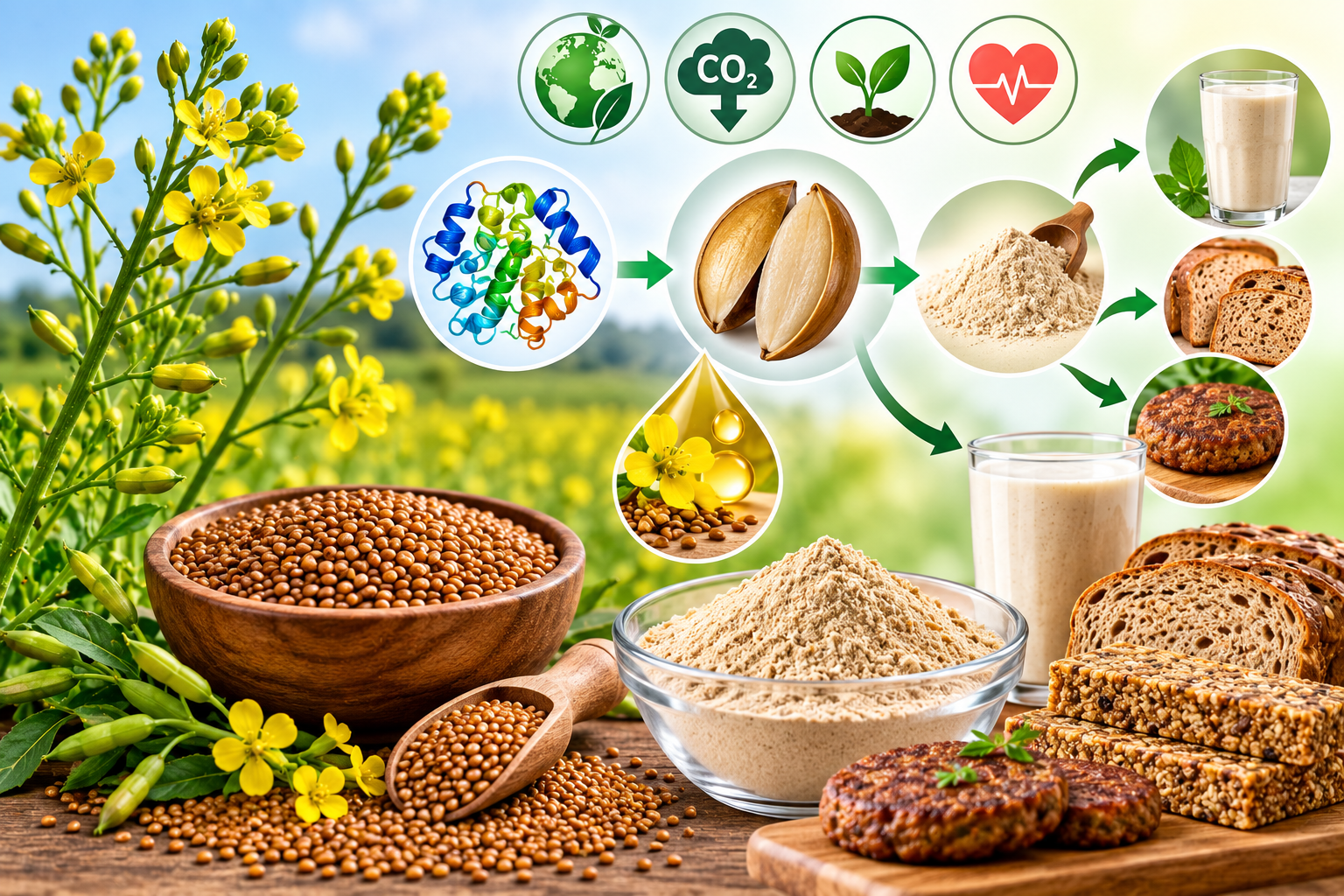
The global demand for protein is rising very quickly due to dietary changes, population increase, and sustainability concerns. Because of its benefits for the environment, nutrition, and ethics, plant-based proteins have become a viable substitute for traditional animal-derived proteins. Among these, the Brassicaceae family's underappreciated oilseed crop Camelina sativa has drawn notice for its high protein content, advantageous amino acid profile, and useful qualities. Essential amino acids like lysine and methionine are found in camelina protein, along with bioactive substances that may have anti-inflammatory and anti-diabetic properties. Because camelina uses less land and produces fewer greenhouse gas emissions than animal protein production, it is both economically and environmentally viable for large-scale production. To improve protein yield and functioning, several extraction strategies have been investigated, such as alkaline, salt, and ultrasonic-assisted procedures. According to studies, camelina protein has promising emulsifying, foaming, and water-holding properties that make it appropriate for a variety of food applications, including protein supplements, baked goods, and meat substitutes. Camelina protein is a viable and sustainable substitute protein source with enormous potential in the developing global food sector. There are still issues, nevertheless, such as the existence of anti-nutritional substances like phytic acid and glucosinolates, a lack of human consumption studies, and low consumer acceptance.
References
[1] K. L. Hefferon, H. De Steur, F. J. Perez-Cueto and R. Herring (2023). Alternative protein innovations and challenges for industry and consumer: an initial overview. Front. Sustain. Food Syst., 7: 1038286. doi: 10.3389/fsufs.2023.1038286.
[2] M. A. Ashraf, B. Shen, M. A. Raza, Z. Yang, M. N. Amjad, G. ud Din and L. Yue et al., (2025). Albumin: A review of market trends, purification methods, and biomedical innovations. Curr. Issues Mol. Biol., 47: 303. doi: 10.3390/cimb47050303.
[3] B. P. Ismail, L. Senaratne-Lenagala, A. Stube and A. Brackenridge (2020). Protein demand: Review of plant and animal proteins used in alternative protein product development and production. Anim. Front., 10: 53-63.
[4] C. Boyle, L. Hansen, C. Hinnenkamp and B. P. Ismail (2018). Emerging camelina protein: Extraction, modification, and structural/functional characterization. J. Am. Oil Chem. Soc., 95: 1049-1062.
[5] J. Poore, T. Nemecek (2018). Reducing food’s environmental impacts through producers and consumers. Science., 360: 987-992.
[6] H. Harwatt (2019). Including animal to plant protein shifts in climate change mitigation policy: a proposed three-step strategy. Clim. Pol., 19: 533-541.
[7] P. J. Gerber, H. Steinfeld, B. Henderson, A. Mottet, C. Opio, J. Dijkman and J. Falcucci et al., (2013). Tackling climate change through livestock: a global assessment of emissions and mitigation opportunities. Rome: Food and Agriculture Organization of the United Nations.
[8] G. Eshel, A. Shepon, T. Makov and R. Milo (2014). Land, irrigation water, greenhouse gas, and reactive nitrogen burdens of meat, eggs, and dairy production in the United States. PNAS., 111: 11996-12001.
[9] L. Aleksandrowicz, R. Green, E. J. Joy, P. Smith and A. Haines (2016). The impacts of dietary change on greenhouse gas emissions, land use, water use, and health: a systematic review. PloS one., 11: e0165797. doi: 10.1371/journal.pone.0165797.
[10] P. J. Tuso, M. H. Ismail, B. P. Ha and C. Bartolotto (2013). Nutritional update for physicians: plant-based diets. Perm. J., 17: 61-66.
[11] C. J. Rebello, F. L. Greenway and J. W. Finley (2014). A review of the nutritional value of legumes and their effects on obesity and its related co‐morbidities. Obes. Rev., 15: 392-407.
[12] M. Kumar, M. Tomar, S. Punia, J. Dhakane-Lad, S. Dhumal, S. Changan and M. Senapathy et al., (2022). Plant-based proteins and their multifaceted industrial applications. LWT-Food Sci. Technol., 154: 112620. doi: 10.1016/j.lwt.2021.112620.
[13] J. J. Ball, R. P. Wyatt, M. M. Coursen, B. D. Lambert and J. T. Sawyer (2021). Meat substitution with oat protein can improve ground beef patty characteristics. Foods., 10: 3071. doi: 10.3390/foods10123071.
[14] R. Juodka, R. Nainienė, V. Juškienė, R. Juška, R. Leikus, G. Kadžienė and D. Stankevičienė (2022). Camelina (Camelina sativa (L.) Crantz) as feedstuffs in meat type poultry diet: A source of protein and n-3 fatty acids. Animals, 12: 295. doi: 10.3390/ani12030295.
[15] T. T. N. Ngo, T. R. Senadheera and F. Shahidi (2022). Prediction of bioactive peptides produced from camelina (Camelina Sativa (l.) Crantz) seed meal. Available at SSRN 4211674. https://ssrn.com/abstract=4211674.
[16] N. T. T. Ngo and F. Shahidi (2021). Functional properties of protein isolates from camelina (Camelina sativa (L.) Crantz) and flixweed (sophia, Descurainis sophia L.) seed meals. Food Prod. Process. Nutr., 3: 31. doi: 10.1186/s43014-021-00076-8.
[17] E. L. Turina and T. Y. Prakhova (2020). Influence of climatic conditions on productivity and adaptability of Camelina sativa. In: E3S Web of Conferences., 224: 04006. doi: 10.1051/e3sconf/202022404006.
[18] B. Bakhshi, H. Rostami-Ahmadvandi and H. R. Fanaei (2021). Camelina, an adaptable oilseed crop for the warm and dried regions of Iran. Cent. Asian J. Plant Sci. Innov., 1: 39-45.
[19] M. Arshad, A.K. Mohanty, R. Van Acker, R. Riddle, J. Todd, H. Khalil and M. Misra (2022). Valorization of camelina oil to biobased materials and biofuels for new industrial uses: a review. RSC Adv., 12: 27230-27245.
[20] M. Ghidoli, M. Pesenti, F. Colombo, F. F. Nocito, R. Pilu and F. Araniti (2023). Camelina sativa (L.) Crantz as a promising cover crop species with allelopathic potential. Agronomy, 13: 2187. doi: 10.3390/agronomy13082187.
[21] R. Matteo, E. Pagnotta, L. Ugolini, L. Righetti, S. Tavarini and L. Lazzeri (2023). Camelina sativa (Cranz.) from minor crop to potential breakthrough. In: F. Muhammad, H. M. Kadambot (Eds.), Neglected and Underutilized Crops. Elsevier Academic Press, pp781-801.
[22] R. H. Lohaus, D. Neupane, M. A. Mengistu, J. K. Solomon, and J. C. Cushman (2020). Five-year field trial of eight Camelina sativa cultivars for biomass to be used in biofuel under irrigated conditions in a semi-arid climate. Agronomy, 10: 562. doi: 10.3390/agronomy10040562.
[23] R. Mahious, E. Halvacı, A. Aygün, and F. Şen (2024). The golden discovery of camelina sativa: a pivotal study of ıts unique components and its multiple uses in various applications in science and industry. J. Sci. Rep.-A., 059: 105-118.
[24] S. Colombini, G. A. Broderick, I. Galasso, T. Martinelli, L. Rapetti, R. Russo and R. Reggiani (2014). Evaluation of Camelina sativa (L.) Crantz meal as an alternative protein source in ruminant rations. J. Sci. Food Agric., 94: 736-743.
[25] Ș. L. Bătrîna, Ș. Jurcoane, I. Popescu, F. Marin, I. M. Imbrea, F. Crista and G. Pop et al., (2020). Camelina sativa: A study on amino acid content. Rom. Biotechnol. Lett., 25: 1136-1142.
[26] A. A. Yagoub, H. Ma and C. Zhou (2017). Ultrasonic-assisted extraction of protein from rapeseed (Brassica napus L.) meal: Optimization of extraction conditions and structural characteristics of the protein. Int. Food Res. J., 24: 621-629.
[27] Y. Zou, L. Wang, P. Li, P. Cai, M. Zhang, Z. Sun and C. Sun et al., (2017). Effects of ultrasound assisted extraction on the physiochemical, structural and functional characteristics of duck liver protein isolate. Process Biochem., 52: 174-182.
[28] I. Tontul, Z. Kasimoglu, S. Asik, T. Atbakan and A. Topuz (2018). Functional properties of chickpea protein isolates dried by refractance window drying. Int. J. Biol. Macromol., 109: 1253-1259.
[29] C. Lopez, H. Rabesona, V. Beaumal, H. Sotin, B. Novales and M. Anton (2024). Exploring the biodiversity of plant proteins for sustainable foods: Composition and emulsifying properties of the proteins recovered by aqueous extraction from camelina (Camelina sativa L.) seeds. Curr. Res. Food Sci., 9: 100922. doi: 10.1016/j.crfs.2024.100922.
[30] G. Ali, A. Hannachi, M. Benidir, Z. E. Fellahi, and B. Frih (2022). Agro-biochemical Characterisation of Camelina sativa: A review. Agric. Rev., 43: 278-287.
[31] P. Sentís-Moré, N. Ortega-Olive, I. Robles-Rodriguez, A. Royo-Esnal and M. P. Romero-Fabregat (2023). Protein hydrolysis of Camelina sativa meals: A study of molecular weight distribution and emulsifying properties. Food Bioscience., 56: 103062. doi: 10.1016/j.fbio.2023.103062.
[32] Y. Singh, M. Cullere, E. Tumova and A. Dalle Zotte (2023). Camelina sativa as a sustainable and feasible feedstuff for broiler poultry species: A review. Czech J. Anim. Sci., 68: 277-295.
[33] J. J. Delver and Z. K. Smith (2024). Opportunities for camelina meal as a livestock feed ingredient. Agriculture., 14: 116. doi: 10.3390/agriculture14010116.
[34] B. Prandi, M. Di Massimo, T. Tedeschi, L. Rodríguez-Turienzo and Ó. Rodríguez (2022). Ultrasound and microwave-assisted extraction of proteins from coffee green beans: effects of process variables on the protein integrity. Food Bioprocess Technol., 15: 2712-2722.
[35] Y. V. Smol'nikova, V. L. Bopp, A. V. Kolomeytsev, O. V. Stutko, V. A. Khanipova and D. V. Broshko (2022). Aqueous enzymatic extraction of protein concentrates from camelina sativa oil cake. Food Processing: Tech. Technol., 52: 199-209.
[36] M. Mondor and A. J. Hernández‐Álvarez (2022). Camelina sativa composition, attributes, and applications: A review. Eur. J. Lipid Sci. Technol., 124: 2100035. doi: 10.1002/ejlt.202100035.
[37] P. Qin, T. Wang and Y. Luo (2022). A review on plant-based proteins from soybean: Health benefits and soy product development. J. Agric. Food Res., 7: 100265. doi: 10.1016/j.jafr.2021.100265.
[38] W. R. Aimutis (2022). Plant-based proteins: the good, bad, and ugly. Annu. Rev. Food Sci. Technol., 13: 1-17.
[39] M. Kumar, M. Tomar, J. Potkule, Reetu, S. Punia, J. Dhakane-Lad and S. Singh, et al., (2022). Functional characterization of plant-based protein to determine its quality for food applications. Food Hydrocoll., 123: 106986. doi: 10.1016/j.foodhyd.2021.106986.
[40] P. J. Pinckaers, J. Trommelen, T. Snijders and L. J. Van Loon (2021). The anabolic response to plant-based protein ingestion. Sports Med., 51 (Suppl 1): 59-74.
[41] X. Xiao, P. R. Zou, F. Hu, W. Zhu and Z. J. Wei (2023). Updates on plant-based protein products as an alternative to animal protein: Technology, properties, and their health benefits. Molecules., 28: 4016. doi: 10.3390/molecules28104016.
[42] S. Langyan, P. Yadava, F. N. Khan, Z. A. Dar, R. Singh and A. Kumar (2022). Sustaining protein nutrition through plant-based foods. Front. Nutr., 8: 772573. doi: 10.3389/fnut.2021.772573.
[43] J. Ampofo and M. Ngadi (2022). Ultrasound-assisted processing: Science, technology and challenges for the plant-based protein industry. Ultrason. Sonochem., 84: 105955. doi: 10.1016/j.ultsonch.2022.105955.
[44] A. Detzel, M. Krüger, M. Busch, I. Blanco-Gutiérrez, C. Varela, R. Manners and J. Bez, et al., (2022). Life cycle assessment of animal‐based foods and plant‐based protein‐rich alternatives: an environmental perspective. J. Sci. Food Agric., 102: 5098-5110.
Downloads
Published
Issue
Section
License
Copyright (c) 2026 Author (s)

This work is licensed under a Creative Commons Attribution-NonCommercial-NoDerivatives 4.0 International License.
Copyright © The Author(s). This is an open access article distributed under the terms of the Creative Commons Attribution-NonCommercial-NoDerivatives 4.0 International License (CC BY-NC-ND 4.0), which permits unrestricted non-commercial use, distribution, and reproduction in any medium, provided the original author(s) and source are properly credited, and the work is not modified or adapted.