
The ecology, biology and aquaculture of Channa sp. with special emphasis on striped snakehead, Channa striata: A review
DOI:
https://doi.org/10.31783/elsr.2026.1214567Keywords:
distribution, ecology, genotypic characterization, medicinal value, murrel, snakeheadAbstract
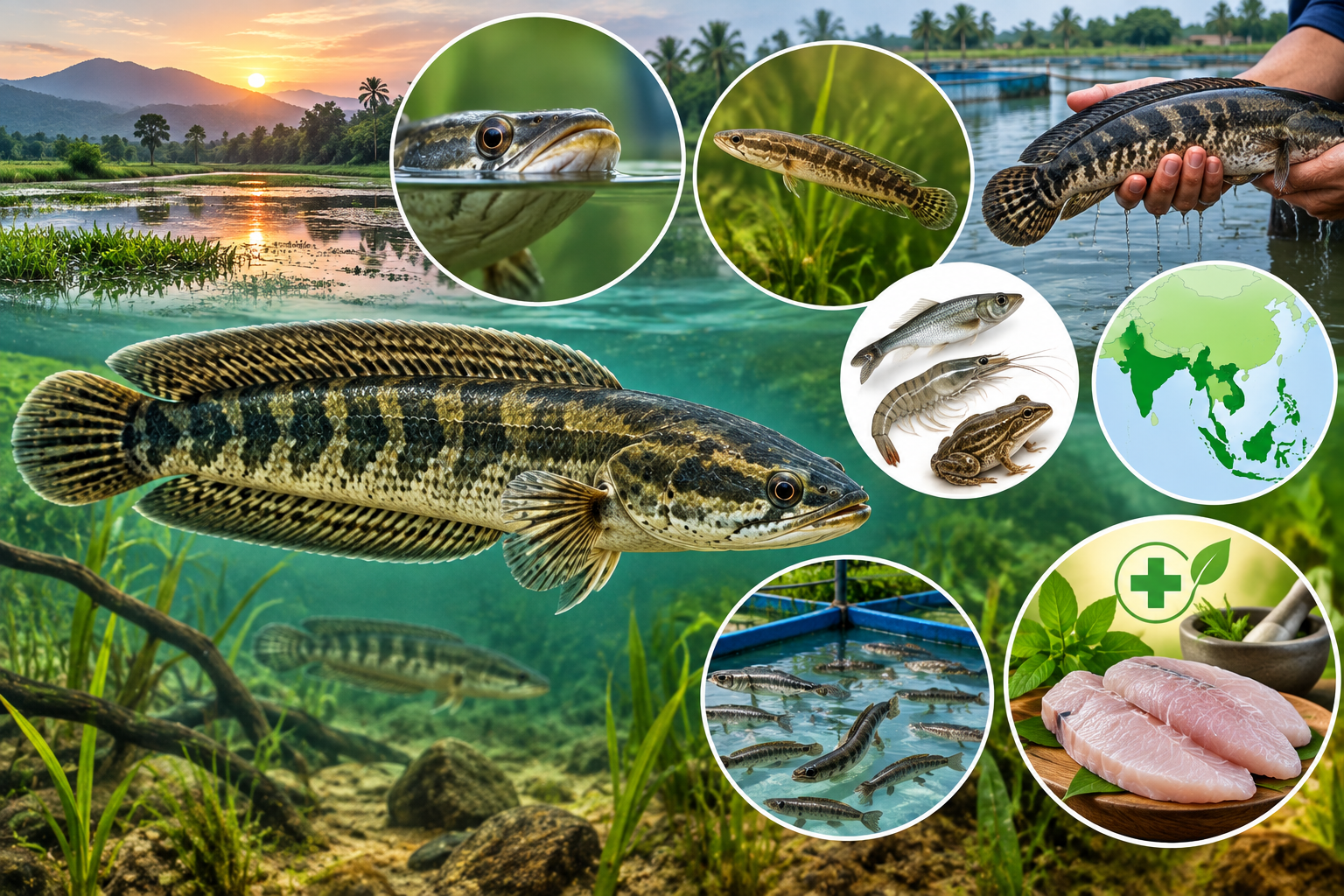
Snakeheads belong to the family Channidae and comprise 2 genera of which Channa spp represent an iconic genus of large-bodied species of the family. However, recently, a new family Aenigmachannidae, was erected as a sister group to Channidae. In general, snakeheads have a long, torpedo-shaped body with long, continuous dorsal and anal fins that run along their body upto the caudal fin. They are called snakeheads because of their body shape and the presence of eyes on top of their heads. If they are moist, they can survive out of water up to 4 days. Some species of snakehead can grow to over 4 feet long and weigh more than 40 pounds. Striped murrel is considered to be highly nutritious and is known to have medicinal values. It is also to be noted that some of the snakehead species are becoming invasive. The spread of the species is likely to continue due to illegal introductions, primarily for food, along with natural range extension due to climate change. The majority of species production is from capture fisheries due to a lack of standardized aquaculture production technology, which has led to habitat degradation and pressure on the ecosystem. Therefore, standardization of aquaculture technology is the need of the hour to conserve and enhance the natural stock of the species. However, recent reviews on the species have focussed mainly on aquaculture technologies available for the species.
References
[1] FAO (2020). The state of world fisheries and aquaculture: sustainability in action. Rome (Italy): FAO. pp1-206.
[2] J. Hambrey, P. Edwards and B. Belton (2008). An ecosystem approach to freshwater aquaculture: a global review. In: D. Soto, J. Aguilar-Manjarrez and N. Hishamunda (Eds.), Building an Ecosystem Approach to Aquaculture. FAO Fisheries and Aquaculture Proceedings, 14, FAO, Rome, pp117-221.
[3] R. K. Keservani, R. K.,Kesharwani N. Vyas, S. Jain, R. Raghuvanshi and A. K. Sharma (2010). Nutraceutical and functional food as future food: A review. Der Pharmacia Lettre. 2: 106-116
[4] K. Kumar, A. E. Eknath, A. K. Sahu, U. L. Mohanty, R. Kumar, M. Sahoo and J. Noor (2011). Snake heads: Challenging fish for diversification of fish farming. Fish. Chimes., 31: 110-113.
[5] R. Kumar, S. Saurabh, G. R. Sahoo, S. K. Mohanty, Lalrinsanga and P. Jayasankar (2012). Snakeheads Fishes: Fact sheets. Central Institute of Freshwater Aquaculture. pp1-38.
[6] K. Kumar, P. L. Lalrinsanga, M. Sahoo, U. L. Mohanty, R. Kumar and A. K. Sahu (2013). Length-weight relationship and condition factor of Anabas testudineus and Channa species under different culture systems. World J Fish Marine Sci., 5: 74-78.
[7] M. A. Haniffa, M. Nagarajan, K. Marimuthu and A. J. A. R. Raj (2003). Embryonic and larval development of spotted murrel, Channa punctatus (Bloch). Indian J. Fish., 50: 355-362.
[8] A. R. Romadhoni, E. Afrianto, R. I. Pratama and R. Grandiosa (2016). Extraction of snakehead fish [Ophiocephalus striatus (Bloch, 1793)] into fish protein concentrate as albumin source using various solvent. Aquat. Procedia, 7: 4-11. doi: 10.1016/j.aqpro.2016.07.001.
[9] F. W. Beamish, R. B. Beamish and S. L. Lim (2003). Fish assemblages and habitat in a Malaysian blackwater peat swamp. Environ. Biol. Fishes. 68: 1-13. doi: 10.1023/A:10260 04315 978.
[10] S. Nurdawati, H. Asyari and E. Prianto (2007). Fish fauna in peat swamp lake in South Barito, Central Kalimantan. Jurnal Iktiologi Indonesia, 7: 89-97.
[11] K. L. Wee (1982). The Biology and Culture of Snakeheads. In: J. Muir, R. Roberts (Eds.), Recent Advances in Aquaculture. Westview Press, Boulder, CO, USA. pp180-211.
[12] N. M. Chakrabarty (2006). Murrels and Murrel Culture. Narendra Publishing House, Delhi, India. ISBN-10: 8185375070.
[13] M. Aliyu-Paiko, R. Hashim and A. C. Shu-Chien (2010). Influence of dietary lipid/protein ratio on survival, growth, body indices and digestive lipase activity in snakehead (Channa striata, Bloch 1793) fry reared in re-circulating water system. Aquacult. Nutr., 16: 466-474.
[14] A. Dey, B. R. Chowdhury, R. Nur, D. Sarkar, L. Kosygin and S. Barat (2019). Channa amari, a new species of snakehead (Teleostei: Channidae) from North Bengal, India. Int. J. Pharm. Biol. Sci., 9: 299-304.
[15] J. McClelland (1845). Description of four species of fishes from the rivers at the foot of Boutan Mountains. J. Nat. Hist. Calcutta v., 5: 274-282.
[16] R. Britz (2013). Channa andrao, a new species of dwarf snakehead from West Bengal, India (Teleostei: Channidae). Zootaxa, 3731: 287-294.
[17] T. Cantor (1842). General features of Chusan, with remarks on the flora and fauna of that island. Ann. Mag. Nat. Hist. London., 9: 486-489.
[18] J. Praveenraj, T. Thackeray, S. G. Singh, A. Uma, N. Moulitharan and B. K. Mukhim (2020). A new species of snakehead (Teleostei: Channidae) from East Khasi Hills, Meghalaya, Northeastern India. Copeia, 108: 938-947.
[19] H. Liu, J. Liu, T. Cui, J. Zhang, Q. Luo, S. Fei and K. Chen et al., (2025). A chromosome-level reference genome assembly of the small snakehead (Channa asiatica). Sci. Data, 12: 1159. doi: 10.1038/s41597-025-05479-7.
[20] P. Musikasinthorn (2000). Channa aurantimaculata, a new channid fish from assam (Brahmaputra River basin), India, with designation of a neotype for C. amphibeus (McClelland, 1845). Ichthyol Res., 47: 27-37.
[21] D. V. Lalhlimpuia, S. Lalronunga and L. Lalramliana (2016). Channa aurantipectoralis, a new species of snakehead from Mizoram, north-eastern India (Teleostei: Channidae). Zootaxa, 4147: 343-350.
[22] E. A. S. Adamson, R Britz and S Lieng (2019). Channa auroflammea, a new species of snakehead fish of the Marulius group from the Mekong River in Laos and Cambodia (Teleostei: Channidae). Zootaxa, 4571: 398-408.
[23] F. Day (1870). On the fishes of the Andaman and Nicobar Islands. Proc. Zoo. Soc. London. pp.677-705.
[24] P. Bleeker (1853). Nalezingen op de ichthyologische fauna van het eiland Banka. Nat. Tijdschr. Ned. Ind., 5: 175-194.
[25] L. Rüber, H. H. Tan and R. Britz (2020). Snakehead (Teleostei: Channidae) diversity and the Eastern Himalaya biodiversity hotspot. J. Zool. Syst. Evol. Res., 58: 356-386.
[26] F. Hamilton (1822). An account of the fishes found in the river Ganges and its branches. Archibald Constable & Co., Edinburgh, pp1-405.
[27] J. Praveenraj, A. Uma, N. Moulitharan and H. Bleher (2018). Channa bipuli, a new species of snakehead (Teleostei: Channidae) from Assam, northeast India. Int. J. Ichthyol., 24: 153-166.
[28] P. Chakraborty, K. Yardi and P. Mukherjee (2020). Channa brahmacharyi sp. nov., a new species of dwarf snakehead from Meghalaya, North-East India (Teleostei: Channidae). Species, 21: 101-108.
[29] J. Praveenraj, A. Uma, N. Moulitharan and R. Kannan (2019). Channa brunnea , a new species of snakehead (Teleostei: Channidae) from West Bengal, India. Zootaxa, 4624: 59-70.
[30] B. L. Chaudhuri (1919). Report on a small collection of fish from Putao (Hkamti Long) on the northern frontier of Burma, Records of the Indian Museum, 16: 271-287.
[31] F. Day (1865). On the fishes of Cochin, on the Malabar coast of India. Part I. Acanthopterygii. Proceedings of the General Meetings for Scientific Business of the Zoological Society of London (pt 1): 2-40. Continues as Part II, pp286-318.
[32] N. Annandale (1918). Fish and fisheries of the Inle Lake. Records of Indian Museum 14: 33-64.
[33] V. H. Nguyen (2011). Two new species belong to genus Channa (Channidae, Perciformes) discovered in Ninh Binh province. Academia J. Biol., 33: 8-17.
[34] A. Günther (1861). Catalogue of the Acanthopterygian fishes in the collection of the British Museum. British Museum, London.
[35] J. Praveenraj, A. Uma, N. Moulitharan and S. G. Singh (2019). A new species of dwarf channa (Teleostei: Channidae) from Meghalaya, Northeast India. Copeia. 107: 61-71
[36] K. Geetakumari and W. Vishwanath (2010). Channa melanostigma, a new species of freshwater snakehead from north-east India (Teleostei: Channidae). J. Bombay Nat. Hist. Soc., 107: 231-235.
[37] C. G. Zhang, P. Musikasinthorn and K. Watanabe (2002). Channa nox, a new channid fish lacking a pelvic fin from Guangxi, China. Ichthyol. Res., 49: 140-146.
[38] M. E. Bloch and J. G. Schneider (1801). M.E. Blochii Systema Ichthyologiae iconibus cx illustratum. Post obitum auctoris opus inchoatum absolvit, correxit, interpolavit Jo. Gottlob Schneider, Saxo. Berolini. Sumtibus Auctoris Impressum et Bibliopolio Sanderiano Commissum. doi: 10.5962/bhl.title.5750.
[39] R. Britz (2008). Channa ornatipinnis and C. pulchra, two new species of dwarf snakeheads from Myanmar (Teleostei: Channidae). Ichthyol. Explor. Freshw. 18: 335-344.
[40] P. Musikasinthorn (1998). Channa panaw, a new channid fish from the Irrawaddy and Sittang basins, Myanmar. Ichthyol. Res., 45: 355-362.
[41] J. D. M. Knight (2016). Channa pardalis, a new species of snakehead (Teleostei: Channidae) from Meghalaya, northeastern India. J. Threat. Taxa., 8: 8583-8589.
[42] S. D. Gurumayum and L. Tamang (2016). Channa pomanensis, a new species of snakehead (Teleostei: Channidae) from Arunachal Pradesh, northeastern India. Species. 17: 175-186.
[43] R. Britz (2007). Channa ornatipinnis and C. pulchra, two new species of dwarf snakeheads from Myanmar (Teleostei: Channidae). Ichthyol. Explor. Freshwaters. 18: 335-344.
[44] J. Praveenraj, A. Uma, J. D. M. Knight, N. Moulitharan, S. Balasubramanian, K. Bineesh and H. Bleher (2018). Channa quinquefasciata, a new species of snakehead (Teleostei: Channidae) from Torsa River, North Bengal, India. Aqua. 24: 141-152.
[45] R. Britz, N. Dahanukar, V. K. Anoop and A. Ali (2019). Channa rara, a new species of snakehead fish from the Western Ghats region of Maharashtra, India (Teleostei: Labyrinthici: Channidae). Zootaxa, 4683: 589-600.
[46] J. Praveenraj, J. D. M. Knight, R. Kiruba-Sankar, B. Halalludin, J. J. A. Raymond, V. R. Thakur (2018). Channa royi (Teleostei: Channidae): a new species of snakehead from Andaman Islands, India. Indian J. Fish, 64:1-4.
[47] M. Endruweit (2017). Description of a new dwarf snakehead (Perciformes: Channidae) from western Yunnan. Vertebr. Zool., 67: 173-178.
[48] GBIF Secretariat. (2023). Channa stewartii (Playfair, 1867) in GBIF Backbone Taxonomy. https://www.gbif.org/species/2391448.
[49] Lalramliana, J. D. M. Knight, D. V. Lalhlimpuia and M. Singh (2018). Integrative taxonomy reveals a new species of snakehead fish, Channa stiktos (Teleostei: Channidae), from Mizoram, North Eastern India. Vertebr. Zool., 68: 165-175.
[50] A. Dey, R. Nur, B. Raychowdhury, D. Sarkar, L. K. Singh and S. Barat (2019). A new ornamental species of snakehead fish (Teleostei: Channidae) from River Torsa of West Bengal, India. Int. J. Pure Appl. Biosci., 6: 497-503.
[51] V. K. Murugesan (1978). The growth potential of the murrels, Channa marulius (Hamilton) and Channa striatus (Bloch): J. Inland Fisheries Society of India, 10: 169-170.
[52] B. Laxmappa and G. V. Babu (2014). Present status and prospects of Murrels Farming in Andhra Pradesh, India. Int. J. Fish Aquat. Stud., 1: 22-31.
[53] S. E. Djumanto, E. Setyobudi, C. P. H. Simanjuntak and M. F. Rahardjo, (2020). Estimating the spawning and growth of striped snakehead Channa striata Bloch, 1793 in Lake Rawa Pening Indonesia. Sci Rep., 10: 19830. doi: 10.1038/s41598-020-76825-5.
[54] K. Sampath (1984). Preliminary report on the effects of feeding frequency in Channa striata. Aquacult., 40: 301–306.
[55] A. Zuraini, M. N. Somchit, M. H. Solihah, Y. M. Goh, A. K. Arifah, M. S. Zakaria and N. Somchit et al., (2006). Fatty acid and amino acid composition of three local Malaysian Channa spp. fish. Food Chem., 97: 674-678.
[56] P. K. Talwar and A. G. Jhingran (1991). Inland fishes of India and adjacent countries, (Vol. 2), Oxford-IBH Publishing Co. Pvt. Ltd., New Delhi.
[57] P. G. Lee and P. K. L. Ng (1994). The systematics and ecology of snakeheads (Pisces: Channidae) in Peninsular Malaysia and Singapore. Hydrobiologia, 285: 59-74.
[58] P. K. L. Ng and K. K. P. Lim (1990). Snakeheads (Pisces: Channidae): Natural history, biology and economic importance. In: C. L. Ming and P. K. L. Ng (eds), Essays in Zoology. Papers commemorating the 40th Anniversary of the Department of Zoology, National University of Singapore. pp127-152.
[59] W. R. Courtenay, J. D. Williams, R. Britz, M. N. Yamamoto and P. V. Loiselle (2004). Identity of introduced snakeheads (Pisces, Channidae) in Hawai'i and Madagascar, with comments on ecological concerns. Bishop Museum occasional paper No.77.
[60] N. T. T. Nguyen and T. Y. Duong (2016). Morphological and genetic differences between cultured and wild populations of Channa striata in Viet Nam and its phylogenetic relationship with other Channa species. Songklanakarin J. Sci. Technol., 38: 427-434.
[61] S. K. M. Torres, B. S. Santos and F. S. Magbanua (2020). Geometric morphometric analysis of Channa striata (Striped Snakehead) populations from Laguna de Bay, Philippines reveals shape differences in relation to water quality. Sci. Diliman, 32: 31-40.
[62] B. Muslimin, R. Rustadi, H. Hardaningsih and B. Retnoaji (2020). Morphometric variation of Cork fish (Channa striata Bloch, 1793) from nine populations in Sumatra Island, Indonesia. Iranian J. Ichthyol., 7: 209-221.
[63] T. Arisuryanti, N. U. N. Firdaus and L. Hakim (2020). Genetic characterization of striped snakehead (Channa striata Bloch, 1793) from Arut River, Central Kalimantan inferred from COI mitochondrial gene. AIP Conf. Proc., 2260: 020001. doi: 10.1063/5.0015905.
[64] T. S. Zemlak, R. D. Ward, A. D. Connell, B. H. Holmes and P. D. Hebert (2009). DNA barcoding reveals overlooked marine fishes. Mol Ecol Resour., 9: 237-242.
[65] H. Liu, J. Liu, T. Cui, J. Zhang, Q. Luo, S. Fei and K. Chen et al., (2025). A chromosome-level reference genome assembly of the small snakehead (Channa asiatica). Sci. Data, 12: 1159. doi: 10.1038/s41597-025-05479-7.
[66] E. A. S. Adamson, D. A. Hurwood and P. B. Mather (2010). A reappraisal of the evolution of Asian snakehead fishes (Pisces, Channidae) using molecular data from multiple genes and fossil calibration. Mol. Phylogen. Evol., 56: 707-717.
[67] L. M. Song, K. Munian, Z. A. Rashid and S. Bhassu (2013). Characterisation of Asian snakehead Murrel Channa striata (Channidae) in Malaysia: An insight into molecular data and morphological approach. Sci. World J., Article 917506, doi: 10.1155/2013/917506.
[68] M. Böhme (2004). Migration history of air-breathing fishes reveals Neogene atmospheric circulation patterns. Geology, 32: 393-396.
[69] A. A. Bhat, M. A. Haniffa, M. J. Milton, B. A. Paray, P. R. Divya and A Gopalakrishnan (2014). Genetic variation of striped snakehead (Channa striatus Bloch, 1793) populations using random amplified polymorphic DNA (RAPD) markers. Int. J. Biodivers. Conserv., 6: 363-372.
[70] D. T. Yen, V. N. Duyen, T. T. T. Hien, R. Pomeroy and E. Hillary (2019). Variation in morphometric characteristics between cultured and wild striped snakehead (Channa striata) populations in the Mekong Delta. Can Tho University J. Sci., 11: 70-77.
[71] R. Robert, N. H. Amit, N. M. Sukarno, R. J. Majapun and S. V. Kumar (2018). Population genetic structure of Asian snakehead fish (Channa striata) in North Borneo: Implications for conservation of local freshwater biodiversity. Ecol Res., 34: 55-67.
[72] E. A. S. Adamson, D. A. Hurwood and P. B. Mather (2012). Insights into historical drainage evolution based on the phylogeography of the chevron snakehead fish (Channa striata) in the Mekong Basin. Freshwater Biol., 57: 2211-2229.
[73] M. P. Tan, A. F. J. Jamsari and M. N. Siti-Azizah (2016). Genotyping of microsatellite markers to study genetic structure of the wild striped snakehead Channa striata in Malaysia. J Fish Biol., 88: 1932-1948.
[74] H. Yambe, M. Yamada and F. Yamazaki (2006). Responses of immature male masu salmon parr to the urine of mature males. Ichthyol. Res., 53: 182-184.
[75] C. Phen, B. T. Thang, E. Baran and S. V. Leng (2004). Biological Reviews of Important Cambodian Fish Species, Based on FishBase; Inland Fisheries Research and Development Institude of Cambodia (IFRdDI): Phnom Penh, Cambodia, 2005; Volume 1, pp127. ISBN: 983-2346-48-7.
[76] M. War, K. Altaff and M. A. Haniffa (2011). Growth and survival of larval snakehead Channa striatus (Bloch, 1793) fed different live feed organisms. Turk. J. Fish. Aquatic Sci., 11: 523-528.
[77] R. Britz, N. Dahanukar, V. K. Anoop, S. Philip, B. Clerk, R. Raghavan and L. Rüber (2020). Aenigmachannidae, a new family of snakehead fishes (Teleostei: Channoidei) from subterranean waters of South India. Sci Rep., 10: 16081. doi: 10.1038/s41598-020-73129-6.
[78] J. S. Nelson, T. C. Grande and M. V. H. Wilson (2016). Fishes of the World. 5th edn., John Wiley & Sons.
[79] R. Chakraborty, S. K. Das and D. Bhakta (2017). Length-weight relationship, relative condition factor, food and feeding habits of Channa striata from wetlands of Nadia district, West Bengal. J. Inland Fish Soc. India, 49: 22-26.
[80] J. Qin and A. W. Fast (1996). Size and feed dependent cannibalism with juvenile snakehead Channa striata. Aquaculture, 144: 313-320.
[81] L. M. Rao, K. Ramaneswari and L. V. Rao (1998). Food and feeding habits of Channa species from East Godavari district (Andhra Pradesh). Indian J. Fish., 45: 349-353.
[82] A. Qayyum and S. Z. Qasim (1964). Studies on the biology of some freshwater fishes. Part I. Ophiocehalus punctatus (Bloch). J. Bombay Nat. Hist. Soc., 61: 74-98.
[83] S. M. Das and S. K. Moitra (1955). Studies on the food of some common fishes of Uttar Pradesh, India. Part-I. The surface feeders, mid feeders and bottom feeders. Proc. Nat. Acad. Sci. (B), 25: 1-6.
[84] S. Ndobe, N. Serdiati and A. Moore (2014). Domestication and length-weight relationship of striped snakehead Channa striata (Bloch). Proceedings of the International Conference on Aquaculture, Indo, doi: 10.31230/osf.io/yv6ne.
[85] E. E. Werner (1974). The fish size, prey size, handling time relation in several sunfishes and some implications. J. Fish Res. Board Can., 31: 1531-1536.
[86] L. Persson, J. Anderson, E. Wahlstrom and P. Eklov (1996). Size-specific interactions in lake systems: predator gape limitation and prey growth rate and mortality. Ecology. 77: 900-911.
[87] T. E. Brooking, L. G. Rudstam, M. H. Olson and A. J. Vandevalk (1998). Size-dependent alewife predation on larval walleyes in laboratory experiments. North Am. J. Fish Manag., 18: 960-965.
[88] P. A. Nilsson and C. Bronmark (2000). Prey vulnerability to a gape-size limited predator: behavioural and morphological impacts on northern pike piscivory. Oikos. 88: 539-546.
[89] H. Dorner and A. Wagner (2003). Size-dependent predator prey relationships between perch and their fish prey. J. Fish Biol., 62: 1021-1032.
[90] H. A. Truemper and T. E. Lauer (2005). Gape limitation and piscine prey size-selection by yellow perch in the extreme southern area of Lake Michigan, with emphasis on two exotic prey items. J. Fish Biol., 66: 135-149.
[91] B. Christensen (1996). Predator foraging capabilities and prey antipredator behaviours: pre-versus post capture constrains on size-dependent predator–prey interactions. Oikos. 76: 368-380.
[92] M. Das, S. C. Chakraborty, F. Ahmed and R. K. Basak (1998). Predatory behavior of a snakehead fish (Channa striatus Bloch), Bangladesh J. Fish Res., 2: 127-137.
[93] K. K. P. Lim and P. K. L. Ng (1990). A guide to the freshwater fishes of Singapore. Singapore science centre, Singapore. pp160.
[94] N. Baker and K. K. P. Lim (2012). Wild animals of Singapore. A photographic guide to mammals, reptiles, amphibians and freshwater fishes. reprint with correction and updates. Draco Publishing and Distribution and Nature Society (Singapore), Singapore. pp180.
[95] G. M. Natarajan, G. S. Rajulu, S. S. Sundary and S. Subramanian (1983). Effect of sublethal concentration of metasystox on the circadian rhythm of bimodal oxygen uptake in Channa Striatus. Curr. Sci., 52: 675-678.
[96] V. Kumar (2017). Biological timekeeping: Clocks, rhythms and behaviour. Springer (India) Pvt. Ltd., New Delhi.
[97] S. Halle and N. C. Stenseth (2012). Activity patterns in small mammals: An ecological approach. Springer, Berlin.
[98] N. Kronfeld-Schor, G. Bloch and W. J. Schwartz (2013). Animal clocks: when science meets nature. Proc. Biol. Sci., 280: 20131354. doi: 10.1098/rspb.2013.1354.
[99] G. S. Helfman, B. B. Collette, D. E. Facey (1997). The diversity of fishes. Blackwell Scientific Publications, Malden, Massachusetts.
[100] G. V. Nikolsky (1963). The ecology of fishes. Academic Press. London and New York. pp352.
[101] K.-C. Li, B.-S. Shieh, Y.-W. Chiu, D.-J. Huang and S.-H. Liang (2016). Growth, diet composition and reproductive biology of the invasive freshwater fish chevron snakehead Channa striata on a subtropical island. Zool. Stud., 55: 53. doi: 10.6620/ZS.2016.55-53.
[102] Irmawati, J. Tresnati, Nadiarti and L. Fachruddin (2019). Sex Differentiation and Gonadal Development of striped murrel (Channa striata Bloch, 1793). IOP Conf. Ser.: Earth Environ. Sci., 253 012007. doi: 10.1088/1755-1315/253/1/012007.
[103] N. A. Mahmud, H. M. H. Rahman, G. M. Mostakim, M. G. Q. Khan, Md. Shahjahan, N. S. Lucky and M. S. Islam (2016). Cyclic variations of gonad development of an air-breathing fish, Channa striata in the lentic and lotic environments. Fish Aquat Sci., 19: 5. doi: 10.1186/s41240-016-0005-0.
[104] B. R. Kiran, K. S. Murthy and M. Venkateshwarlu (2013). A review on induced breeding of cat fishes, murrels and climbing perches in India. Adv. Appl. Sci. Res., 4: 310-323.
[105] M. A. Hossain, S. Mian, M. Akter, A. F. Rabby, S. S. Marine, M. A. Rahman and M. M. Iqbal et al., (2015). Ovarian biology of spotted snakehead (Channa punctatus) from natural wetlands of Sylhet, Bangladesh. Ann. Vet. Anim. Sci., 2: 64-76.
[106] A. W. C. T. Herre (1924). Distribution of the true fresh-water fishes in the Philippines. I. The Philippine Cyprinidae. Philipp. J. Sci., 24: 683-709
[107] A. B. Ali (1999). Aspects of the reproductive biology of female snakehead (Channa striata Bloch) obtained from irrigated rice agroecosystem, Malaysia. Hydrobiologia. 411: 71-77.
[108] S. Tongnunui and F. W. H. Beamish (2009). Habitat and relative abundance of fishes in small rivers in eastern Thailand. Environ. Biol. Fish. 85: 209-220.
[109] H. J. Ferdausi, N. C. Roy, M. J. Ferdous, M. A. Hossain, M. M. Hasan, B. D. Trina and S. I. Mian et al., (2015). Reproductive biology of striped snakehead (Channa striata) from natural wetlands of Sylhet, Bangladesh. Ann. Vet. Anim. Sci., 2: 162-169.
[110] L. Prasad, A. K. Dwivedi, V. K. Dubey and M Serajuddin (2011). Reproductive biology of freshwater murrel, Channa punctatus (Bloch, 1793) from river Varuna (A tributary of Ganga River) in India. J. Ecophysiol. Occup. Hlth., 11: 69-80.
[111] S. Morioka, B. Vongvichith, P. Chanthasone, P. Phommachane and N. Suzuki (2016). Reproductive season, age estimation and growth in a striped snakehead Channa striata population in Nasaythong District, Vientiane Province, Central Laos. Aquac. Sci., 64: 183-191.
[112] R. V. Kilambi (1986). Age, growth and reproductive strategy of the snakehead, Ophiocephalus striatus Bloch, from Sri Lanka. J. Fish Biol., 29: 13-22.
[113] K. H. Alikunhi (1953). Notes on the bionomics, breeding and growth of the murrel, Ophiocephalus striatus Bloch. Proc. Indian Acad. Sci., 38: 10-20.
[114] A. G. Jhingran (1984). The fish genetic resources of India: Bureau of Fish Genetic Resources, Allahabad and Maya Press Private. Limited Allahabad, pp82.
[115] K. Marimuthu, M. A. Haniffa, M. Muruganandam, A. J. A. Raj (2001). Low cost murrel seed production technique for fish farmers. Naga. 24: 21-22.
[116] K. H. Alikunhi (1957). Fish culture in India. Ind. Counc. Agric. Res. New Delhi. Farm Bull., 20: 1-144.
[117] B. A. Paray, M. A. Haniffa, D. Manikandaraja and M. J. Milton (2013). Breeding behavior and parental care of the induced bred striped murrel Channa striatus under captive conditions. Turk. J. Fish. Aquat. Sci., 13: 707-711.
[118] C. A. Annett, R. Pierotti and J. R. Bayliss (1999). Male and female parental roles in the monogamous cichlid, Tilapia mariae, introduced in Florida. Environ. Biol. Fishes, 54: 283-293.
[119] S. Raizada, A. Rawat, P. P. Srivastava and K. K. Lal (2022). Cannibalism mitigation in striped murrel, Channa striata, with hatchery seed weaned on pellet diet: A review. Rev. Aquacult., 14: 1213-1233.
[120] R. Kumar, M. Gokulakrishnan, J. Debbarma and D. K. Damle (2022). Advances in captive breeding and seed rearing of striped murrel Channa striata, a high value food fish of Asia. Anim. Reprod. Sci., 238: 106957. doi: 10.1016/j.anireprosci.2022.106957.
[121] M. A. Haniffa, T. Merlin and M. Shaik (2000). Induced spawning of the striped murrel Channa striatus using pituitary extracts, human chorionic gonadotropin, luteinizing hormone releasing hormone analogue, and ovaprim. Acta. Ichthyol. Piscat., 30: 53-60.
[122] T. Francis, C. B. T. Rajagopalsamy, N. Jeyakumar, M. Venkatasamy and C. A. Devi (2011). Role of kisspeptin on gonadal maturation of striped murrel, Channa striatus. Indian J. Sci. Technol., 4: Proceedings of 9th International Symposium on Reproductive Physiology of Fish, Cochin, India. August 9-14, 2011.
[123] R. Kumar, U. L. Mohanty and B. R. Pillai (2021). Effect of hormonal stimulation on captive broodstock maturation, induced breeding and spawning performance of striped snakehead, Channa striata (Bloch, 1793). Anim. Reprod. Sci., 224: 106650. doi: 10.1016/j.anireprosci.2020.106650.
[124] S. K. Singh (2019). ICAR Technologies: Breeding and seed production of finfishes and shellfishes. ICAR, New Delhi, India. pp68.
[125] K. Marimuthu, D. Kumar and M. A. Haniffa (2007). Induced spawning of striped snakehead, Channa striatus, using Ovatide. J. Appl. Aquac., 19: 95-103.
[126] CARE (2014). Final report of project on A Value Chain on Murrel Production in Tamil Nadu and Orissa, National Agricultural Innovation Project (ICAR). ICAR, New Delhi, India. pp144.
[127] B. Laxmappa (2010). Murrel seed collection: A Potential income generation source. Fishing Chimes, 30: 23.
[128] B. Laxmappa (2017). A view on murrel (snakeheads) fisheries in India. Aquaculture Asia 22: 15-19.
[129] J. Qin, A. W. Fast, D. DeAnda and R. P. Weidenbach (1997). Growth and survival of larval snake head fish (Channa striata) fed different diets. Aquaculture. 148: 105-113.
[130] J. S. Diana (1951). Production systems for commonly cultured freshwater fishes of Southeast Asia. International Programme Report, 7: https://quod.lib.umich.edu/cgi/t/text/text-idx?c=glrr;idno=4743112.0001.001.
[131] M. Boonyaratpalin, E. W. McCoy and T. Chittapalapong (1985). Snakehead culture and its Socio-Economics in Thailand. FAO Corporate Document Repository, Fisheries and Aquaculture Department, Bangkok, Thailand.
[132] J. G. Qin and A. W. Fast (2007). Food selection and growth of young snakehead Channa striatus. J. Appl. Ichthyol., 13: 21-25.
[133] D. Kumar, K. Marimuthu, M. A. Haniffa and T. A. Sethuramalingam (2008). Effect of different live feed on growth and survival of striped murrel Channa striatus larvae. E. U. J. Fish Aquat. Sci., 25: 105-110.
[134] D. Kumar and M. A. Haniffa (2016). Growth judgment of Channa striatus fry fed with different live feeds. Int. J. Curr. Sci. Res., 2: 1034-1043.
[135] S. Kumari, V. K. Tiwari, A. M. B. Rani, R. Kumar and S Praksah (2018). Effect of feeding rate on growth, survival and cannibalism in striped snakehead, Channa striata (bloch, 1793) fingerlings. J. Exp. Zool. India, 21: 205-210.
[136] P. Roy, C. S. S. Chandan, N. C. Roy and I Islam (2020). Feed types affect the growth, survival and cannibalism in early juvenile of striped snakehead (Channa striata Bloch.). Egypt. J. Aquat. Res., 46: 377-382.
[137] E. R. Cruz-Lacierda and M. Shariff (1995). Experimental transmission of epizootic ulcerative syndrome (EUS) in snakehead, Ophicephalus striatus. In: Shariff M, Arthur JR, Subasinghe RP (eds) Diseases in Asian Aquaculture II, Fish Health Section, Asian Fisheries Society, Manila, pp327-336.
[138] R. J. Roberts, G. N. Frerichs, K. Tonguthai and S. Chinabut (1994). Epizootic ulcerative syndrome of farmed and wild fishes. In: Muir JF, Roberts RJ (eds) Recent advances in aquaculture V, Chapter 4. Blackwell Science, pp207-239
[139] A. Llobrera and R. Q. Gacutan (1987). Aeromonas hydrophila associated with ulcerative disease epizootic in Laguna de Bay, Philippines. Aquac., 67: 273-278.
[140] S. L. Chondar and P. S. Rao (1996). Epizootic ulcerative syndrome disease to fish and its control: a review. World Aquaculture 1996, Queen Sirikit National Convention Centre, Bangkok.
[141] T. S. Vishwanath, C. V. Mohan and K. M. Shankar (1997). Mycotic granulomatosis and seasonality are the consistent features of epizootic ulcerative syndrome (EUS) in fresh and brackishwater fishes of Karnataka, India. Asian Fish. Sci., 10: 149-154.
[142] J. H. Lilley, R. B. Callinan, S. Chinabut, S. Kanchanakhan, I. H. MacRae and M. J. Phillips (1998). Epizootic ulcerative syndrome (EUS) technical handbook. Aquatic Animal Health Research Institute, Bangkok, pp88.
[143] R. E. Campbell, J. H. Lilley, P. Taukhid, V. Panyawachira and S. Kanchanakhan (2001). In vitro screening of novel treatments for Aphanomyces invadans. Aquac. Res., 32: 223-233.
[144] D. J. C. Miles, J. Polchana, J. H. Lilley, S. Kanchanakhan, K. D. Thompson and A. Adams (2001). Immunostimulation of striped snakehead Channa striata against epizootic ulcerative syndrome. Aquaculture. 195: 1-15.
[145] D. Kamilya and A. Baruah (2014). Epizootic ulcerative syndrome (EUS) in fish: history and current status of understanding. Rev Fish Biol. Fish., 24: 369-380.
[146] K. D. Thompson, J. H. Lilley, S. Chinabut and A. Adams (1997). The antibody response of snakehead, Channa striata Bloch, to Aphanomyces invadans. Fish Shellfish Immunol., 7: 349-353.
[147] T. Hecht and A. Pienaar (1993). A review of cannibalism and its implications in fish larviculture. J. World Aquac. Soc., 24: 246-261.
[148] T. Hecht and S. Appelbaum (1988). Observations on intraspecific aggression and coeval sibling cannibalism by larval and juvenile Clarias gariepinus (Clariidae: Pisces) under controlled conditions. J. Zool., 214, 21-44.
[149] I. Katavic, J. Jug-Dujakovic and B. Glamuzina (1989). Cannibalism as a factor affecting the survival of intensively cultured sea bass (Dicentrarchus labrax) fingerlings. Aquaculture. 77: 135-143.
[150] J. Qin, A. W. Fast and AT Kai (1997). Tolerance of snakehead Channa striatus to ammonia at different pH. J. World Aquac. Soc., 28: 87-90.
[151] A. M. M. Jais (1992). Molecular size of the bio-active component from haruan Channa striatus extract. J. Appl. Sci., 7: 2198-2199.
[152] A. Mustafa, M. A. Widodo and Y. Kristianto (2012). Albumin and zinc content of snakehead fish (Channa striata) extract and its role in health. Int. J. Sci. Tech., 1: 1-8.
[153] A. Asikin (1999). The impact of snakehead filtrate extra menu administration for pre and post-operative patients in saiful anwar general hospital malang, (Thesis). (in Indonesian)
[154] Sugihastutik (2002). Administration of snakehead fish filtrate for hypoalbuminemia patients in general hospital Dr. Subandi Jember (Thesis). Polytechnic of Health MoH Malang. (in Indonesian).
[155] Nilasanti (2003). Administration of snakehead fish as an extra menu for hypoalbuminemia patient in bapelkes ward general hospital ngudi waluyo wlingi, blitar. (Thesis), Polytechnic of Health MoH Malang. (in Indonesian).
[156] E. Suprayitno (2003). Snakehead fish (Ophocephalus striatus) albumin as functional food to combat nutrition problem in the future, formal speech for professor legitimation in field of fish biochemistry, University of Brawijaya.
[157] A. M. M. Jais, Z. A. Zakaria, A. Luo and Y. X. Song (2008). Antifungal activity of Channa striatus (haruan) crude extracts. Int. J. Trop. Med., 3: 43-48.
[158] M. Dhanaraj, M. A. Haniffa, S. V. A. Singh, M. C. Ramakrishnan, D. Manikandaraja and J. M. Milton (2009). Antibacterial activity of skin and intestinal mucus of five different freshwater fish species viz., Channa striatus, C. micropeltes, C. marulius, C. punctatus and C. gachua. Malaysian J. Sci., 28: 257-262.
[159] O. Y. Wei, R. Xavier and K Marimuthu (2010). Screening of antibacterial activity of mucus extract of snakehead fish, Channa striatus (Bloch). Eur. Rev. Med. Pharmacol. Sci., 14: 675-681.
[160] S. Karmakar, S. C. Dasgupta and A. Gomes (2002). Pharmacological and haematological study of shol fish (Channa striatus) skin extract on experimental animals. Indian J. Exp. Biol., 40: 115-118.
[161] S. Karmakar, T. Das, A. Ghosh, S. C. Dasgupta, A. K. Biswas and A. Gomes (2004). Isolation and partial structural evaluation of a cardiotoxic factor from Indian common murrel (Channa striatus L.) skin extract. Indian J. Exp. Biol., 42: 271-278.
[162] M. Ghassem, K. Arihara, A. S. Babji, M. Said and S. Ibrahim (2011). Purification and identification of ACE inhibitory peptides from haruan (Channa striatus) myofibrillar protein hydrolysate using HPLCESI- TOF MS/MS. Food Chem., 129: 1770-1777.
[163] N. R. Galla, P. R. Pamidighantam, S. Akula and B. Karakala (2012). Functional properties and in vitro antioxidant activity of roe protein hydrolysates of Channa striatus and Labeo rohita. Food Chem., 135: 1479-1484.
[164] A. M. Saleem, M. T. Hidayat, A. M. M. Jais, S. Fakurazi, M. Moklas, M. R. Sulaiman and Z. Amom (2011). Antidepressant-like effect of aqueous extract of Channa striatus fillet in mice models of depression. Eur. Rev. Med. Pharmacol. Sci., 15: 795-802.
[165] A. M. Saleem, M. T. Hidayat, A. M. M. Jais, S. Fakurazi, M. A. M. Moklas, M. R. Sulaiman and Z. Amom (2010). Evidence for the involvement of monoaminergic system in the antidepressant activity of haruan extract in mice. Universiti Putra Malaysia, Malaysia: 25th Scientific Meeting of the Malaysian Society of Pharmacology and Physiology. pp08.
[166] M. A. M. Shafri, A. M. M. Jais and M. K. Kyu (2011). Neuro-regenerative properties of haruan (Channa striatus spp.) traditional extract. J. Intelek, 6: 77-83.
[167] FJ Al-Saffar, S. Ganabadi and S. Fakuraz (2011). Response of Channa striatus extract against monosodium iodoacetate induced osteoarthritis in rats. J. Anim. Vet. Adv., 10: 460-469.
[168] M. Puspaningdiah, A. Solichin and A. Ghofar (2014). Biological aspects of snakehead (Ophiocephalus striatus) in the waters of Rawa Pening lake, Semarang Regency. Manage. Aquat. Resour., 3: 75-82.
[169] E. Amilhat and K. Lorenzen (2005). Habitat use, migration pattern and population dynamics of chevron snakehead Channa striata in a rainfed rice farming landscape. J. Fish Biol., 67: 23-34.
[170] N. Ryman, F. Utter and L. Laikre (1995). Protection of intra-specific biodiversity of exploited fishes. Rev. Fish Biol. Fisher., 5: 417-446.
[171] P. J. Smith, R. I. C. C. Francis, M. McVeagh (1991). Loss of genetic diversity due to fishing pressure. Fish. Res., 10: 309-316.
[172] J. W. Bickham, S. Sandhu, P. D. N. Hebert, L. Chickhi and R. Athwal (2000). Effects of chemical contaminants on genetic diversity in natural populations: implications for biomonitoring and ecotoxicology. Mutat. Res., 463: 33-51.
Downloads
Published
Issue
Section
License
Copyright (c) 2026 Author (s)

This work is licensed under a Creative Commons Attribution-NonCommercial-NoDerivatives 4.0 International License.
Copyright © The Author(s). This is an open access article distributed under the terms of the Creative Commons Attribution-NonCommercial-NoDerivatives 4.0 International License (CC BY-NC-ND 4.0), which permits unrestricted non-commercial use, distribution, and reproduction in any medium, provided the original author(s) and source are properly credited, and the work is not modified or adapted.