
Evaluation of bioethanol production from rice field weed biomass
DOI:
https://doi.org/10.7324/ELSR.2017.324249Keywords:
gooseweed, small-flowered nutsedge, theoretical ethanol yieldAbstract
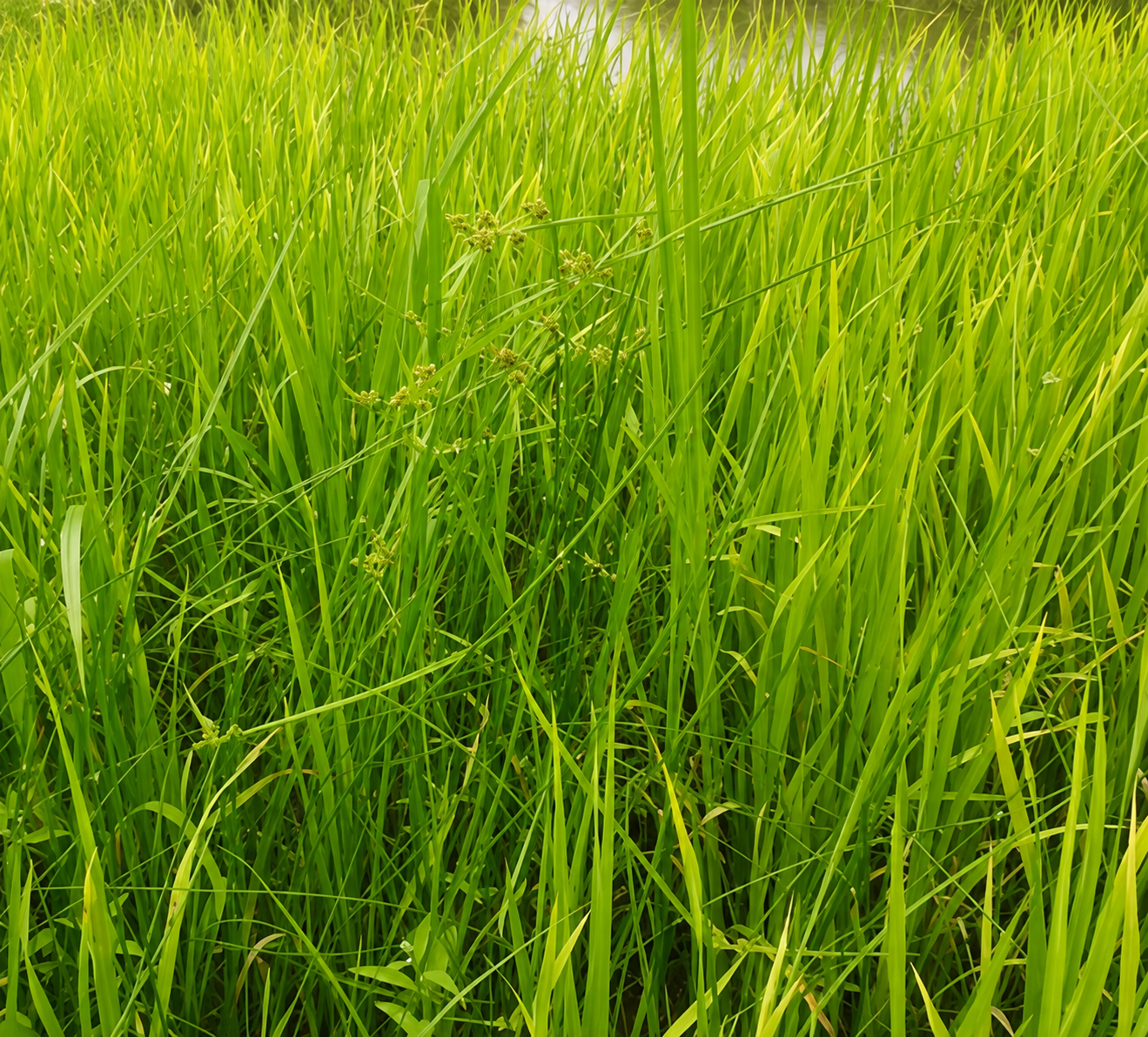
Bioethanol has attracted more attention as a clean-burning fuel that can benefit both environment and energy sector. Gooseweed and small-flowered nutsedge are abundant in rice fields in form of weeds and considered as a major agricultural problem. Thus, this paper aims to evaluate the possibility of ethanol production from these two weeds by calculating the theoretical ethanol yield from its reducing sugars and cellulose content. Experiment was conducted in rice fields in Chiang Mai province, Thailand and 207 kg/ha and 201 kg/ha biomass yield was obtained from gooseweed and small-flowered nutsedge plants. The theoretical ethanol yield of gooseweed and small-flowered nutsedge were 160 L/Mg and 223 L/Mg, respectively that suggest utilizing these materials as promising feedstocks for bioethanol production.
References
[1] Y. J. Kaufman, R. S. Fraser and R. L. Mahoney (1991). Fossil fuel and biomass burning effect on climate-heating or cooling. J. Climate, 4: 578-588.
[2] R. Wilson (1980). Health effects of fossil fuel burning: assessment and mitigation. Ballinger Publishing Company. ISBN: 9780884107149, https://books.google.com.tr/books?id=B6iEAAAAIAAJ
[3] M. F. Demirbas (2011). Biofuels from algae for sustainable development. Appl. Energy, 88: 3473-3480.
[4] R. Strzalka, D. Schneider and U. Eicker (2017). Current status of bioenergy technologies in Germany. Renew. Sust. Energ. Rev., 72: 801-820.
[5] H. Zabed, J. N. Sahu, A. Suelya, A. N. Boycea and G. Faruq (2017). Bioethanol production from renewable sources: Current perspectives and technological progress. Renew. Sust. Energ. Rev., 71: 475-501.
[6] K. Smith (2013). Biofuels, air pollution, and health: a global review. Springer Science & Business Media.
[7] RFA (2017). Ethanol industry outlook, Building partnerships and growing markets, in Washington, DC, February 2017.
[8] Y. N. Guragain, J. De Coninck, F. Husson, A. Durand and S. K. Rakshita (2011). Comparison of some new pretreatment methods for second generation bioethanol production from wheat straw and water hyacinth. Bioresour. Technol., 102: 4416-4424.
[9] P. S. Nigam and A. Singh (2011). Production of liquid biofuels from renewable resources. Prog. Energy Combust. Sci., 37: 52-68.
[10] J. Baeyens, Q. Kang, L. Appels, R. Dewil, Y. Lv and T. Tan (2015). Challenges and opportunities in improving the production of bio-ethanol. Prog. Energy Combust. Sci., 47: 60-88.
[11] H. Chen and X. Fu (2016). Industrial technologies for bioethanol production from lignocellulosic biomass. Renew. Sust. Energy Rev., 57: 468-478.
[12] L. R. Brown (1980). Food or fuel. Worldwatch paper, 35: p.43.
[13] G. Koçar and N. Civaş (2013). An overview of biofuels from energy crops: Current status and future prospects. Renew. Sust. Energy Rev., 28: 900-916.
[14] M. Chen, L. Xia and P. Xue (2007). Enzymatic hydrolysis of corncob and ethanol production from cellulosic hydrolysate. Int. Biodeterior. Biodegradation, 59: 85-89.
[15] H. B. Aditiya, T. M. I. Mahlia, W. T. Chong, H. Nur and A. H. Sebayang (2016). Second generation bioethanol production: A critical review. Renew. Sust. Energy Rev., 66: 631-653.
[16] P. Alvira, E. Tomás-Pejó, M. Ballesteros and M. J. Negro (2010). Pretreatment technologies for an efficient bioethanol production process based on enzymatic hydrolysis: A review. Bioresour. Technol., 101: 4851-4861.
[17] S. H. Mood, A. H. Golfeshan, M. Tabatabaei, G. S. Jouzani, G. H. Najafi and M. Gholami et al. (2013). Lignocellulosic biomass to bioethanol, a comprehensive review with a focus on pretreatment. Renew. Sust. Energy Rev., 27: 77-93.
[18] J. Yan, Z. Wei, Q. Wang, M. He, S. Li and C. Irbis (2015). Bioethanol production from sodium hydroxide/hydrogen peroxide-pretreated water hyacinth via simultaneous saccharification and fermentation with a newly isolated thermotolerant Kluyveromyces marxianu strain. Bioresour. Technol., 193: 103-109.
[19] C. Toquero and S. Bolado (2014). Effect of four pretreatments on enzymatic hydrolysis and ethanol fermentation of wheat straw. Influence of inhibitors and washing. Bioresour. Technol., 157: 68-76.
[20] Y. Zheng, Z. Pan and R. Zhang (2009). Overview of biomass pretreatment for cellulosic ethanol production. Int. J. Agri. & Biol. Eng., 2: 51-68.
[21] P. J. Van Soest, J. B. Robertson and B. A. Lewis (1991). Methods for dietary fiber, neutral detergent fiber, and non-starch polysaccharides in relation to animal nutrition. J. Dairy Sci., 74: 3583-3597.
[22] K. P. Vogel, B. S. Dien, H. G. Jung, M. D. Casler, S. D. Masterson and R. B. Mitchell (2011). Quantifying actual and theoretical ethanol yields for switchgrass strains using NIRS analyses. BioEnergy Res., 4: 96-110.
[23] K. J .Ptasinski (2016). Efficiency of biomass energy: An exergy approach to biofuels, power, and biorefineries. John Wiley & Sons, ISBN: 9781119118169.
[24] S. K. Thangavelu, A. S. Ahmed and F. N. Ani (2014). Bioethanol production from sago pith waste using microwave hydrothermal hydrolysis accelerated by carbon dioxide. Appl. Energy, 128: 277-283.
[25] B. C. Sah, N. N.Nichols, N. Qureshi, G. J. Kennedy, L. B. Iten and M. A. Cotta (2015). Pilot scale conversion of wheat straw to ethanol via simultaneous saccharification and fermentation. Bioresour. Technol., 175: 17-22.
[26] P. T. Vu, Y. Unpaprom and R. Ramaraj (2018). Impact and significance of alkaline-oxidant pretreatment on the enzymatic digestibility of Sphenoclea zeylanica for bioethanol production. Bioresour. Technol., 247: 125-130.
[27] K. Saito, K. Azoma and J. Rodenburg (2010). Plant characteristics associated with weed competitiveness of rice under upland and lowland conditions in West Africa. Field Crops Res., 116: 308-317.
[28] L. G. Holm, D. L. Plucknett, J. V. Pancho and J. P. Herberger (1977). The world's worst weeds. University Press.
[29] R. Carter, J. C. Jones and R. H. Goddard (2014). Sphenoclea zeylanica (Sphenocleaceae) in North America-Dispersal, ecology, and morphology. Castanea, 79: 33-50.
[30] C. Bryant (2010). Third Berkeley Conference on Bioeconomy.
[31] O. Ueno and T. Takeda (1992). Photosynthesis pathways, ecological characteristics, and the geographical distribution of the Cyperaceae in Japan. Oecologia, 89: 195-203.
[32] B. Sanders (1994). The life cycle and ecology of Cyperus difformis (rice weed) in temperate Australia: a review. Aust. J. Exp. Agr., 34: 1031-1038.
[33] R. Vishwakarma and R. Banerjee (2016). Enhancement of sugar content of Cyperus sp. through cellulolytic enzymes for bioethanol generation. Lignocellulose, 5: 94-105.
[34] B. Chauhan and D. Johnson (2009). Ecological studies on Cyperus difformis, Cyperus iria and Fimbristylis miliacea: three troublesome annual sedge weeds of rice. Ann. Appl. Biol., 155: 103-112.
[35] M. O. Mabbayad and A. K. Watson (1995). Biological control of gooseweed (Sphenoclea zeylanica Gaertn.) with an Alternaria sp. Crop Prot., 14: 429-433.
Downloads
Published
Issue
Section
License
Copyright (c) 2017 Author (s)

This work is licensed under a Creative Commons Attribution-NonCommercial-NoDerivatives 4.0 International License.
Copyright © The Author(s). This is an open access article distributed under the terms of the Creative Commons Attribution-NonCommercial-NoDerivatives 4.0 International License (CC BY-NC-ND 4.0), which permits unrestricted non-commercial use, distribution, and reproduction in any medium, provided the original author(s) and source are properly credited, and the work is not modified or adapted.