Hepatoprotective activity of Centella asiatica linn. against paracetamol induced liver damage in experimental animals
DOI:
https://doi.org/10.7324/ELSR.2018.411926Keywords:
biochemical markers, Centella asiatica L., hepatoprotective activity paracetamolAbstract
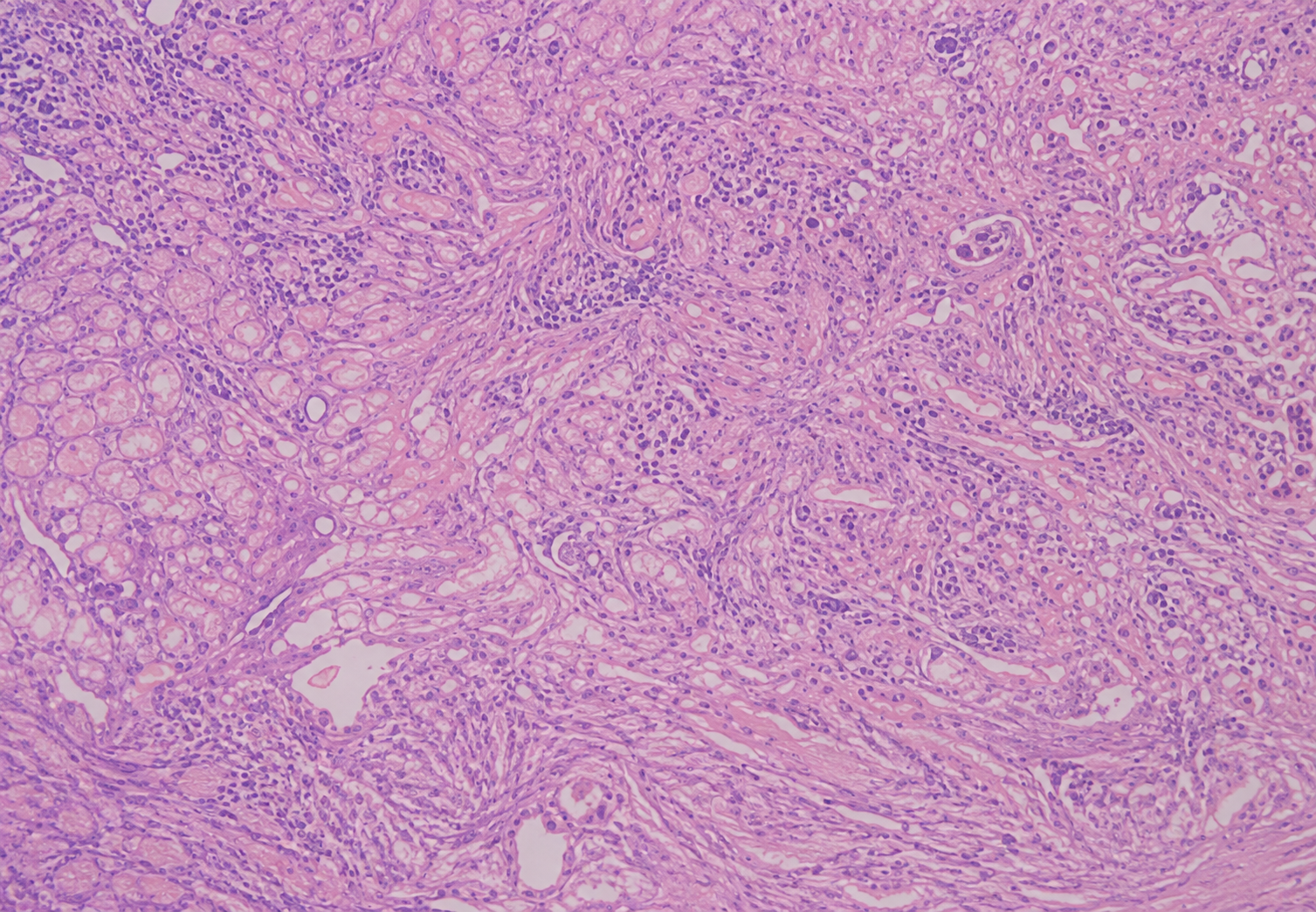
The aim of the present study was to evaluate the hepatoprotective potential of Centella asiatica L. against paracetamol-induced hepatotoxicity in experimental rats. Liver toxicity was induced by paracetamol drug at a dose level of 3g/kg each, p.o for 7th and 14th days. About 50% ethanol extract of Centella asiatica L. (100 and 200 mg/kg) was administered orally once everyday up to 14 days. The hepatoprotective activity was assessed using different biochemical markers SGPT, SGOT, ALP, bilirubin, total protein and LDH. Meanwhile, in vivo antioxidant activities as SOD, CAT, GSH and, LPO were measured in liver homogenate and histological examinations were carried out to assess the hepato-protective activity. The values were subjected to one-way analysis of variance (ANOVA) followed by Tukey multiple compare test. Results were considered statistically significant at the level of P < 0.001. Obtained results demonstrated that the treatment with Centella asiatica L. (C. asiatica) significantly prevented the drug-induced increase in serum levels of hepatic enzymes. Furthermore, C. asiatica significantly reduced the lipid peroxidation in the liver tissue and restored the activities of defense antioxidant enzymes SOD, CAT and GSH towards normal. Histopathology of liver tissue showed that C. asiatica attenuated the hepatocellular necrosis, regeneration and repair of cells towards normal. The results of this study strongly indicate the protective effect of C. asiatica against paracetamol liver injury which may be attributed to its hepatoprotective activity, and there by scientifically support its traditional use.
References
[1] S. Rajeshkumar, B. Tamilarasan and V. Sivakumar (2015). Phytochemical screening and hepatoprotective efficacy of leaves extracts of annona squamosa against paracetamol induced liver toxicity in rats. Int. J. Pharmacognosy, 2: 178-185.
[2] K. Dinesh, V. Sivakumar, B. Selvapriya, E. Deepika and A. M. Sadiq (2014). Evaluation of hepatoprotective polyherbal formulations contains some Indian medicinal plants. J. Pharmacognosy and Phytochemistry, 3: 1-5.
[3] D. Arora, M. Kumar and S. D. Dubey (2002). Centella asiatica – A review of its medicinal uses and pharmacological effects. J. Natural Remedies, 2: 143-149.
[4] Kashmira Gohil J, Jagruti Patel A and Anuradha Gajjar K. (2010). Pharmacological Review on Centella asiatica: A potential Herbal Cure all. Indian J. Pharm. Sci., 72: 546-556.
[5] C. K. Kokate (2001). Practical Pharmacognosy, 2001. Vallabh Prakashan, Delhi, 107, 108-111.
[6] Organization for Economic Co-operation and Development (2001). Guidelines on acute oral Toxicity. (July 2001). https://ntp.niehs.nih.gov/iccvam/suppdocs/ feddocs/oecd/oecd-gd24.pdf.
[7] M. Mujahid, H. H. Siddiqui, A. Hussain and M. S. Hussain (2013). Hepatoprotective effects of Adenanthera pavonina (Linn.) against anti-tubercular drugs-induced hepatotoxicity in rats. Pharmacog J., 5: 286-90.
[8] V. Sivakumar and M. S. Dhanarajan (2010). Antioxidant activity of Tinospora cordifilia in Alloxan induced diabetic rats. Indian J. Pharm. Sci., 72: 795-798.
[9] D. Das and R. K. Banerjee (1993). Effect of stress on the antioxidant enzymes and gastric ulceration. Mol Cell Biochem., 125: 115-125.
[10] H. Aebi (1984). Catalase in vitro. In: Methods in enzymologyvol. 105. New York: Academic Press. pp.121-16.
[11] P. Kakkar, B. Das and P. N. Visvanathan (1984). A modified spectrophotometric assay of superoxide dismutase. Indian J Biochys; 21: 130-132.
[12] S. N. Upadhyay (1997). Therapeutic potential of immunomodulatory agents from plant
products. Immunomodulation. New Delhi: Narosa Publishing House, 3: 149-154.
[13] V. Sivakumar and S. Rajeshkumar (2015). Protective effect of Andrographis paniculata on hyperglycemic mediated oxidative damage in renal tissues of diabetic rats. J. Phytopharmacol., 4: 287-294.
[14] K. Dinesh, V. Sivakumar, B. Selvapriya, E. Deepika and A. Mohamed Sadiq (2014). Evaluation of hepatoprotective polyherbal formulations contains some Indian medicinal plants. J. Pharmacog. Phytochemis. 3: 1-5.
[15] M. T. Olaleye, A. C. Akinmoladun, A. A. Ogunboye and A. A. Akindahunsi (2010). Antioxidant activity and hepatoprotective property of leaf extracts of Boerhaavia diffusa Linn against acetaminophen-induced liver damage in rats. Food Chem Toxicol., 48: 2200- 2205.
[16] S. A. Tasduq, K. Singh, N. K. Satti, D. K. Gupta, K. A. Suri and R. K. Johri (2006). Terminalia chebula (fruit) prevents liver toxicity caused by sub-chronic administration of rifampicin, isoniazid and pyrazinamide in combination. Hum. Exp. Toxicol., 25:111-118.
[17] V. D. Reddy, P. Padmavathi, S. Gopi, M. Paramahamsa and N. Ch.Varadacharyulu (2010). Protective effect of Emblica officinalis against alcohol‑induced hepatic injury by ameliorating oxidative stress in rats. Indian J Clin Biochem., 25: 419-424.
[18] A. I. Mir, B. Kumar, S. A. Tasduq, D. K. Gupta, S. Bhardwaj and R. K. Johri (2007). Reversal of hepatotoxin‑induced pre‑fibrogenic events by Emblica officinalis – a histological study. Indian J. Exp. Biol., 45: 626-629.
[19] B. P. Kale, M. A. Kothekar, H. P. Tayade and J. B. Jaju (2003). Effect of aqueous extract of Azadirachta indica leaves on hepatotoxicity induced by antitubercular drugs in rats. Indian J. Pharmacol., 35: 177-180.
[20] C. P. Sodhi, S. V. Rana, S. K. Mehta, K. Vaiphei, S. Attari and S. Mehta (1997). Study of oxidativestress in isoniazid-rifampicin induced hepatic injury in young rats. Drug Chem Toxicol., 20: 255-269.
[21] O. O. Onyema, E. O. Farombi, G. O. Emerole, A. I. Ukoha, G. O. Onyeze (2006). Effect of vitamin E on monosodium glutamate induced hepatotoxicity and oxidative stress in rats. Indian J. Biochem Biophys., 43: 20-24.
[22] Sre. P. R. Rathi, T. Sheila, K. Murugesan (2012). Phytochemical screening and In vitro antioxidant activity of methanolic root extract of Erythrina indica. Asian Pac. J. Trop. Biomed., S1696e700.
Downloads
Published
Issue
Section
License
Copyright (c) 2018 Author (s)

This work is licensed under a Creative Commons Attribution-NonCommercial-NoDerivatives 4.0 International License.
Copyright © The Author(s). This is an open access article distributed under the terms of the Creative Commons Attribution-NonCommercial-NoDerivatives 4.0 International License (CC BY-NC-ND 4.0), which permits unrestricted non-commercial use, distribution, and reproduction in any medium, provided the original author(s) and source are properly credited, and the work is not modified or adapted.