Damage potential of Tyrophagus putrescentiae Schrank (Acari: Acaridae) in Oyster (Pluerotus sajor caju) Mushrooms
DOI:
https://doi.org/10.7324/ELSR.2018.414044Keywords:
faeces, harvest, Saprophagous, T. putrescentiaeAbstract
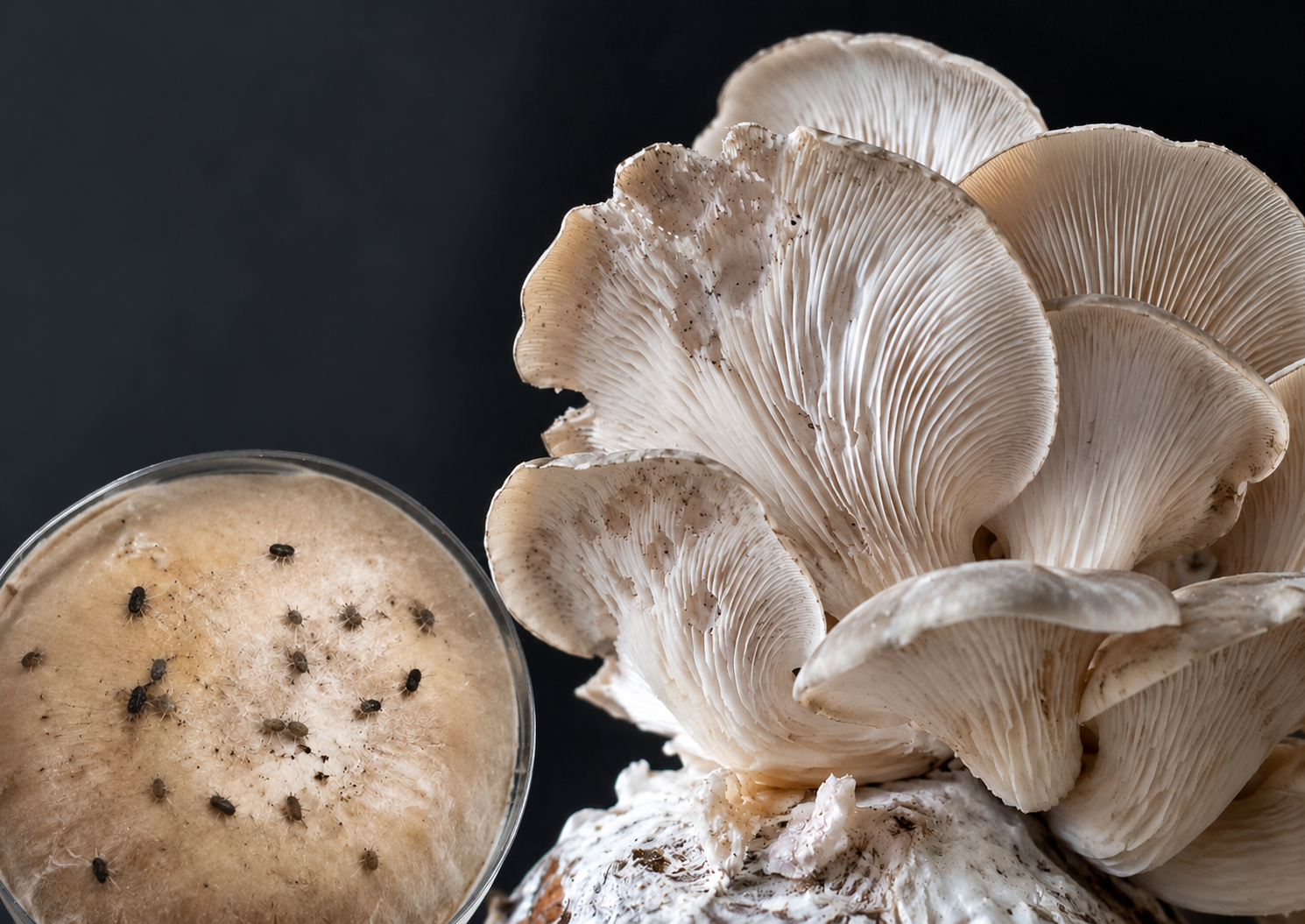
Mite pests are cosmopolitan and reported from many parts of the world. T. putrescentiae was previously described as saprophagous species that feeds on different fungi including moulds (Eutorium, Penicilium) Fusarium, Alternaria, Geotrichum, Mucor and Trichophyton. Oyster Mushroom is a low investment, low risk, low labour intensive, and moderate profit enterprise. Mites have been found to damage mushrooms right from spawning to harvest of the crop. Moreover, mites themselves pollute the mushrooms by the multitude of faeces that they excrete all over, making the mushrooms uneatable as a food, causes allergies and other diseases. Considering the above facts, efforts have been made to assemble the available literature in this article.
References
[1] D. A. Ania, J. K. Oloke, S. G. Jonathan and O. J. Olawuyi (2012). Comparative assessment of mycelia biomass and exo polysaccharide production in wild type and mutant strains of Scizophyllum commune grown in Submerged liquid medium. Nature Sci., 10: 82-89.
[2] A. U. Singh and K. Sharma (2016). Pests of Mushroom. Adv. Crop. Sci. Tech., 4: 213. doi:10.4172/2329-8863.1000213.
[3] D. P. Tripathi (2005). Mushroom Cultivation, Oxford, IBH Publishing Co. Pvt. Ltd., New Delhi, p352.
[4] C. D. Thapa and P. K. Seth (1982). Mushroom mites and their control. Indian J. Mush., 8: 45-52.
[5] K. Okabe, K. Miyazaki and H. Yamamoto (2001). Population increase in mushroom pest mites on cultivated Hypsozygus marmoreus and their vectoring of weed fungi between mushroom cultivation media. JPN. J. APPL. ENTOMOL. Z., 45: 75-81.
[6] J. Arnau and L. Guerrero (1994). Physical methods of controlling mites in dry-cured ham. FIeischwirtschaft (Germany), 74: 1311-1313.
[7] K. Solarz, P. Szilman and E. Szilman (1999). Allergenic mites associated with bird nests in Poland (Astigmata: Pyroglyphidae, Acaridae, Glycyphagidae). In Ecology and Evolution of the Acari, pp 651-656. Springer, Dordrecht, 1999.
[8] L. Duek, G. Kaufman, E. Palevsky, I. Berdicevski (2001). Mites in fungal cultures. Mycoses, 44: 390-394.
[9] K. Kheradmand, K. Kamali, Y. Fathipour and E. M. Goltapeh (2007). Development, life table and thermal requirement of Tyrophagus putrescentiae (Astigmata: Acaridae) on mushrooms. J. Stored. Prod. Res., 43: 276-281.
[10] P. Brazis, M. Serra, A. Selles, F. Dethioux, V. Biourge and A. Puigdemont (2008). Evaluation of storage mite contamination of commercial dry dog food. Vet. Dermatolo., 19: 209-214.
[11] F. Bahrami, K. Kamali and Y. Fathipour (2007). Life history and population growth parameters of Tyrophagus putrescentiae (Acari: Acaridae) on Fusarium graminearum in laboratory. Journal of Entomology Society of Iran, 26: 7-18.
[12] W. Chmielewski (1999). Acceptance of buckwheat grain as food by Tyrophagus putrescentiae. Fagopyrum, 16: 95-99.
[13] K. Solarz, L. Senczuk, H. Maniurka, E. Cichecka and M. Peszke (2007). Comparisons of the allergenic mite prevalence in dwellings and certain outdoor environments of the Upper Silesia (southwest Poland). Int. J. Hyg. Environ. Health, 210: 715-724.
[14] R. N. Sinha (1964). Effect of low temperature on the survival of some stored products mites. Acarologia, 6: 336-341.
[15] M. Singh and R. Gulati (2001). Minimization of losses due to mites in major pulses during storage. Final Technical Report. CSIR, New Delhi, 1-129.
[16] P. L. Robertson (1961). A morphological study of variation in Tyrophagus (Acarina), with particular reference to populations infesting cheese. Bull. Entomol. Res., 52: 501-529.
[17] A. M. Hughes (1976). The mites of stored food and houses (No. 2nd edition). Technical Bulletin of the Ministry of Agriculture, Her Majesty's Stationery Office.
[18] N. Garcia (2004). Efforts to control mites on Iberian ham by physical methods. Exp. Appl. Acarol., 32: 41-50.
[19] G. R. Anita, H. D. Kaushik and Arvind (2014). Efficacy of Ocimum sanctum and Glycyrrhiza glabra against stored mite, Tyrophagus putrescentiae Schrank in oat flakes. Biopesticides International, 10: 41-49.
[20] T. Erban, D. Rybanska, K. Harant, B. Hortova and J. Hubert (2016). Feces derived allergens of Tyrophagus putrescentiae reared on dried dog food and evidence of the strong nutritional interaction between the mite and Bacillus cereus producing protease bacillolysins and exo-chitinases. Front. Physiol., 7: 53. doi: 10.3389/fphys.2016.00053.
[21] K. K. Walia and S. Mathur (1995). Predatory behaviour of two nematophagus mites, Tyrophagus putrescentiae and Hypoaspis calcuttaensis, on root-knot nematode, Meloidogyne javanica. Nematol. Medit., 23: 255-261.
[22] D. E. Walter, R. A. Hudgens and D. W. Freckman (1986). Consumption of nematodes by fungivorous mites, Tyrophagus spp. (Acarina: Astigmata: Acaridae). Oecologia, 70: 357-361.
[23] S. Kumar, Y. Gautam and S. R. Sharma (2004). Mushroom mites and their management. Mushroom Res., 13: 46-52.
[24] A.D. Clift and R. B. Toffolon (1981). Biology, fungal host preferences and economic significance of two pygmephorid mites (Acarina: Pygmephoridae) in cultivated mushrooms, NSW, Australia. In Proceedings of the Eleventh International Scientific Congress on the Cultivation of Edible Fungi, Australia, 1981/edited by NG Nair, AD Clift. Sydney.
[25] M. A. Abdel-Sater, S. K. Hemida, S. A. Eraky and M. M. Nasser (1995). Distribution of fungi on two mite species and their habitats in Egypt. Folia Microbiol., 40: 304-313.
[26] O. Ali, R. Dunne and P, Brennan (1997). Biological control of the sciarid fly, Lycoriella solani by the predatory mite, Hypoaspis miles (Acari: Laelapidae) in mushroom crops. Syst. Appl. Acarol., 2: 71-80.
[27] E. S. Binns (1973). Predatory mites neglected allies. Mushroom Journal, 12: 540-545.
[28] O.Ali, R. Dunne and R. Brennan (1999). Effectiveness of the predatory mite Hypoaspis miles (Acari: Mesostigmata: Hypoaspidae) in conjunction with pesticides for control of the mushroom fly Lycoriella solani (Diptera: Sciaridae). Exp. Appl. Acarol., 23: 65-77.
[29] E. Dmowska, J. Dmoch and K. Ilieva (1997). Early interaction of the bacterivorous nematode Rhabditis cucumeris and the edible fungus Agaricus bisporus in relation to time and quantity of nematode inoculation. International Journal of Mushroom Sci., 2: 15-23.
[30] Y. Chen (1967). The fungi of wheat straw compost: II. Biochemical and physiological studies. Trans. Br. Mycol. Soc., 50: 667-677.
[31] R. S. Gill, G. S. Sandu and M. S. Dhooria (1988). Studies on the pest and predatory status of mite, Parasitus consanguineus Oudemans and Voigts (Parasitidae: Mesostigmata) occurring on mushroom in Punjab. Indian J. Mush., 14: 32-36.
[32] S. Kasuga and H. Amano (2000). Influence of temperature on the life history parameters of Tyrophagus similis Volgin (Acari: Acaridae). Appl. Entomol. Zool., 35: 237-244.
[33] J. G. Rodriguez and L. D. Rodriguez (1987). Nutritional ecology of stored-product and house dust mites. Nutritional ecology of insects, mites, spiders and related invertebrates. Wiley, New York, 345-368.
[34] P. P. Reddy, M. S. Rao, R. P. Tewari, M. Nagesh (1999). Evaluation of oil cakes for their efficacy against mushroom nematodes in chicken manure. Pest Manag. Hort. Ecosyst., 5: 50-53.
[35] J. Pumnuan, A. Insung and A. Chandrapatya (2008). Acaricidal effects of herb extracts on the mushroom mites, Luciaphorus perniciosus Rack and Formicomotes heteromorphus Magowski. Syst. Appl. Acarol., 13: 33-38.
[36] A. Jeyasankar, N. Raja and S. Ignacimuthu (2010). Antifeedant and growth inhibitory activities of Syzygium lineare Wall. (Myrtaceae) against Spodoptera litura Fab. (Lepidoptera: Noctuidae). Curr. Res. J. Biol. Sci., 2: 173-177.
[37] V. P. Sharma and K. Rajesh (2005). Use of botanicals to manage Sepedonium Yellow Mould and obtain higher yield in button mushroom. Indian J. Mycol. Pl. Path., 35: 257-259.
[38] I. Sanchez-Ramos and P. Castanera (2000). Acaricidal activity of natural monoterpenes on Tyrophagus putrescentae (Schrank), a mite of stored food. J. Stored Prod. Res., 37: 93-101.
[39] I. Sanchez-Ramos and P. Castanera (2003). Laboratory evaluation of selective pesticides against the storage mite Tyrophagus putrescentiae (Acari: Acaridae). J. Med. Entomol., 40: 475-481.
[40] G. Gurusubramanian, A. Rahaman, M. Samrah, S. Roy and S. Bora (2008). Pesticide usage pattern in tea ecosystem, their retrospect and alternative measures. J. Environ. Biol., 29: 813-826.
[41] Y. Jiang, T. J. Smith and E. L. Ghisalberti (1997). The effect of volatile metabolites of lipid peroxidation on the aggregation of redlegged earth mites Halotydeus destructor (Acarina: Penthaleidae) on damaged cotyledons of subterranean clover. J. Chem. Ecol., 23:163-174.
[42] G. Venkateshwarlu, M. V. Chandravadana and R. P. Tewari (1999). Volatile flavor components of some edible mushrooms (Basidiomycetes). Flavour and Fragr J., 14:191-194.
[43] B. Xia, D. Luo, Z. Zou and Z. Zhu (2009). Effect of temperature on the life cycle of Aleuroglyphus ovatus (Acari: Acaridae) at four constant temperatures. J. Stored Prod. Res., 45: 190-194.
[44] D. J. Royse, J. E. Sanchez, R. B. Beelman and J. Davidson (2008). Re-supplementing and recasing mushroom (Agaricus bisporus) compost for a second crop. World J. Microbiol. Biotechnol., 24: 319-325.
[45] R. A. Freire, G. J. de Moraes, E. S. Silva, A. C. Vaz and R. de Campos Castilho (2007). Biological control of Bradysia matogrossensis (Diptera: Sciaridae) in mushroom cultivation with predatory mites. Exp. Appl. Acarol., 42: 87-93.
[46] A. R. Cabrera, R. A. Cloyd and E. R. Zaborski (2005). Development and reproductive of Stratiolaelaps scimitus (Acari: Laelapidae) with fungus gnat larvae (Diptera: Sciaridae), potwrms (Oligochaeta: Enchytraeidae) or Sancassania aff sphaerogaster (Acari: Acaridae) as the sole food source. Exp. Appl. Acarol., 36: 71-81.
[47] R. Gulati (2002). Bioefficacy of Curcuma longa L. oil against Tyrophagus putrescentiae Schrank and Suidasia nesbitti Hughes in wheat. Pest Management and Economic Zoology, 10: 115-119.
Downloads
Published
Issue
Section
License
Copyright (c) 2018 Author (s)

This work is licensed under a Creative Commons Attribution-NonCommercial-NoDerivatives 4.0 International License.
Copyright © The Author(s). This is an open access article distributed under the terms of the Creative Commons Attribution-NonCommercial-NoDerivatives 4.0 International License (CC BY-NC-ND 4.0), which permits unrestricted non-commercial use, distribution, and reproduction in any medium, provided the original author(s) and source are properly credited, and the work is not modified or adapted.