Determinants of pregnant women intention to respect the optimal timeframe for intermittent preventive treatment to Sulfadoxine pyrimethamine against malaria
DOI:
https://doi.org/10.7324/ELSR.2018.415365Keywords:
Aesculus hippocastanum L., buckeye, micro-morphological character, SEM, stomaAbstract
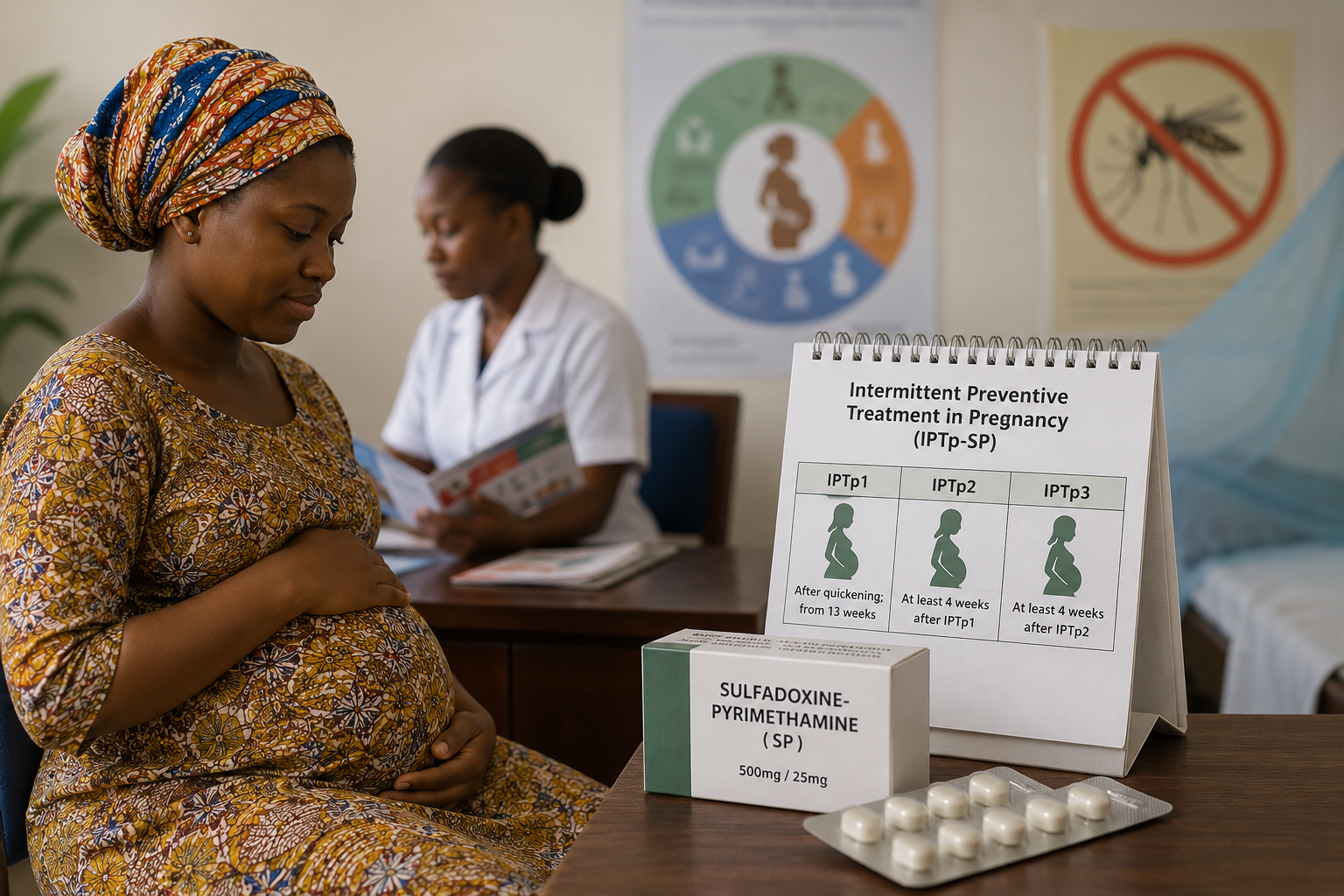
Malaria is the leading cause of morbidity and mortality in Democratic Republic of the Congo (DRC), precisely among children under five years and pregnant women who do not receive necessary preventive or curative care. The aim of this study was to identify the psychosocial factors explaining the intention of pregnant women to respect the optimal timeframe of Intermittent Preventive Treatment (IPT) for malaria. This was an analytical study, of correlational descriptive type. In this study, 108 pregnant women who initiated their antenatal care services in the structures of the Lemba Health Zone to benefit for the TPI to Sulfadoxine Pyrimethamine (SP) were surveyed. The structured interview and the seven-level Likert scale were used for data collection. The findings revealed that the mean age of our respondents was 27.33 ± 4.8 years, 84.3% were married, 50% had a high school education, 74% were unaware of the calendar of IPT for malaria and 70.4% know that a pregnant woman must start the antenatal in her first trimester. Behavioral beliefs (β = 0.236) and control beliefs (β = 0.235) correlate with the intention. On the other hand, the importance attributed to facilitating or detrimental factors (β = 0.131) and normative beliefs (β = 0.038) didn’t correlate with the intention. Malaria constitutes a great danger for pregnant woman and the knowledge of the IPT to SP is very important for the well-being of these women as well as of their future baby.
References
[1] Ministère de Santé Publique (Ministry of Public Health) (2012). Normes et directives de santé relatives aux interventions intégrées de santé de la mère, du nouveau-né et de l’enfant en République Démocratique du Congo. Soins Obs. Ess. 1, pp 110.
[2] Organisation Mondiale de la Santé (2017). Recommandation de politique générale de l’OMS : Chimio-prévention du paludisme saisonnier pour lutter contre le paludisme à Plasmodium falciparum en zone de forte transmission saisonnière dans la sous-région du Sahel en Afrique. Rapport sur le paludisme dans le monde, Genève 2012, 4 p - [Mise à jour le 18 Mars 2017], disponible à : http://www.who.int/malaria/publications/atoz/who_smc_policy_recommendation/fr/.
[3] D. D. Sangba (2010). Lutte contre le paludisme : connaissances, attitudes et pratiques dans les ménages. Mémoire de Master, Santé Publique, Epidémiologie et Médecine Préventive, Faculté de Médecine, Université de Lubumbashi, pp 50.
[4] P. Aubry and G. Bernard-Alex (2015). Passeport Santé pour l’Afrique. Editions Universitaires Européennes, 444 pp.
[5] D. Ogobara (1992). Epidémiologie du paludisme au Mali : étude de la chloroquino-résistance, essai de stratégie de contrôle basée sur l’utilisation de rideaux imprégnés de permethrine associée au traitement systématique des accès fébriles. Thèse de Doctorat, Sc Bio. Montpellier II, France, pp 245.
[6] M. T. Diouf (2004). Représentation populaire de la maladie et option thérapeutique chez les femmes enceintes et les enfants de moins de dix ans : les cas des fièvres et/ou de l’accès palustre en milieux rural, Niakhar, Sénégal. Mémoire de maitrise en Population, développement et Santé de la reproduction. Université Cheikh Anta Diop, Dakar, 109 pp.
[7] S. Incardona (2007). Le paludisme au Cambodge : épidémiologie, diagnostic moléculaire à haut débit, et variabilité du gène ARNr 18S des quatre espèces infectant l’homme. Thèse de doctorat, Université Paris 7- Dénis Diederot. Ecole doctorale de biochimie et biologie Moléculaire, pp 236.
[8] H. C. Triandis (1980). Values, attitudes, and inter-personal behavior. In: Howe H, Page M, editors. Nebraska Symposium on Motivation. Lincoln, NE: University of Nebraska Press, 1980:195-259
[9] I. Ajzen (1991). The theory of planned behavior. Organ Behav. Hum. Perform., 50: 179-211.
[10] I. Ajzen and M. Fishbein (1980). Understanding attitudes and predicting social behaviour.
[11] M. Fishbein and I. Ajzen (1975). Attitude, Intention and Behavior. In: An Introduction to Theory and Research 1975. Addison-Western, Boston.
[12] R. C. Bonono and P. Ongolo-Zogo (2012). Optimiser l’utilisation de la consultation prénatale au Cameroun. Centre pour le Développement des Bonnes Pratiques en Santé–Hôpital Central. Yaoundé, Cameroun SURE–Supporting the Use of Research Evidence (SURE) for Policy in African Health Systems–is a collaborative project that builds on and supports the Evidence-Informed Policy Network (EVIPNet) in Africa and the Regional East African Community Health (REACH) Policy Initiative. SURE is funded by the European Commission’s 7th Framework Programme. http://www.portal.pmnch.org/evidence/sure/ESPBCPN.pdf.
[13] D. A. Russo, J. Stochl, M. Painter, G. F. Shelley, P. B. Jones and J. Perez (2015). Use of the Theory of Planned Behaviour to assess factors influencing the identification of students at clinical high-risk for psychosis in 16+ Education. BMC health Serv. Res., 15: 411. doi: 10.1186/s12913-015-1074-y.
[14] F. Légaré, F. Borduas, A. Freitas, A. Jacques, G. Godin, F. Luconi and J. Grimshaw (2014). Development of a simple 12-item theory-based instrument to assess the impact of continuing professional development on clinical behavioral intentions. PLoS ONE 9: e91013. doi: 10.1371/journal.pone.0091013.
[15] J. P. Weir (2005). Quantifying test-retest reliability using the intraclass correlation coefficient and the SEM. J. Strength Cond. Res., 19: 231-240.
[16] J. Nunnally and I. Bernstein (1994). Psychometric Theory (3rd ed.). New York: McGraw-Hill.
[17] D. R. Congo (2011). Déterminants de la fréquentation tardive des services de soins prénatals dans les zones de santé de l’Equateur et du Katanga en République Démocratique du Congo. Annual Afr Med , 4: 845.
[18] A. Dicko, I. Sagara, A. A. Djimdé, S. O. Touré, M. Traore and S. Dama et al. (2010). Molecular markers of resistance to sulphadoxine-pyrimethamine one year after implementation of intermittent preventive treatment of malaria in infants in Mali. Malar. J., 9: 9. doi: 10.1186/1475-2875-9-9.
[19] P. Ndiaye, A. T. Dia, A. Diediou, E. H. L. Dieyeand and D. A. Dione (2005). Déterminants socioculturels du retard de la 1ere consultation prénatals dans un district sanitaire au Sénégal. Santé Publ., 17: 531-538. doi: 10.3917/spub.054.0531.
[20] S. Roy (2008). Déterminants de l'utilisation des services publics de santé prénatale dans la ville de Rosario en Argentine (Doctoral dissertation, Université Laval).
[21] WHO (World Health Organization) (2017). Traitement préventif intermittent du paludisme (TPI) pour les femmes enceintes. [Mise à jour le 6 Mai 2017], disponible dans : http://www.who.int/malaria/areas/preventive_therapies/pregnancy/fr/.
[22] M. Khan, M.R. Mwaku, N.D. Kinkela and V.A. Rie (2005). Soins prénatals à Kinshasa (République démocratique du Congo): croyances, connaissances et obstacles à la programmation appropriée. Cahiers d'études et de recherches francophones/Santé, 15: 93-97.
[23] N. Beaudin, E.B. Boulianne, M. Fortier, L. Poirier, M. Leclerc, G. Beaudet-Hillman et al. (2015). Soins de proximité en périnatalité : Standards de Pratique de l’infirmière. Ordre des infirmiers et infirmières du Quebec.
[24] G. Gordin and G. Kok (1996). The theory of planned behaviors: a review of its applications to health-related behaviors. Am. J. Health Prom., 1: 87-98.
[25] G. Godin, C. Gagné and P. Sheeran (2004). Does perceived behavioural control mediate the relationship between power beliefs and intention? Br. J. Health Psychol., 9: 557-568.
[26] W. Rwenge and T. Nguemaleu (2011). Facteurs sociaux de l’utilisation des services de soins obstétricaux parmi les adolescentes Camerounaises. Afr. J. Repro. Health, 15: 81-92.
[27] A. Dickson, C. Knussen and P. Flowers (2008). 'That was my old life; it's almost like a past-life now': Identity crisis, loss and adjustment amongst people living with Chronic Fatigue Syndrome. Psychol. Health, 23: 459-476.
[28] A. A. Greco (2005). Las voces acalladas en la maternidad: Los controles prenatales ausentes o inadecuados en la perspectiva de las mujeres de sectores populares.
[29] R. M. Kanter (1977). Men and Women of the Corporation. New York.
Downloads
Published
Issue
Section
License
Copyright (c) 2018 Author (s)

This work is licensed under a Creative Commons Attribution-NonCommercial-NoDerivatives 4.0 International License.
Copyright © The Author(s). This is an open access article distributed under the terms of the Creative Commons Attribution-NonCommercial-NoDerivatives 4.0 International License (CC BY-NC-ND 4.0), which permits unrestricted non-commercial use, distribution, and reproduction in any medium, provided the original author(s) and source are properly credited, and the work is not modified or adapted.