Efficacy of Acaricides and botanicals against Tyrophagus putrescentiae (Acari: Acaridae)
DOI:
https://doi.org/10.7324/ELSR.2018.416671Keywords:
fruiting bodies, mycelium, monoterpenoids, spawningAbstract
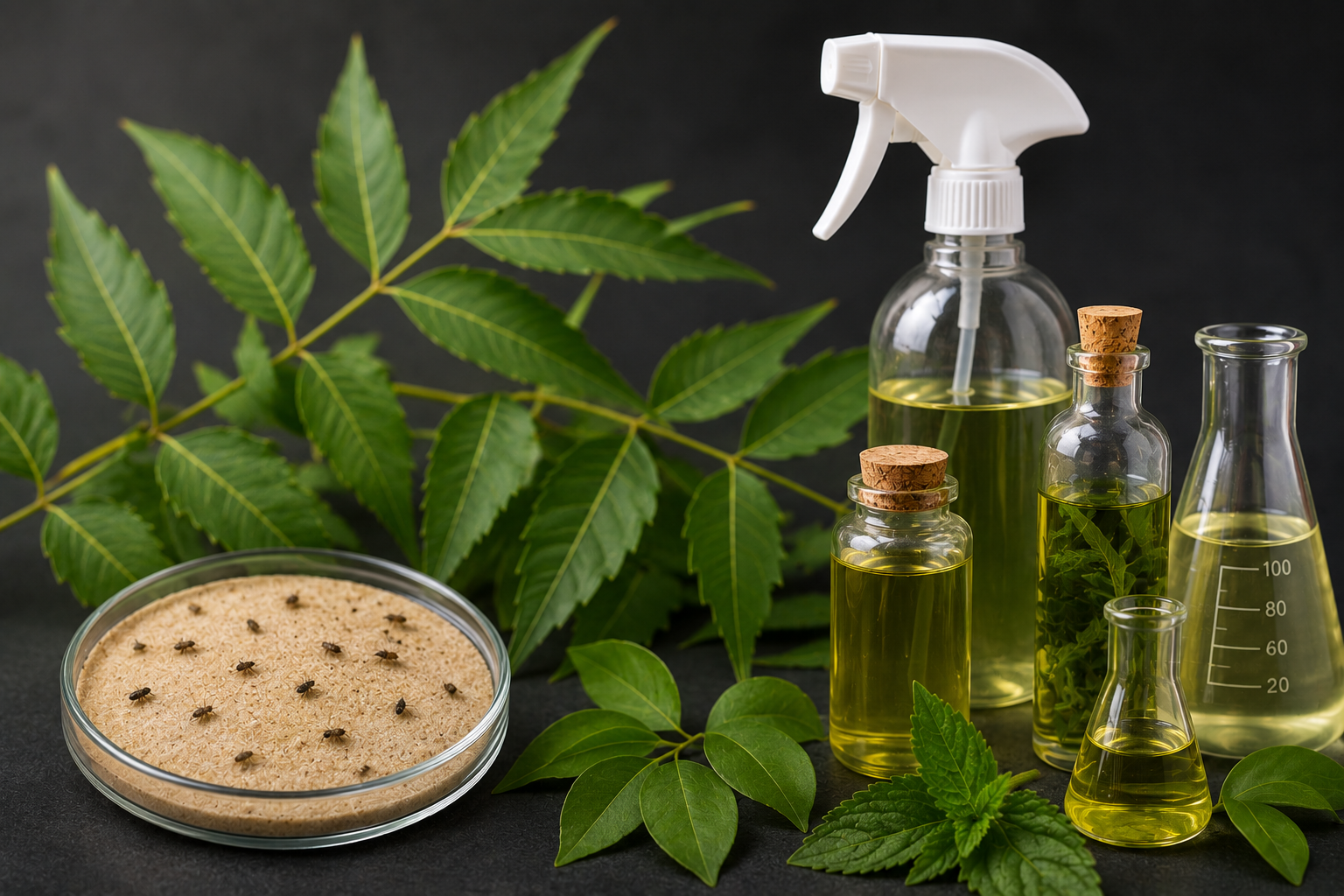
Haryana is the leading state in seasonal mushroom production contributing approximately 4000 tonnes per year. Reports are available on the occurrence of mites including Tyrophagus putrescentiae in oyster mushrooms. Mites have been found to damage mushrooms right from spawning to the harvest of the crop. Mite damage on the fruiting bodies often shows up as the small cavities in the stem and cap similar in appearance to bacterial pit disease. Mycelium-eating mites can cause high yield losses. Although pesticides (permetrin, perefosmetil, anometrin, forbecide and dichlorvos) are applied, but due to growing ecological and health concerns, bio-control methods are being developed against pests. There is a need to exploit the use of plant products which have acaricidal properties and are safe for mushroom mycelium. Plant-derived alkalis, alcohols, aldehydes, terpenoids and some monoterpenoids show fumigant properties and thus, the use of plant based pesticides is preferred against pests and diseases in mushroom production.
References
[1] D. P. Tripathi (2005). Mushroom cultivation. Oxford and IBH Publishing Company Pvt. Limited.
[2] C. D. Thapa and P. K. Seth (1982). Mushroom mites and their control. Indian J. Mush., 8: 45-52.
[3] K. Okabe, K. Miyazaki and H. Yamamoto (2001). Population increase in mushroom pest mites on cultivated Hypsozygus marmoreus and their vectoring of weed fungi between mushroom cultivation media. JPN. J. APPL. ENTOMOL. Z., 45: 75-81.
[4] S. Kumar, Y. Gautam and S. R. Sharma (2004). Mushroom mites and their management. Mushroom Res., 13: 46-52.
[5] K. Kheradmand, K. Kamali, Y. Fathipour and E. M. Goltapeh (2007). Development, life table and thermal requirement of Tyrophagus putrescentiae (Astigmata: Acaridae) on mushrooms. J. Stored. Prod. Res., 43: 276-281.
[6] G. Clancy (1981). Record of Caloglyphus sp. from cultivated mushrooms. Mushroom Sci., 11: 233-244.
[7] M. Singh (2011). Mushroom production: an agribusiness activity. Mushrooms-Cultivation, Marketing and Consumption (Eds. M. Singh, B. Vijay, S. Kamal and G. C. Wakchaure). Directorate of Mushroom Research, Chambaghat, Solan.
[8] R.T. Gahukar (2014). Mushroom pest and disease management using plant-derived products in the tropics: a Review. Int. J. Vegetable Sci., 20: 78-88.
[9] N. Chiron and D. Michelot (2005). Mushrooms odours, chemistry and role in the biotic interactions - a review. Crypt. Mycology, 26: 299-364.
[10] T. Sawahata, S. Shimano and M. Suzuki (2008). Tricholoma matsutake 1-octen-3-ol and methyl cinnamate repel mycophagous Proisotoma minuta (Collembola: Insecta). Mycorrhiza, 18: 111-114.
[11] Y. Jiang, T. J. Smith and E. L. Ghisalberti (1997). The effect of volatile metabolites of lipid peroxidation on the aggregation of redlegged earth mites Halotydeus destructor (Acarina: Penthaleidae) on damaged cotyledons of subterranean clover. J. Chem. Ecol., 23:163-174.
[12] G. Venkateshwarlu, M. V. Chandravadana and R. P. Tewari (1999). Volatile flavor components of some edible mushrooms (Basidiomycetes). Flavour and Fragr J., 14:191-194.
[13] B. Xia, D. Luo, Z. Zou and Z. Zhu (2009). Effect of temperature on the life cycle of Aleuroglyphus ovatus (Acari: Acaridae) at four constant temperatures. J. Stored Prod. Res., 45: 190-194.
[14] M. Nagesh and P. P. Reddy (1999). Evaluation of oil cakes for their efficacy against mushroom nematodes in chicken manure. Pest Manag. Hort. Ecosyst., 5: 50-53.
[15] D. J. Royse, J. E. Sanchez, R. B. Beelman and J. Davidson (2008). Re-supplementing and recasing mushroom (Agaricus bisporus) compost for a second crop. World J. Microbiol. Biotechnol., 24: 319-325.
[16] R. A. Freire, G. J. de Moraes, E. S. Silva, A. C. Vaz and R. de Campos Castilho (2007). Biological control of Bradysia matogrossensis (Diptera: Sciaridae) in mushroom cultivation with predatory mites. Exp. Appl. Acarol., 42: 87-93.
[17] A. R. Cabrera, R. A. Cloyd and E. R. Zaborski (2005). Development and reproductive of Stratiolaelaps scimitus (Acari: Laelapidae) with fungus gnat larvae (Diptera: Sciaridae), potwrms (Oligochaeta: Enchytraeidae) or Sancassania aff sphaerogaster (Acari: Acaridae) as the sole food source. Exp. Appl. Acarol., 36: 71-81.
[18] R.T. Gahukar (2007). Botanicals for use against vegetable pests and diseases: a Review. Int. J. Vegetable Sci., 13: 41-60.
[19] P. Das (1986) Economics and control of mushroom mites. Ph.D. Thesis, BCKV, Kalyani, West Bengal.
[20] R. Gulati (2002). Bioefficacy of Curcuma longa L. oil against Tyrophagus putrescentiae Schrank and Suidasia nesbitti Hughes in wheat. Pest Management and Economic Zoology, 10: 115-119.
[21] R. Gulati and S. Mathur (1995) Effect of Eucalyptus and Mentha leaves and Curcuma rhizomes on Tyrophagus putrescentiae (Schrank) (Acarina : Acaridae) in wheat. Exp. Appl. Acarol., 19: 511-518.
[22] C. P. Lee, B. Sung and H. Lee (2006) Acaricidal activity of fennel seed oils and their main components against Tyrophagus putrescentiae, a stored-food mite. J. Stored Prod. Res., 42: 8-14.
[23] I. Sanchez-Ramos and P. Castanera (2000). Acaricidal activity of natural monoterpenes on Tyrophagus putrescentae (Schrank), a mite of stored food. J. Stored Prod. Res., 37: 93-101.
[24] R. Gulati (1998). Inhibitory action of neem products on Tyrophagus putrescentiae Schrank (Acarina: Acaridae) in wheat during storage. Annals of Agri Bio Research, 227-230.
[25] R. Gulati (2007a). Turmeric (Curcuma longa L.) as acaricidal against Tyrophagus putrescentiae Schrank and Suidasia nesbitti Hughes in stored wheat. J. Food Sci. Technol. Mysore, 44: 367-370.
[26] R. Gulati (2007b). Potential of Garlic as grain protectant against Tyrophagus putrescentiae Schrank and Suidasia nesbitti Hughes in Wheat. Syst. Appl. Acarol., 12: 19-25.
[27] G. R. Anita, H. D. Kaushik and Arvind (2014). Efficacy of Ocimum sanctum and Glycyrrhiza glabra against stored mite, Tyrophagus putrescentiae Schrank in oat flakes. Biopesticides International, 10: 41-49.
[28] R. Jacobson (1993). Control of Frankliniella occidentalis with Orius mujusculus experiences during the first full season of commercial use in the U. K. SROP/WPRS Bulletin, 16: 81-84. http://library.wur.nl/WebQuery/titel/844394.
[29] W. Y. Chaim, Y. Huang, S. X. Chen and S. H. Ho (1999). Toxic and antifeedant effects of allyl disulphide on Tribolium castaneum (Herbst) (Coleoptera: Tenebrionidae) and Sitophilus zeamis (Coleoptera: Curculionidae). J. Econ. Entomol., 92: 239-245.
[30] Y. Huang, S. X. Chen and S. H. Ho (2002). Bioactivities of methyl allyl disulfide and diallyl trisulfide from essential oil of garlic to two species of stored product pests, Sitophilus zeamais (Coleoptera: Curculionidae) and Tribolium castaneum (Coleoptera: Curculionidae). J. Econ. Entomol., 93: 537-543.
[31] V. P. Sharma and K. Rajesh (2005). Use of botanicals to manage Sepedonium Yellow Mould and obtain higher yield in button mushroom. Indian J. Mycol. Pl. Path., 35: 257-259.
[32] F. Macchioni, P. L. Cioni, G. Flamini, I. Morelli, S. Perrucci, A. Franceschi, G. Macchioni, et al., (2002). Acaricidal activity of pine essential oils and their main components against Tyrophagus putrescentiae, a stored food mite. J. Agric. Food Chem., 50: 4586-4588.
[33] K. Tehri and R. Gulati, (2014) Field efficacy of some biorationals against the two spotted spider mite Tetranychus urticae Koch (Acari: Tetranychidae). J. Appl. & Nat. Sci., 6: 62-67.
[34] P. P. Reddy, M. S. Rao, R. P. Tewari, M. Nagesh (1999). Evaluation of oil cakes for their efficacy against mushroom nematodes in chicken manure. Pest Manag. Hort. Ecosyst., 5: 50-53.
[35] J. Pumnuan, A. Insung and A. Chandrapatya (2008). Acaricidal effects of herb extracts on the mushroom mites, Luciaphorus perniciosus Rack and Formicomotes heteromorphus Magowski. Syst. Appl. Acarol., 13: 33-38.
[36] A. Jeyasankar, N. Raja and S. Ignacimuthu (2010). Antifeedant and growth inhibitory activities of Syzygium lineare Wall. (Myrtaceae) against Spodoptera litura Fab. (Lepidoptera: Noctuidae). Curr. Res. J. Biol. Sci., 2: 173-177.
[37] V. P. Sharma and K. Rajesh (2005). Use of botanicals to manage Sepedonium Yellow Mould and obtain higher yield in button mushroom. Indian J. Mycol. Pl. Path., 35: 257-259.
[38] I. Sanchez-Ramos and P. Castanera (2000). Acaricidal activity of natural monoterpenes on Tyrophagus putrescentae (Schrank), a mite of stored food. J. Stored Prod. Res., 37: 93-101.
[39] I. Sanchez-Ramos and P. Castanera (2003). Laboratory evaluation of selective pesticides against the storage mite Tyrophagus putrescentiae (Acari: Acaridae). J. Med. Entomol., 40: 475-481.
[40] G. Gurusubramanian, A. Rahaman, M. Samrah, S. Roy and S. Bora (2008). Pesticide usage pattern in tea ecosystem, their retrospect and alternative measures. J. Environ. Biol., 29: 813-826.
[41] C. Veeraphant, V. Mahakittikun and N. Soonthornchareonnon (2011). Acaricidal effects of thai herbal essential oils against Dermatophagoides pteronyssinus. Mahidol University Journal of Pharmaceutical Sci, 38: 1-12.
[42] A. U. Singh and K. Sharma (2016). Pests of Mushroom. Adv. Crop. Sci. Tech., 4: 213. doi:10.4172/2329-8863.1000213.
[43] P. N. Richardson (1992). Entomopathogenic nematodes and the protected crops industry. Phytoparasitica. 20: 61-65.
[44] D. L. Rinker, TH. H. A. Olthof, J. Dano and G. Alm (1995). Effect of entomopathogenic nematodes on control of mushroom infesting sciarid fly and on mushroom production. Biocontrol Sci Technol., 5: 109-119.
[45] C. B. Keil (1991). Field and laboratory evaluation of Bacillus thuringensis var israelensis formulation for control of fly pest of mushroom. J. Econ. Entomol., 84: 1180-1188.
[46] V. P. Sharma (1994). Potential of Pleurotus Sajor. Caju for biocontrol of Aphelenchoides camposticola in Agricus bisporus cultivation. Mushroom Res., 3: 15-20.
[47] P. S. Grewal, H. S. Sohi, K. Grabbe and O. Hilber (1989). Effect of various fungal metabolites on Aphelenchoides composticola Franklin and its multiplication on some fungi. In Mushroom Science. Proceedings of the twelfth international congress on the science and cultivation of edible fungi, Braunschweig, Germany (Vol. 2, pp. 813-820).
[48] S. Jess and J. F. Bingham (2004). Biological control of sciarid and phorid pests of mushroom with predatory mites from the genus Hypoaspis (Acari: Hypoaspidae) and the entomopathogenic nematode Steinernema feltiae. Bulletin of Entomological Research, 94:159-167.
[49] A. H. K. Al-Amidi, R. Dunne and M. J. Downes (1991). Parasitus bituberosus (Acari: Parasitidae): An agent for control ofLycoriella solani (Diptera: Sciaridae) in mushroom crops. Exp. Appl. Acarol., 11: 159-166.
[50] S. Kumar, Y. Gautam and S. R. Sharma (2004). Mushroom mites and their management. Mushroom Res., 13: 46-52.
[51] H. S. Garcha (1978). Diseases of mushroom and their control. Indian Mush. Sci., 1: 185-191.
Downloads
Published
Issue
Section
License
Copyright (c) 2018 Author (s)

This work is licensed under a Creative Commons Attribution-NonCommercial-NoDerivatives 4.0 International License.
Copyright © The Author(s). This is an open access article distributed under the terms of the Creative Commons Attribution-NonCommercial-NoDerivatives 4.0 International License (CC BY-NC-ND 4.0), which permits unrestricted non-commercial use, distribution, and reproduction in any medium, provided the original author(s) and source are properly credited, and the work is not modified or adapted.