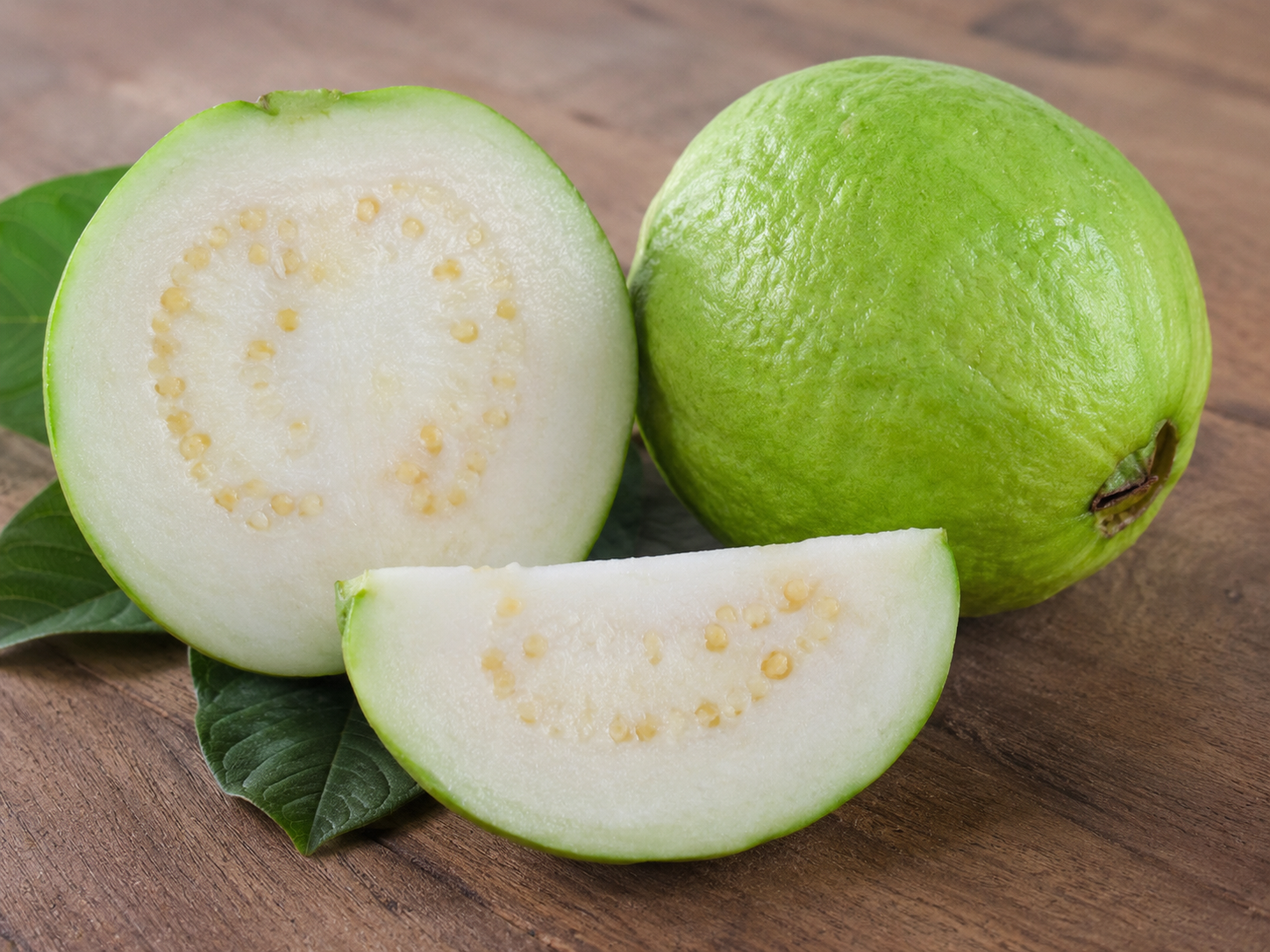
Antioxidant Profile Determination of off-Seasonal Guava, Allahabad Safeda (Psidium guajava L.) Fruits
Keywords:
antioxidants, chlorophyll a, chlorophyll b, carotenoid, proteinAbstract
Antioxidants received from plant sources are found to be one of the best remedies for a number of human diseases. Guava with high amount of dietary fiber is recommended as natural and secured source of antioxidants. In this study, antioxidant capacity in guava fruits is determined by the assessment of total phenol content and DPPH scavenging activity. Results obtained emphasize on the usage guava fruits to eradicate destructive free radicals from the human body. Daily intake of guava fruits can help fighting noxious diseases like cancer and arthritis.
References
R.A. Gill, H.W. Polley, H.B. Johnson, L.J. Anderson, H. Maherali, R.B. Jackson (2002). Antioxidant capacities, phenolic compounds, carotenoids and vitamin C contents of nectarine, peach and plum cultivars from California. J. Agric. Food Chem. 50: 4976-4982.
G. C. Yen and H. Y. Chen (1995). Antioxidant activity of various tea extracts in relation to their antimutagenicity. J. Agric. Food Chem., 43: 27-32.
I. Gulcin (2006). Antioxidant and antiradical activities of L-Carnitine. Life Sci., 78: 803-811.
I. Gulcin (2007). Comparison of in vitro antioxidant and antiradical activities of L-tyrosine and L-Dopa. Amino Acids, 32: 431-438.
I. Gulcin (2010). Antioxidant properties of resveratrol: a structureactivity insight. Innov. Food Sci. Emerg. Technol., 11: 210-218.
T. Hatano, H. Kagawa, T. Yasuhara and T. Okuda (1988). Two new flavonoids and other constituents in licorice roots: their relative astringency and radial scavenging effects. Chem. Pharm. Bull., 36: 2090-2097.
J.E. Kinsella, E. Frankel, B. German and J. Kanner (1993). Possible mechanism for the protective role of the antioxidant in wine and plant foods. Food Technol. 47: 85-89.
O.Η. Lowry, Ν.J. Rosebrough, A.L. Farr and R.J. Randall (1951). Protein measurement with the folin phenol reagent. J. Biol. Chem., 193: 265-275.
Ogunlana and Ogunlana (2008). Total phenolics and total flavonoids in Bulgarian fruits and vegetables. J. Univ. Chem.Technol. Metallurgy 40: 255-260.
P. Schopfer (1989). pH-Dependence of Extension Growth in Avena Coleoptiles and Its Implications for the Mechanism of Auxin Action. Plant Physiol., 90: 202-207.
F.L. Song, R.Y. Gan, Y. Zhang, Q. Xiao, L. Kuang and H.B. Li (2010). Total phenolic contents and antioxidant capacities of selected Chinese medicinal plants. Int. J. Mol. Sci., 11: 2362-2372.
K. Thaipong, U. Boonprakob, K. Crosby, L. Cisneros-Zevallos and D.H. Byrne (2006). Comparison of ABTS, DPPH, FRAP, and ORAC assays for estimating antioxidant activity from guava fruit extracts, J. Food Compos. Anal., 19: 669-675.
Downloads
Published
Issue
Section
License
Copyright (c) 2015 Author (s)

This work is licensed under a Creative Commons Attribution-NonCommercial-NoDerivatives 4.0 International License.
Copyright © The Author(s). This is an open access article distributed under the terms of the Creative Commons Attribution-NonCommercial-NoDerivatives 4.0 International License (CC BY-NC-ND 4.0), which permits unrestricted non-commercial use, distribution, and reproduction in any medium, provided the original author(s) and source are properly credited, and the work is not modified or adapted.