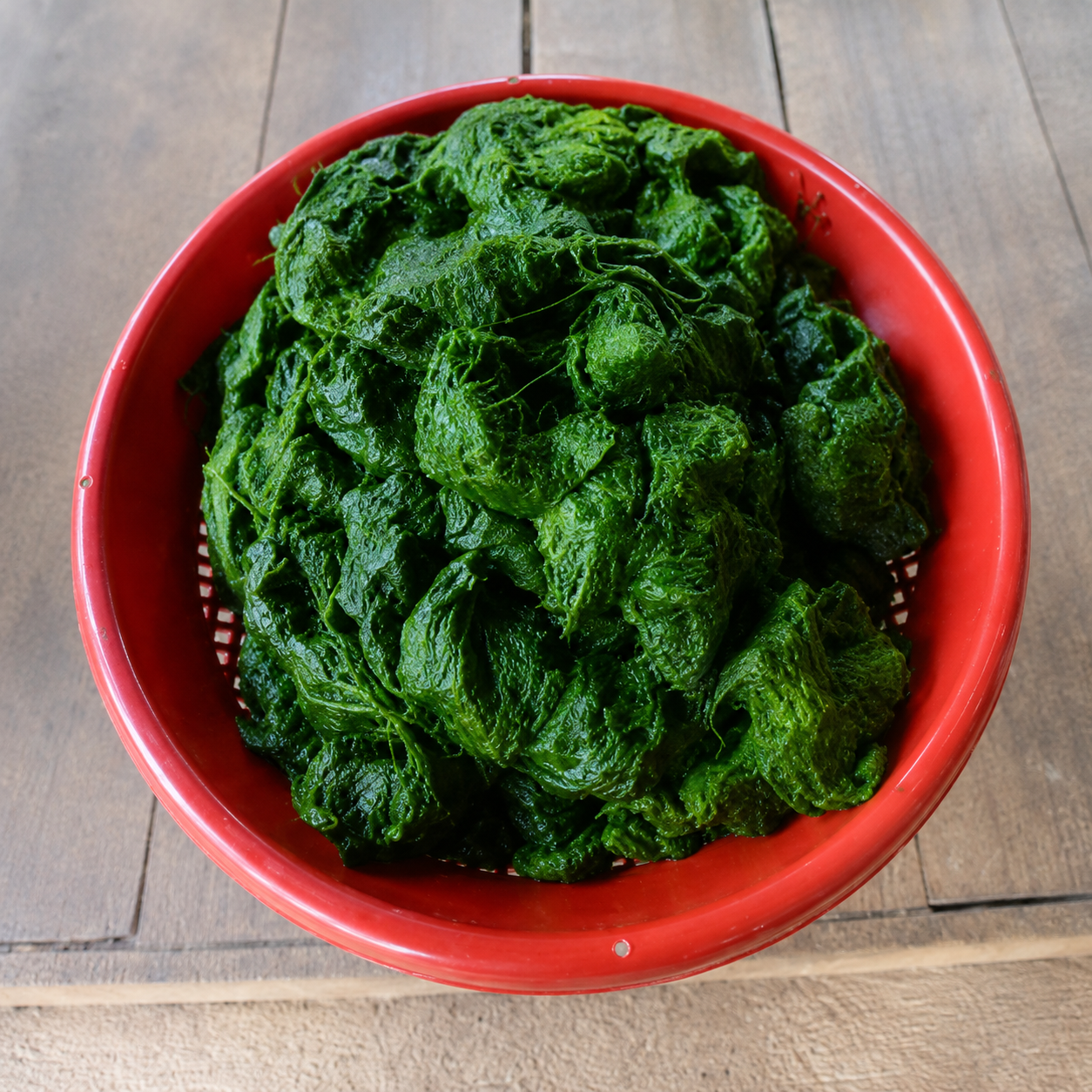
Nutritional Evaluation of Edible Freshwater Green Macroalga Spirogyra varians
Keywords:
phenolic content, pigments, minerals, nutrition, Spirogyra variansAbstract
Freshwater macroalgae are important sources of bioactive natural substances. Macroalgae accumulate specific secondary metabolites which are high value products that have applications in the cosmetic, food and pharmaceutical industries. Macroalgae Spirogyra is being used as nutrient dense foods and sources of fine chemicals. The freshwater alga Spirogyra varians, a filamentous charophyte, collected from the slow running stream, was identified on the basis of morpho-anatomical characters. In this study, a novel strategy that employs a single macroalgae S. varians grown in a natural habitat as a platform to produce pigments, protein, rich carbohydrate and lipid biomass, as desired, was introduced. The pigments, phenolic content and mineral composition showed the possibility of using them as food supplement for human. The total content of protein (% dry weight) ranged from 12.0 % to 24.4%; carbohydrate from 42.8% to 62.0% and lipid from 14.8% to 21.0%. Therefore, the study results suggested that S. varians, could be used for pharmaceutical and cosmetic products.
References
A. Hosikian, S. Lim, R. Halim and M. K. Danquah (2010). Chlorophyll extraction from microalgae: a review on the process engineering aspects. Int. J. Chem. Eng., 39: 32-43.
AOAC (2000). Official methods of analysis of AOAC International. 17th ed. AOAC Int, Washington, DC.
APHA-AWWA-WPCF (2005). Standards Methods for the Examination of Water and Wastewater. 21st ed. APHA-AWWA-WPCF, Washington, DC.
A. N. Kargupta and R. N. Jha (2004). Algal flora of Bihar (Zygnemataceae). Bishen Singh Mahendra Pal Singh, Dehra Dun, India.
B. Darcy-Vrillon (1993). Nutritional aspects of the developing use of marine macroalgae for the human food industry. Int J Food Sci Nutr., 44: 23-35.
C. Dawczynski, R. Schubert and G. Jahreis (2007). Amino acids, fatty acids, and dietary fibre in edible seaweed products. Food Chem., 103: 891-899.
C. E. Taft (2009). Some Oedogoniacea and Zygnemataceae from Texas and Louisiane. Trans Am Microsc Soc., 65: 18-26.
C. Manach, A. Scalbert, C. Morand, C. Rémésy and L. Jiménez (2004). Polyphenols: Food sources and bioavailability. Am. J. Clin. Nutr., 79: 727-747.
C. V. González López, M. C. Cerón García, F. G. Acién Fernández, C. Segovia Bustos, Y. Chisti and J. M. Fernández Sevilla (2010). Protein measurements of microalgal and cyanobacterial biomass. Bioresource Technol., 101: 7587-7591.
E. G. Bligh and W. J. Dyer (1959). A rapid method of total lipid extraction and purification. Can. J. Physiol. Pharmacol., 37: 911-915.
D. M. John, B. A. Whitton and A. J. Brook (2002). The Freshwater Algae of the British Isles: An Identification Guide to Freshwater and Terrestrial Algae. Cambridge University Press, Cambridge.
G. W. Prescott (1951). Algae of the western great lakes area. Cranbrook Institute of Science, Bloomfield Hills, Michigan, USA.
H. K. Lichtenthaler and A. R. Wellburn (1985). Determination of Total Carotenoids and Chlorophylls A and B of Leaf in Different Solvents. Biol. Soc. Trans., 11: 591-592.
I. Wijesekara, R. Pangestuti and S-K. Kim (2011). Biological activities and potential health benefits of sulfated polysaccharides derived from marine algae. Carbohydr Polym., 84: 14- 21.
J. Kumar, P. Dhar, A. B. Tayade, D. Gupta, O. P. Chaurasia, et al. (2015). Chemical composition and biological activities of Trans-Himalayan alga Spirogyra porticalis (Muell.) Cleve. PLoS ONE 10: e0118255.
L. R. Ferguson, M. Philpott and N. Karunasinghe (2004). Dietary cancer and prevention using antimutagens. Toxicology., 198: 147-159.
L. Machu , L. Misurcova , J. V. Ambrozova, J. Orsavova, J. Mlcek, J. Sochor, T. Jurikova (2015). Phenolic content and antioxidant capacity in algal food products. Molecules., 12: 1118-1133.
M. Dubois, K. A. Giles, J. K. Hamilton, P. A. Rebers and F. Smith (1956). Calorimetric method for determination of sugars and related substances. Anal. Chem., 28: 350-356.
M. L. Cornish and D. J. Garbary (2010). Antioxidants from macroalgae: Potential applications in human health and nutrition. Algae., 25: 155-171.
M. S. Randhawa (1959). Zygnemaceae. ICAR, New Delhi, India.
P. Giordano, P. Scicchitano, M. Locorotondo, C. Mandurino, G. Ricci, S. Carbonara Ciccone, et al. (2012). Carotenoids and cardiovascular risk. Curr Pharm Des., 18: 5577-5589.
P. Kumari, M. Kumar, V. Gupta, C. R. K. Reddy and B. Jha (2009). Tropical marine macroalgae as potential sources of nutritionally important PUFAs. Food Chem., 120: 749-757.
P. Matanjun, S. Mohamed, N. M. Mustapha and K. Muhammad (2009). Nutrient content of tropical edible seaweeds, Eucheuma cottonii, Caulerpa lentillifera and Sargassum polycystum. J Appl Phycol., 21: 1-6.
R. Ramaraj, D. D-W. Tsai and P. H. Chen (2010). Algae growth in natural water resources. J. of Soil and Water Conservation., 42: 439-450.
R. Ramaraj, D. D-W. Tsai and P. H. Chen (2013). Chlorophyll is not accurate measurement for algal biomass. Chiang Mai J. Sci., 40: 547-555.
R. Ramaraj, D. D-W. Tsai and P. H. Chen (2014a). An exploration of the relationships between microalgae biomass growth and related environmental variables. J. Photochem. Photobiol. B., 135: 44-47.
R. Ramaraj, D. D-W. Tsai and P. H. Chen (2014b). Freshwater microalgae niche of air carbon dioxide mitigation. Ecol. Eng., 68: 47-52.
R. Ramaraj, D. D-W. Tsai and P. H. Chen (2015a). Carbon dioxide fixation of freshwater microalgae growth on natural water medium. Ecol. Eng., 75: 86-92.
R. Ramaraj, D. D-W. Tsai and P. H. Chen (2015b). Biomass of algae growth on natural water medium. J. Photochem. Photobiol. B., 142: 124-128.
S. K. Chandini, P. Ganesan, P. V. Suresh and N. Bhaskar (2008). Seaweeds as a source of nutritionally beneficial compounds-a review. J Food Sci Tech., 45: 1-13.
U. M. Lanfer-Marquez, R. M. C. Barros and P. Sinnecker (2005). Antioxidant activity of chlorophylls and their derivatives. Food Res Int., 38: 885-891.
Vidyavati and M. N. Noor (1995). Biology of conjugales. Pritwell. Jaipur, India.
V. S. K. Chennubhotla (1996). Seaweeds and their importance. Bull. Cent. Mar. Fish. Res. Inst., 48: 108-109.
W. H. Ryan, C. Senthil, B. Ashish and K. C. Das (2010). Effect of biochemical stimulants on biomass productivity and metabolite content of the microalga, Chlorella Sorokiniana. Appl. Biochem Biotechnol., 162: 2400-2414.
X. Gao, M. Ohlander, N. Jeppsson, L. Björk and V. Trajkovski (2000). Changes in antioxidant effects and their relationship to phytonutrients in fruits of sea buckthorn (Hippophae rhamnoides L.) during maturation. J Agric Food Chem., 48: 1485-1490.
Z. Kamenarska, S. Dimitrova-Konaklieva, C. H. Nikolova, A. Kujumdjiev, K. Stefanov and S. Popov (2000). Volatile components of the freshwater algae Spirogira and Mougeotia. Z. Naturforsch., 55: 495-499.
Published
Issue
Section
License
Copyright (c) 2015 Author (s)

This work is licensed under a Creative Commons Attribution-NonCommercial-NoDerivatives 4.0 International License.
Copyright © The Author(s). Effective from 1 July 2026, articles published in Emergent Life Sciences Research (ELSR) are distributed under the Creative Commons Attribution 4.0 International License (CC BY 4.0), which permits use, sharing, distribution, reproduction, and adaptation in any medium or format, provided that appropriate credit is given to the original author(s) and the source, a link to the license is provided, and any changes made are indicated.
Articles published before 1 July 2026 remain subject to the license applicable at the time of their original publication, including the Creative Commons Attribution-NonCommercial-NoDerivatives 4.0 International License (CC BY-NC-ND 4.0), where applicable.