
Study of Physicochemical Parameters in Selected Ponds of Athiyannoor Block Panchayat, Kerala
Keywords:
alkalinity, dissolved oxygen, electrical conductivity, hardness, temperatureAbstract
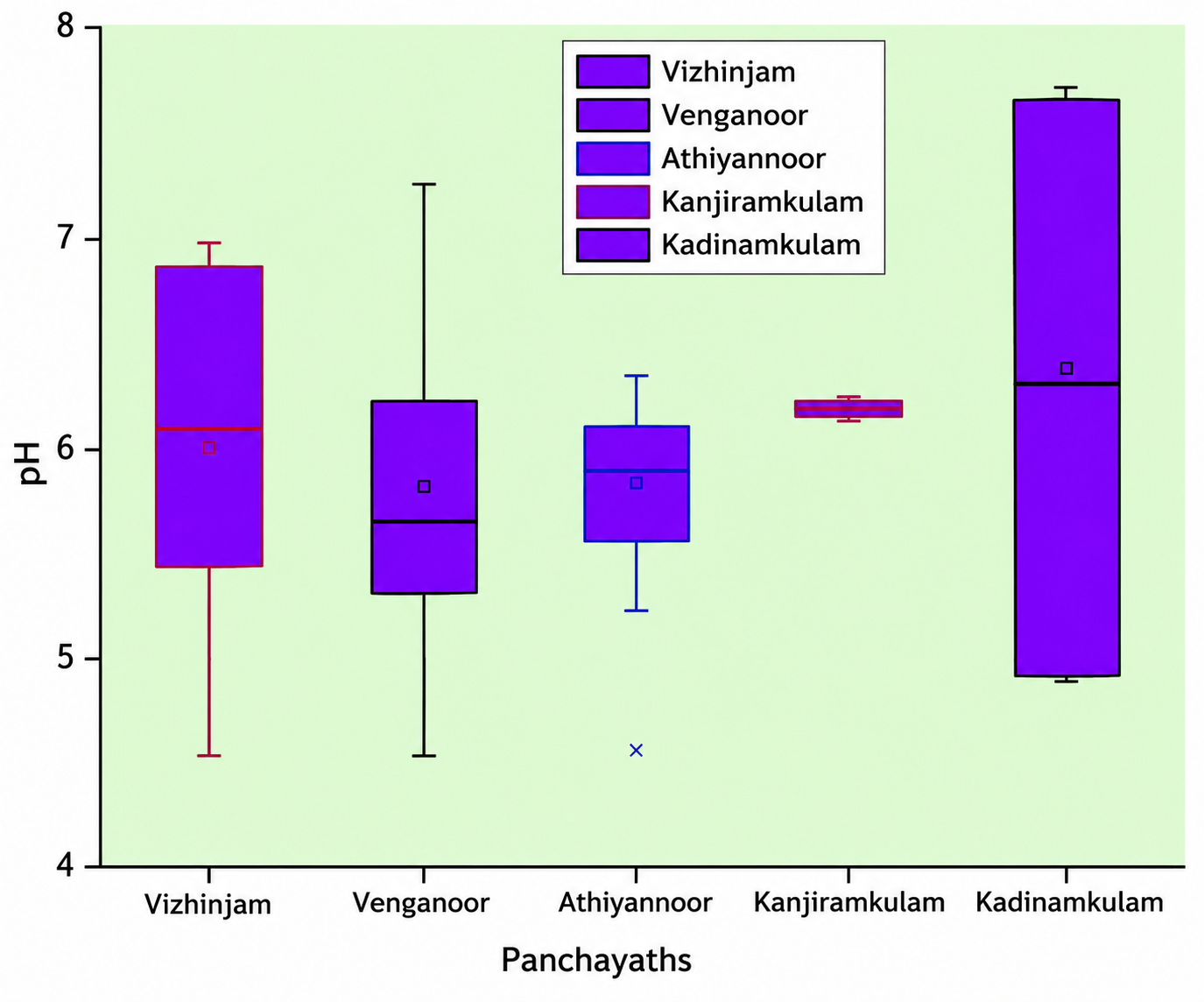
The present study was carried out in 37 ponds of 5 panchayaths within Athiyannoor Block in Thiruvananthapuram dist., Kerala, India. Water samples were collected from the ponds for the analysis of physico-chemical parameters. The physico-chemical factors have great importance in defining the trophic status of aquatic habitats. The gathering of different types of pollutants and nutrients through the municipal effluents, and agricultural activities in to the ponds makes alterations in the physico-chemical features of fresh water. Present work was conducted to examine water quality of Athiyannoor pond due of its prominence in ground water recharging, irrigation and drinking purposes. The temperature varied between 26.5 and 29.6˚C, EC between 49.19 and 517.70µS, the value of pH ranges between 4.51 and 7.7. The values observed were not within the acceptable range (6.5-8.5) of WHO for natural waters, DO was found to be between 10.96mg/L and 0.62mg/L. Outcomes of physico-chemical factors of numerous ponds studied in the present investigation clearly showed that the water is not good for human consumption. So there is an immediate need of restoration, improvement and proper management of these underground water bodies for the human and environment.
References
APHA: Standard methods for examination of water and wastewater. 21st Edn. APHA, AWWA, WPCF, Washington DC, USA.
B. Purandara, N. Varadarajan and K. Jayashree (2003). Impact of Sewage on Groundwater Quality : A Case Study, Poll. Res., 22: 189-197.
F. G. Pohland and D. E. Bloodgood. (1963). Laboratory studies on mesophilic and thermophilic anaerobic sludge digestion. J. Water Pollut. Control Fed., 35: 11-42.
M. Chaurashiya and G. C. Pandey (2007). Study of Physico-chemical Characteristic of Some Water Ponds of Ayodhya- Faizabad, Indian. J. Environ. Prot., 27: 1019-1029.
M. R. Mahananda, B. P. Mohanty and N. R. Behera (2010). Physico-chemical analysis of surface and ground water of Bargarh District, Orissa, India. Intel. J. Res. Rev. Appl. Sci., 2, 3.
P. Mehta (2013). Alteration in water quality parameters and consequential impacts due to festival waste in jodhpur. The Experi., 17: 1166-1176.
S. Mishra, A. L. Singh and D. Tiwary (2014). Studies of Physico-chemical Status of the Ponds a Varanasi Holy City under Anthropogenic Influences. Int. J. Envir. Res. Devel., 4: 261-268.
T. N. Tiwari and M. A. Mishra (2006). A preliminary assignment of water quality index of major Indian rivers. Ind. J. Environ. Protect., 5: 276-279.
V. Dhanalakshmi, K. Shanthi and K. M. Remia (2013). Physicochemical study of Eutrophic pond in Pollachi town, Tamilnadu, India; Int. J. Curr. Microbiol. App. Sci., 2: 219-227.
Downloads
Published
Issue
Section
License
Copyright (c) 2015 Author (s)

This work is licensed under a Creative Commons Attribution-NonCommercial-NoDerivatives 4.0 International License.
Copyright © The Author(s). This is an open access article distributed under the terms of the Creative Commons Attribution-NonCommercial-NoDerivatives 4.0 International License (CC BY-NC-ND 4.0), which permits unrestricted non-commercial use, distribution, and reproduction in any medium, provided the original author(s) and source are properly credited, and the work is not modified or adapted.