Monitoring of Scarab Beetles using Light Trap in Horticulture Field of Paklihawa Campus, Rupandehi, Nepal
Keywords:
coleoptera, phytophagous insects, sampling insects, scarabaeidaeAbstract
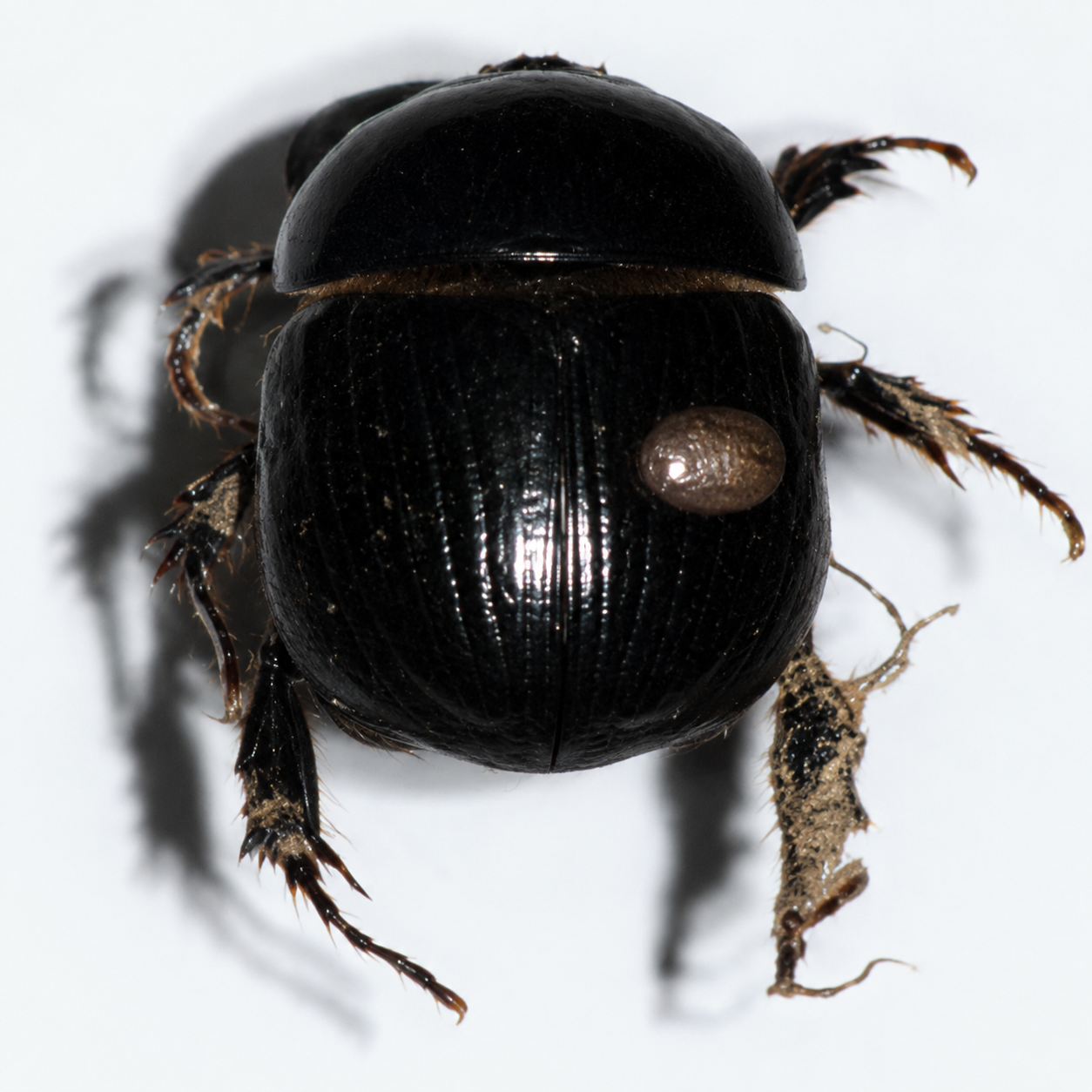
An experiment was conducted in Horticulture field of Institute of Agriculture and Animal Science (IAAS), Paklihawa, Nepal to know the status of Scarabaeid beetle species and population by using light trap. Weekly monitoring of scarabaeid beetles adults with 85 watt vapor lights run from dawn to dusk during April, May, June and July in a field with multiple crops in 2014 showed that beetle populations were higher in May and June than in April and July. Overall, 227 specimens of Scarabaeid beetles were collected and 36% were Coprius indicus (Blanchard), 18% were Anomala mongiloca (Faldermann), 11% were Holotrichia spp., 9% were Cyclocephala spp., 8% were Phyllophaga spp., 6% were Heteronuchus lioderes (Redtenbachen), 5% were Onthophagus madoqua (Arrow), 5% were Alissonotum binodulum (Fairmaire), 2% were Maladera castanea (Arrow), and 0.5% (1 beetle) was Popillia birmaniaca (Arrow).
References
[1] G. C. Yubak Dhoj and S. Keller (2002). Association of fungal pathogens with white grubs. In: Neupane, F. P. (ed.). 2003.
[2] R. Pandey, R. B. Adhikari and J. B. Gurung (1993). Report on insect pest monitoring works at Lumle (1992). Working Paper No. 93/30. Kaski. Nepal: Lumle Agricultural Research Centre.
[3] G. C. Yubak Dhoj (2006). White grubs (Coleoptera: Scarabaeidae) associated with Nepalese agriculture and their control with indigenous entomopathogenic fungus (Metarhizium anisopliae (Metsch.) Sorokin, PhD Thesis. University of Basel, Switzerland.
[4] D. Khanal, G. C. Yubak Dhoj, M. Sporleder and R. B. Thapa (2012). Distribution of white grub in three ecological domain of Nepal. J. Agri. Environ. 13: 40-46. [6] K. S. R. Murthy and R. V. Venkateswar (1997). Temporal studies of land use/land cover in Varah river basin, Andhra Pradesh. J. Indian Soc. Remote, 25: 153-154.
Downloads
Published
Issue
Section
License
Copyright (c) 2016 Author (s)

This work is licensed under a Creative Commons Attribution-NonCommercial-NoDerivatives 4.0 International License.
Copyright © The Author(s). Effective from 1 July 2026, articles published in Emergent Life Sciences Research (ELSR) are distributed under the Creative Commons Attribution 4.0 International License (CC BY 4.0), which permits use, sharing, distribution, reproduction, and adaptation in any medium or format, provided that appropriate credit is given to the original author(s) and the source, a link to the license is provided, and any changes made are indicated.
Articles published before 1 July 2026 remain subject to the license applicable at the time of their original publication, including the Creative Commons Attribution-NonCommercial-NoDerivatives 4.0 International License (CC BY-NC-ND 4.0), where applicable.