Role of Biotechnology in Human Health Care
Keywords:
biotechnology, diagnostic, disease, human healthAbstract
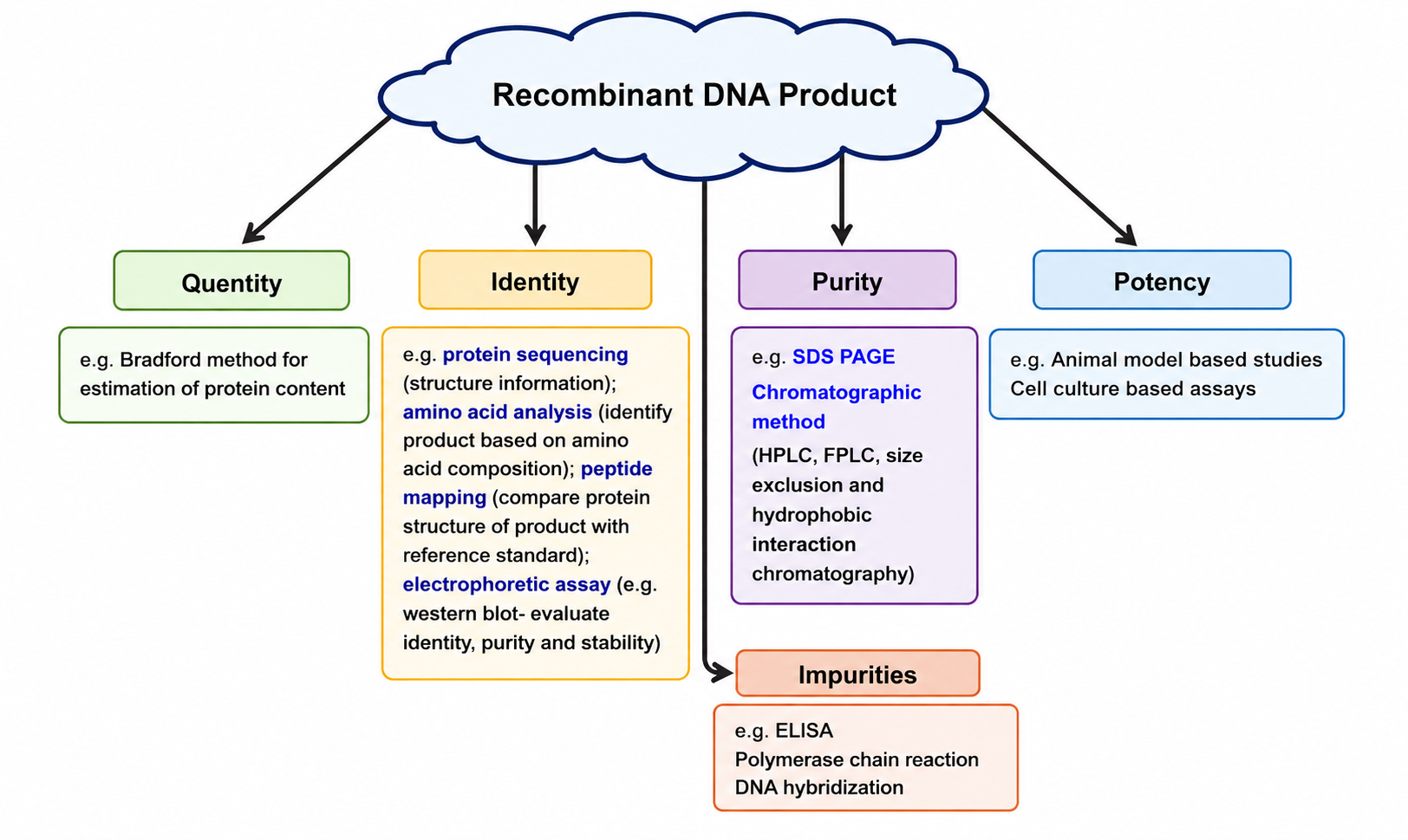
Biotechnology covers a broad spectrum of scientific applications that are applied in many sectors including health and agriculture. It involves the usage of living organisms, or its parts in order to deliver innovative methods of production and create new products e.g. new vaccine production (through disease diagnosis) to avoid disease-attack; genetically modified plants (to develop resistance against various pests); bacteria having the ability to cleaning up oil spills etc. All these features are related to biotechnology that is totally applicable to human health care. In other words, biotechnology related to human healthcare has a tremendous impact on the necessity of patients and their families as it not only revolves around medicines and diagnostics that are produced employing a biotechnological process, but also involve gene and cell therapies, recombinant DNA products, tissue engineered products and controlling environment pollution. Today, the majorities of innovative medicines either produced using biotechnology or through diagnostic products, are made readily available to the society by applying modern biotechnology in their development and/or expansion processes.
References
[1] S. Arnold and P. John (2005). Origin and History of Beer and Brewing: From Prehistoric Times to the Beginning of Brewing Science and Technology. Cleveland Ohio Beer Books 2005, 34. Publisher: Alumni Assn. of the Wahl-Henius Institute, 1911. Reprint Edition, BeerBooks.com.
[2] C. T. Ronald (2003). Biotechnology. Encyclopedia of Science and Religion 2003, http://www.encyclopedia.com/topic/biotechnology.aspx
[3] W. J. Thieman and M. A. Palladino (2008). Introduction to Biotechnology. Publisher: Benjamin Cummings, ISBN 13: 9780321491459.
[4] S. W. Roush, T. V. Murphy and Vaccine-Preventable Disease Table Working Group (2007). Historical comparisons of morbidity and mortality for vaccine-preventable diseases in the United States. JAMA., ; 298: 2155-2163.
[5] S. B. Omer, D. A. Salmon, W. A. Orenstein, M. P. deHart and N. Halsey (2009). Vaccine refusal, mandatory immunization, and the risks of vaccine preventable diseases. N. Engl. J. Med., 360: 1981-1988.
[6] B. H. Lim and T. A. Mahmood (2011). Influenza A H1N1 2009 (Swine Flu) and Pregnancy. J. Obstet. Gynecol. India, 61: 386-393.
[7] A. P. Grammatikos, E. Mantadakis and M. E. Falagas (2009). Meta-analyses on Pediatric Infections and Vaccines. Infect. Dis. Clin. N. Am., 23: 431-457.
[8] Y. Chang, N. T. Brewer, A. C. Rinas, K. Schmitt and J. S. Smith (2009). Evaluating the impact of human papillomavirus vaccines. Vaccine, 27: 4355-4362.
[9] A. Rinaldi (2013). Tackling animal diseases to protect human health. As veterinary science celebrates cattle plague eradication, the inextricable link between human, animal and ecosystem health is increasingly appreciated. EMBO rep., 14: 31-35.
[10] Jonas E. Salk, MAJ B. L. Bennett, L. J. Lewis, E. N. Ward and J. S. Youngner (2008). Polio today: are we on the verge of global eradication. JAMA, 300: 839-841.
[11] N. E. Aronson, M. Santosham G. W. Comstock, R. S. Howard, L. H. Moulton, E. R. Rhoades , L. H. Harrison (2004). Long-term efficacy of BCG vaccine in American Indians and Alaska Natives: A 60-year follow-up study. JAMA, 291: 2086-2091.
[12] B. S. Blumberg, H. J. Alter and S. Visnich (1965). A new antigen in leukemia sera. JAMA, 191: 541-546.
[13] G. Spohn and M. F. Bachmann (2008). Exploiting viral properties for the rational design of modern vaccines. Expert Rev. Vaccines, 7: 43-54.
[14] A. Gupta and S. R. Chaphalkar (2015). Vaccine Adjuvants: The Current necessity of life. Shiraz E-Med J., 16: e28061.
[15] A. Gupta, A. Khajuria, J. Singh and K. A. Suri (2015). Adjuvant effect of biopolymeric fraction from Picrorhiza kurroa to promote both Th1 and Th2 immune responses. Journal of Progressive research in Biology (JPRB), 1: 7-16.
[16] N. Garcon, P. Chomez and M.Van Mechelen (2007). GlaxoSmithKline Adjuvant Systems in vaccines: concepts, achievements and perspectives. Expert Rev. Vaccines, 6: 723-739.
[17] I. S. Johnson (1983). Human insulin from recombinant DNA technology. Science, 219: 632-637.
[18] T. Von Fange, T. McDiarmid, L. Mackler and A. Zolotor (2008). Clinical inquiries: Can recombinant growth hormone effectively treat idiopathic short stature?. J. Fam. Pract., 57: 611-612.
[19] R. Derdaa, A. Laromaine, A. Mammoto, S. K. Y. Tanga. T. Mammoto, D. E. Ingberb and G. M. Whitesides (2009). Paper-Supported 3D Cell Culture for Tissue-Based Bioassays. Proc. Natl. Acad. Sci. U.S.A., 106: 18457-18462.
[20] S. Belak and P. Thoren (2001). Molecular diagnosis of animal diseases: some experiences over the past decade. Expert Rev. Mol. Diagn., 1: 434-443.
[21] S. Belak, P. Thoren, N. Leblanc and G.Viljoen (2009). Advances in viral disease diagnostic and molecular epidemiological techniques. Expert Rev. Mol. Diagn. 9: 367-381.
[22] G. Libeau, A. Diallo, F. Colas and L. Guerre (1994). Rapid differential diagnosis of rinderpest and pestes des petits ruminants using an immunocapture ELISA. Vet. Rec., 134: 300-304.
[23] P. L. Pingali, C. B. Marquez and F. G.Palis (1994). Pesticides and Philippine rice farmer health: a medical and economic analysis. Am. J. Agric. Econ., 76: 587-592.
[24] B. Stone (1988). Developments in agricultural technology. China Quarterly, 110: 767-822.
[25] H. J. Cools and K. E. Hammond-Kosack (2013). Exploitation of genomics in fungicide research: current status and future perspectives. Mol. Plant Pathol. 14: 197-210.
[26] G. J. Zylstraa and J. J. Kukor (2005). What is environmental biotechnology?. Curr. Opin. Biotechnol., 16: 243-245.
[27] P. J. Landrigan and C. Benbrook (2015). GMOs, Herbicides, and Public Health. N. Engl. J. Med., 373: 693-695.
[28] M. Dua, A. Singh, N. Sethunathan and A. K. Johri (2002). Biotechnology and bioremediation: successes and limitations. Appl. Microbiol. Biotechnol., 59: 143-52.
[29] K. S. Chauhan and S. S. Chauhan (2009). Ecological Destruction vis-à-vis Environmental Jurisprudence in India: A Survey. J. Hum. Ecol., 27: 207-216.
Downloads
Published
Issue
Section
License
Copyright (c) 2016 Author (s)

This work is licensed under a Creative Commons Attribution-NonCommercial-NoDerivatives 4.0 International License.
Copyright © The Author(s). This is an open access article distributed under the terms of the Creative Commons Attribution-NonCommercial-NoDerivatives 4.0 International License (CC BY-NC-ND 4.0), which permits unrestricted non-commercial use, distribution, and reproduction in any medium, provided the original author(s) and source are properly credited, and the work is not modified or adapted.