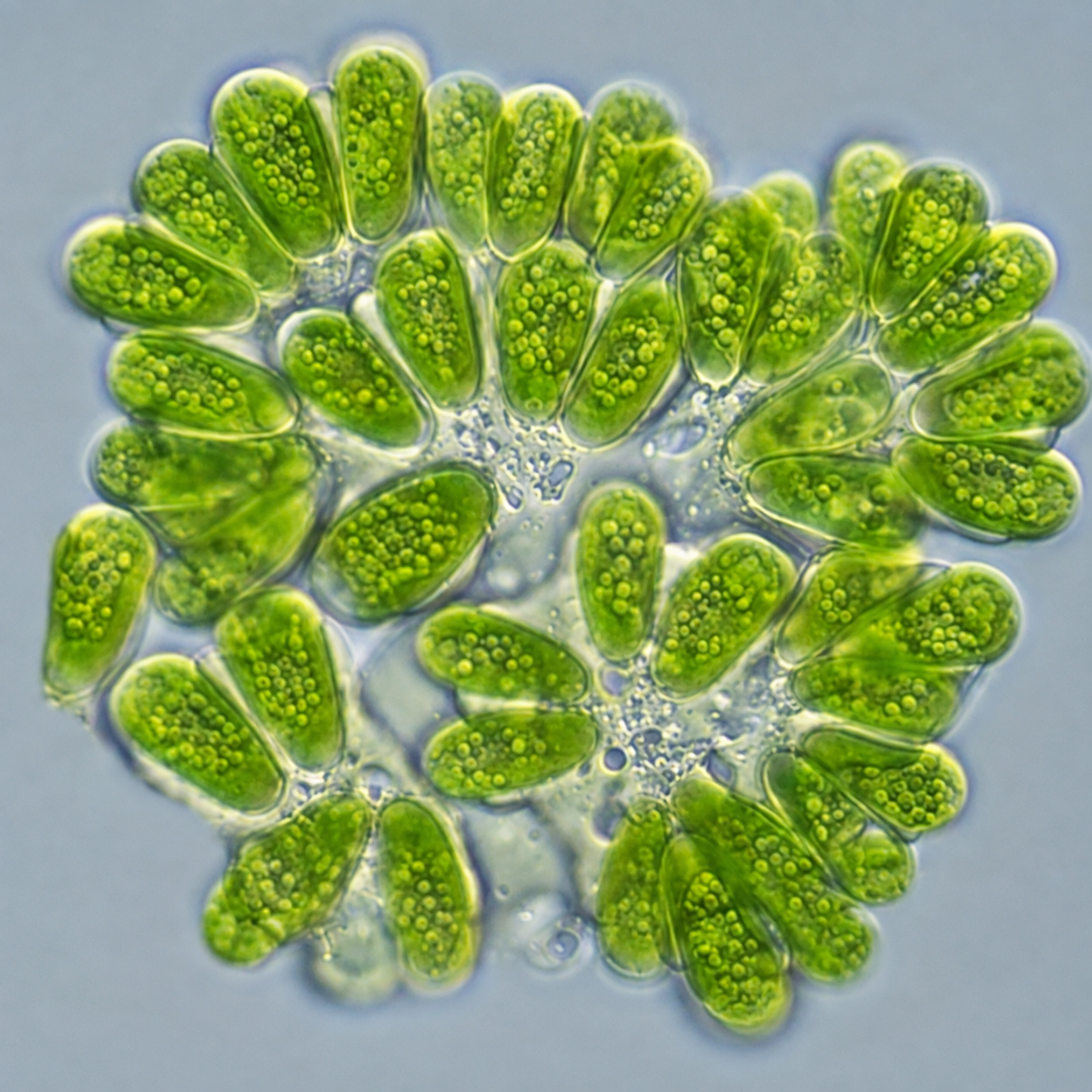
Direct Transesterification of Microalga Botryococcus braunii Biomass for Biodiesel Production
Keywords:
biodiesel, biomass, direct transesterification, microalgae, red tilapia effluent mediumlAbstract
Microalgae biodiesel are reported to be better than fossil fuels in terms of life-cycle energy performance. Green alga, Botryococcus braunii symbolizes one of the most favorable resources of biodiesel due to relatively high lipid content. The present study focused on the cultivation of Botryococcus braunii with the fed-batch in 4 L lab-scale continuously stirred tank reactors (CSTRs) through inexpensive red Nile tilapia effluent medium (RNTEM), biomass growth, protein, carbohydrate, lipid, hydrocarbon production and fatty acids profiles. Additionally, in this study we have evaluated the feasibility of biodiesel production directly from B. braunii biomass at laboratory scale achieved through direct transesterification process. B. braunii growth confirmed the highest biomass yield (8.57 g L−1) and 35.32% hydrocarbon content was observed. Further, 47.59% lipids, 16.39% proteins and 38.21% carbohydrates were observed under laboratory conditions. Fatty acid methyl esters (FAME) synthesis by direct conversion of B. braunii biomass was carried out using sulfuric acid as a catalyst and methanol as solvent. The experimental results obtained in the present study proved that the production of B. braunii by RNTEM is potentially feasible.
References
[1] Y. Unpaprom, S. Tipnee and R. Ramaraj (2015). Biodiesel from Green Alga Scenedesmus acuminatus. IJSGE., 4: 1-6.
[2] X. L. Miao and Q. Y. Wu (2006). Biodiesel production from heterotrophic microalgal oil. Bioresour. Technol., 97: 841-846.
[3] R. Ramaraj, D. D-W. Tsai and P. H. Chen (2014). An exploration of the relationships between microalgae biomass growth and related environmental variables. J. Photochem. Photobiol. B., 135: 44-47.
[4] R. Ramaraj, D. D-W. Tsai and P. H. Chen (2014b). Freshwater microalgae niche of air carbon dioxide mitigation. Ecol. Eng., 68: 47-52.
[5] C. Samori, C. Torr, G. Samorì, D. Fabbri, P. Galletti, F. Guerrini, R. Pistocchi and E. Tagliavini (2010). Extraction of hydrocarbons from microalga Botryococcus braunii with switchable solvents. Bioresour. Technol., 101: 3274-3279.
[6] T. L. Weiss, H. J. Chun, S. Okada, S. Vitha, A. Holzenburg, J. Laane and T. P. Devarenne (2010). Raman spectroscopy analysis of botryococcene hydrocarbons from the green microalga Botryococcus braunii . J. Biol. Chem., 285: 32458-32466.
[7] R. Niitsu, M. Kanazashi, I. Matsuwaki, Y. Ikegami, T. Tanoi, M. Kawachi, M. M. Watanabe and M. Kato (2011). Changes in the hydrocarbon-synthesizing activity during growth of Botryococcus braunii B70. Bioresour. Technol., 109: 297-299.
[8] S. Sawayama, T. Minowa, Y. Dota and S. Yokayama (1992). Growth of hydrocarbon rich microalga Botryococcus braunii in secondarily treated sewage. Appl. Microbiol. Biotechnol., 38: 135-138.
[9] S. Sawayama, T. Minowa, Y. Dota and S. Yokayama (1999). Possibility of renewable energy production and carbon dioxide mitigation by thermo chemical liquefaction of microalgae. Biomass Bioenergy., 17: 33-39.
[10] C. Largeau, E. Caradevall, C. Berkaloff and P. Dhamliencourt (1980). Sites of accumulation and composition of hydrocarbons in Botryococcus braunii. Phytochemistry, 19: 1043-1051.
[11] C. Yeesang and B. Cheirsilp (2011). Effect of nitrogen, salt, and iron content in the growth medium and light intensity on lipid production by microalgae isolated from reshwater sources in Thailand. Bioresour. Technol., 102: 3034-3040.
[12] C. Dayananda, R. Sarada, U. Usha Rani, T. R. Shamala and G. A. Ravishankar (2007). Autotrophic cultivation of Botryococcus braunii for the production of hydrocarbons and exopolysaccharides in various media. Biomass Bioenerg., 31: 87-93.
[13] Y. Ge, J. Liu, G. Tian (2011). Growth characteristics of Botryococcus braunii 765 under high CO2 concentration in photobioreactor. Bioresour. Technol., 102: 130-134.
[14] G. S. Kalacheva, N. O. Zhila and T. G. Volova (2001). Lipids of the green alga Botryococcus cultured in a batch mode. Microbiology, 70: 256-262.
[15] R. Orpez, M. E. Martinez, G. Hodaifa F. E. Yousfi, N. Jbari and S. Sanchez (2009). Growth of the microalga Botryococcus braunii in secondarily treated sewage. Desalination, 246: 625-630.
[16] S. Ruangsomboon (2012). Effect of light, nutrient, cultivation time and salinity on lipid production of newly isolated strain of the green microalga, Botryococcus braunii KMITL 2. Bioresour. Technol., 109: 261-265.
[17] J. Liu, Y. Ge, H. Cheng, L. Wu and G. Tian (2013). Aerated swine lagoon wastewater: a promising alternative medium for Botryococcus braunii cultivation in open system. Bioresour. Technol., 139: 190-194.
[18] Y. Unpaprom, O. Intasaen, P. Yongphet and R. Ramaraj (2015). Cultivation of Microalga Botryococcus braunii Using Red Nile Tilapia Effluent Medium for Biogas Production. JEAES., 3: 58-65.
[19] M. B. Johnson and Z. Wen (2009). Production of biodiesel fuel from the microalga Schizochytrium limacinum by direct transesterification of algal biomass. Energy Fuels., 23: 5179-5183.
[20] S. Tipnee, R. Ramaraj and Y. Unpaprom (2015). Nutritional evaluation of edible fresh water green macroalga Spirogyra varians. Emer. Life Sci. Res., 1: 1-7.
[21] H. K. Lichtenthaler and A. R. Wellburn (1985). Determination of total carotenoids and chlorophylls A and B of leaf in different solvents. Biol. Soc. Trans., 11: 591-592.
[22] APHA-AWWA-WPCF (2005). Standards methods for the examination of water and wastewater. 21st ed. APHA-AWWA-WPCF, Washington, DC.
[23] W. H. Ryan, C. Senthil, B. Ashish and K. C. Das (2010). Effect of biochemical stimulants on biomass productivity and metabolite content of the microalga, Chlorella sorokiniana. Appl. Biochem Biotechnol., 162: 2400-2414.
[24] M. Dubois, K. A. Giles, J. K. Hamilton, P. A. Rebers and F. Smith (1956). Calorimetric method for determination of sugars and related substances. Anal. Chem., 8: 350-356.
[25] E. G. Bligh and W. J. Dyer (1959). A rapid method of total lipid extraction and purification. Can. J. Physiol. Pharmacol., 37: 911-915.
[26] C. Dayananda, R. Sarada, S. Bhattacharya, G. A. Ravishankar (2005). Effect of media and culture conditions on growth and hydrocarbon production by Botryococcus braunii. Process Biochem., 40: 3125-3131.
[27] Z. Chi, D. Pyle, Z. Wen, C. Frear and S. Chen (2007). A laboratory study of producing docosahexaenoic acid from biodiesel-waste glycerol by microalgal fermentation. Process Biochem., 42: 1537-1545.
[28] C. Yeesang and B. Cheirsilp (2014). Low-cost production of green microalga Botryococcus braunii biomass with high lipid content through mixotrophic and photoautotrophic cultivation. Appl Biochem Biotechnol., 174: 116-129.
[29] E. W. Becker (2007). Micro-algae as a source of protein. Biotechnol. Adv., 25: 207-210.
[30] G. Ahlgren, I. Gustafsson and M. Boberg (1992). Fatty acid content and chemical composition of freshwater microalgae. J. Phycol., 28: 37-50.
[31] K. Yamaguchi, H. Nakano, M. Murakami, S. Konosu, O. Nakayama, M. Kanda, A. Nakamura, H. Iwamoto (1987). Lipid composition of a green alga, Botryococcus braunii . Agric. Biol. Chem., 51: 493-498.
[32] J. Y. Fang, H. C. Chiu, J. T. Wu, Y. R. Chiang, S. H. Hsu (2004). Fatty acids in Botryococcus braunii accelerate tropical delivery of flurbiprofen into and across skin. Int. J. Pharm. 276: 163-173.
[33] G. Knothe (2008). Designer’ biodiesel: optimizing fatty ester composition to improve fuel properties. Energy Fuel, 22: 1358-1364.
[34] V. A. Kumar and R. Rengasamy (2012). Mass culture of Botryococcus braunii Kutz under open race way pond for biofuel production. Bioresour. Technol., 104: 394-399.
[35] U. Rashid, F. Anwar, B. R. Moser and G. Knothe (2008). Moringa oleifera oil: A possible source of biodiesel. Bioresour. Technol., 99: 8175-8179.
[36] R. Halim, M. K. Danquah and P. A. Webley (2012). Extraction of oil from microalgae for biodiesel production: A review. Biotechnol. Adv., 30: 709-732.
[37] T. Lewis, P. D. Nichols and T. A. McMeekin (2000). Evaluation of extraction methods for recovery of fatty acids from lipid-producing microheterotrophs. J. Microbiol. Methods, 43: 107-116.
[38] B. Liu and Z. Zhao (2007). Biodiesel production by direct methanolysis of oleaginous microbial biomass. J. Chem. Technol. Biotechnol., 82: 775-780.
[39] E. C. Francisco, D. B. Neves, E. Jacob-Lopes and T. T. Franco (2010). Microalgae as feedstock for biodiesel production: carbon dioxide sequestration, lipid production and biofuel quality. J. Chem. Technol. Biotechnol., 85: 395-403.
Downloads
Published
Issue
Section
License
Copyright (c) 2016 Author (s)

This work is licensed under a Creative Commons Attribution-NonCommercial-NoDerivatives 4.0 International License.
Copyright © The Author(s). This is an open access article distributed under the terms of the Creative Commons Attribution-NonCommercial-NoDerivatives 4.0 International License (CC BY-NC-ND 4.0), which permits unrestricted non-commercial use, distribution, and reproduction in any medium, provided the original author(s) and source are properly credited, and the work is not modified or adapted.