Analytical Method Development of Amodiaquine Hydochloride in Marketed Formulation by UV Visible Spectrophotometry
Keywords:
amodiaquine hydrochloride, first order derivative, UV Spectrophotometer, zero order derivativeAbstract
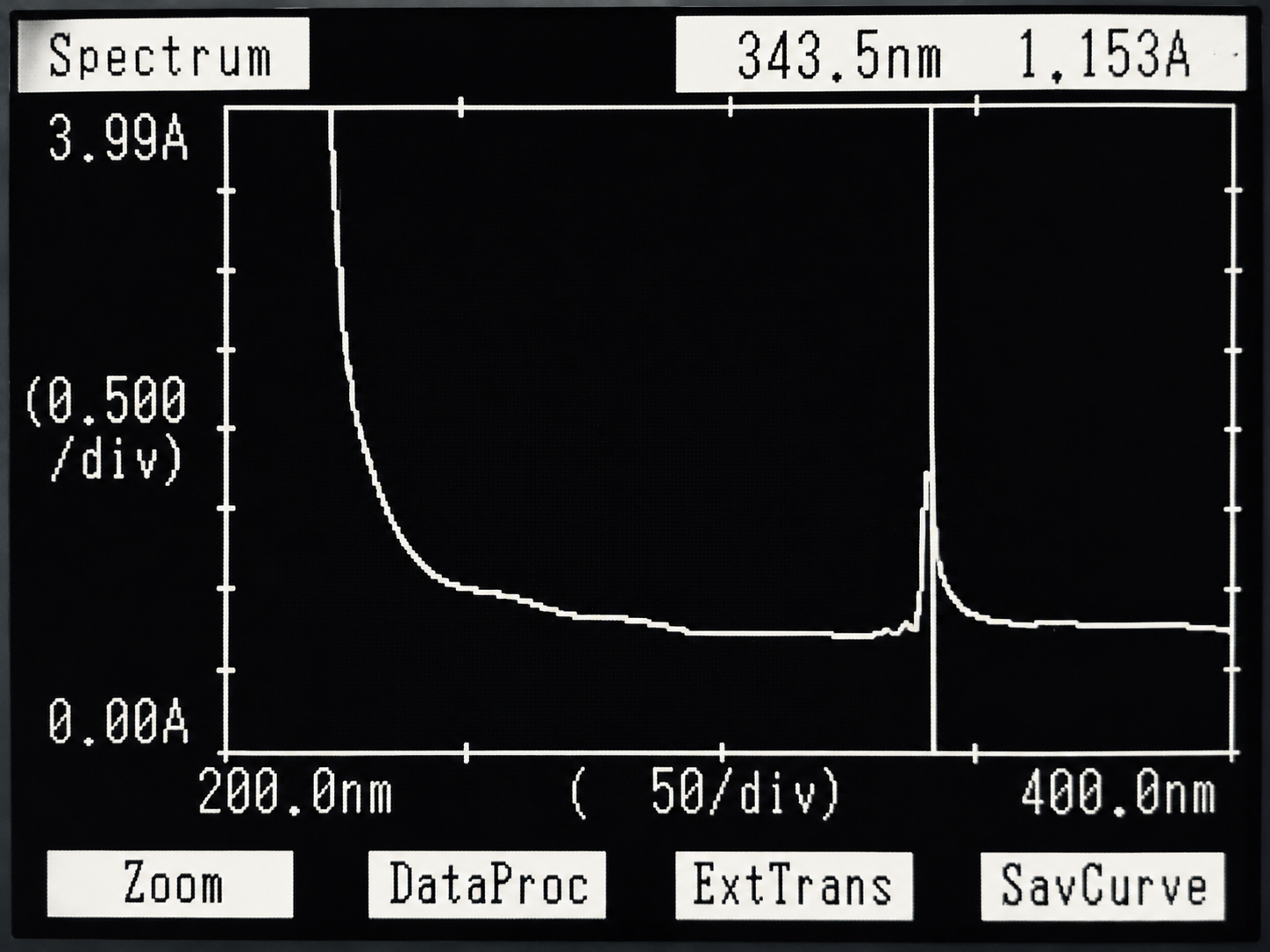
In the present study, two simple, precise and economical UV methods have been developed for the estimation of Amodiaquine Hydrochloride in bulk formulation using methanol. Method A involved the measurement of UV absorbance in zero order derivative at 343 nm, while Method B involved the measurement of UV absorbance in first order derivative at 217.5 nm. Both methods, A and B followed Beer-Lambert’s law with the drug in the concentration range of 10-70 μg/ml and correlation coefficient (r2) 0.9998 and 0.9997, respectively. The limit of detection for zero order and first order was found to be 0.032 and 2.716 respectively. The limit of quantification for zero order and first order was found to be 0.097, 8.231 respectively. Outcomes of the experiments were found appropriate on statistical confirmation. Hence, suggested procedures can be effectively utilized for the assessment of Amodiaquine hydrochloride in regular analytical studies.
References
[1] S. C. Sweetman (2002). Martindale: The Complete Drug Reference, 33rd ed. London: Pharmaceutical press, http://www.pharmpress.com
[2] The Merck Index, 13th ed. Whitehouse Station NJ: Merck & Co. Inc., 2003.
[3] Indian Pharmacopoeia (2014). 7th ed.vol. 2, Ghaziabad: Indian Pharmacopoeia Commission.
[4] USP (32) NF (27). Vol.2, Asian edition 2008: 1406-1407.
[5] P. R. Rao and N. K.. Agarwal (2013). Analytical method development and validation of Artesunate and Amodiaquine hydrochloride in tablet dosage form by RP-HPLC. J. Res. Pharm. Biotechnol., 1: 822-827.
[6] A. Lawal, R. A. Umar, M. G. Abubakar and U. Z. Faruk (2012). Development and validation of UV Spectrophotometric and HPLC Methods for Quantitative Determination of Chloroquine and Amodiaquine in Pharmaceutical Formulations. I. J. ChemTech Res., 4: 669-676.
[7] M. T. Ansari, T. M. Ansari, A. Raza, M. Ashraf, M. Yar (2008). Spectrophotometric Determination of Amodiaquine and Sulfadoxine in Pharmaceutical Preparations. Chem. Anal., 53: 305-313.
[8] N. G. Rathod and M. V. Lokhande (2014). Identification of impurities related to Amodiaquine Hydrochloride by using some analytical techniques. WJPR., 3: 1739-1758.
[9] M. U. Phadke, V. K. Jadhav D. Patil, S. Narayankar, R. K. Jadhav and Y. K. Bansal (2010). Development and Validation of Stability indicating UPLC Method for Determination of Related Impurities in Artesunate and Amodiaquine Fixed Dose Tablets. Der Pharmacia Lettrre, 2: 333-341.
[10] S. Gandhi, P. Deshpande, P. Jagdale, V. Godbole (2010). A simple and sensitive RP-HPLC method for simultaneous estimation of Artesunate and Amodiaquine in combined tablet dosage form. J. Chem. Pharm. Res., 2: 429-434.
[11] M. H. Odedara, S. D. Faldu and K. P. Dadhania (2012). RP-HPLC Method for Simultaneous Estimation of Artesunate and Amodiaquine HCL in their Combined Pharmaceutical Dosage Form. JPSBR., 2: 114-117 [12] F. P. Modi and P. R. Patel (2011). Formulation, Optimization & Evaluation of Fixed Dose Combination Moisture Barrier Film Coated Bilayer Tablet of Artesunate & Amodiaquine Hydrochloride. Int.J. PharmTech., 3: 2124-2134.
[13] A. H. Panchal , L. M. Prajapati, A. K. Joshi and M. L. Kharodiya (2014). Stability Indicating RP-HPLC Method For Simultaneous Estimation Of Artesunate And Amodiaquine HCl in their Combined Dosage Form. Int. J. Uni. Phar. biosci., 3: 45-58.
[14] S. B. Lahane, U. A. Deokate and R. B. Nawale (2014). A Stability Indicating HPLC Method for the Determination of Amodiquine Hydrochloride. Int. J. Pharm. Sci., 28: 196-199.
[15] Validation of Analytical Procedures, ICH Harmonised Tripartite Guideline (1994). International Conference on Harmonization, OF Technical Requirements for Registration of Pharmaceuticals For HumanUSE, Geneva, October 1994, 1.
Downloads
Published
Issue
Section
License
Copyright (c) 2016 Author (s)

This work is licensed under a Creative Commons Attribution-NonCommercial-NoDerivatives 4.0 International License.
Copyright © The Author(s). This is an open access article distributed under the terms of the Creative Commons Attribution-NonCommercial-NoDerivatives 4.0 International License (CC BY-NC-ND 4.0), which permits unrestricted non-commercial use, distribution, and reproduction in any medium, provided the original author(s) and source are properly credited, and the work is not modified or adapted.